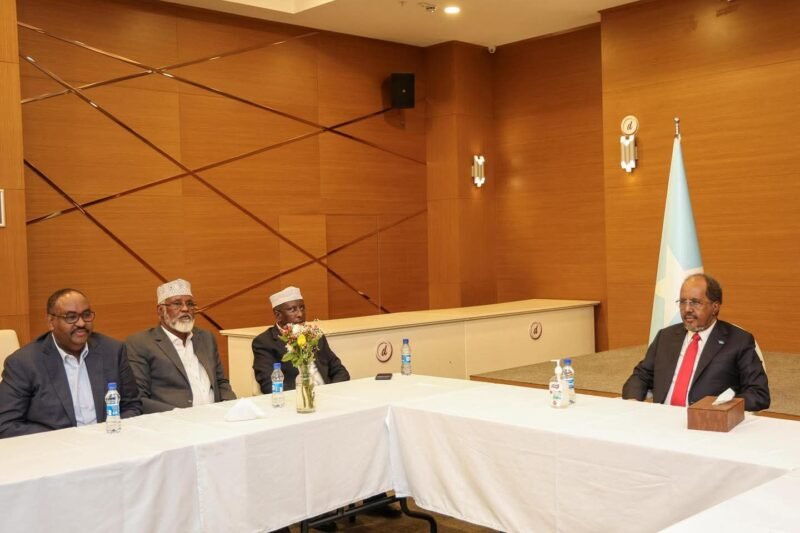
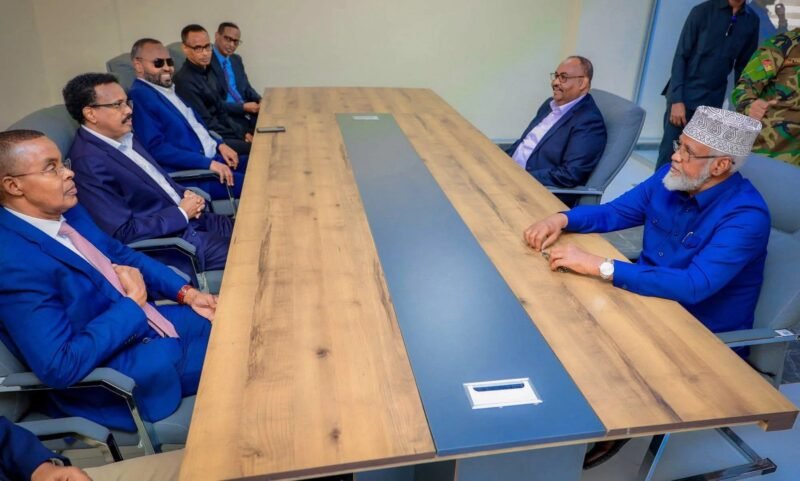
MOGADISHU — High-stakes political negotiations between Somalia’s Federal Government (FGS) and the opposition alliance, the Somali Future Council (SFC), have officially collapsed, plunging the nation into a deepened political standoff as the May 2026 mandate deadline approaches.
Talks Collapse Over “Sacred” Vote
The negotiations, aimed at breaking the deadlock over the country’s upcoming elections and constitutional review, ended without resolution on Monday. The breakdown prompted the immediate departure of the Jubaland regional leader from Mogadishu back to Kismayo.
The core friction remains the electoral model. State Minister for Foreign Affairs, Ali Balcad, reiterated the government’s dedication to implementing a direct “one-person, one-vote” system. While affirming a willingness to make technical adjustments, Balcad declared that the path to universal suffrage is “sacred” and not subject to negotiation. “Somalia’s journey toward democracy cannot be perpetually delayed,” he stated.
Opposition Alleges “Power Grab”
In a sharp rebuttal, the Somali Future Council—comprising the leadership of Jubaland and Puntland along with key opposition figures—blamed the collapse on the government’s refusal to halt what they termed “unilateral constitutional amendments.”
The Council accused the administration of “performative politics” and attempting to organize “sham elections” where the outcome, committee members, and candidates are predetermined. They argued that the government is engaged in a calculated power grab disguised as democracy, warning that such moves violate the provisional federal constitution.
Prominent analyst Professor Afyare Abdi Elmi weighed in on the crisis, noting, “Regrettably, it is now evident that the government is undermining the fragile political settlement’s foundations… If this trajectory continues, it risks leaving the nation without a government possessing a mandate or political direction.”
International Alarm and Soft Diplomacy
The diplomatic community has expressed profound concern over the impasse. The United States Embassy in Mogadishu issued an urgent appeal, warning that a fractured political process directly undermines the security gains made against Al-Shabaab. “A unified Somali political process counters terrorism, strengthens governance, and advances priorities for Somalia,” the Embassy stated.
Similarly, the United Kingdom and the United Nations mission expressed disappointment, urging all sides to return to the table in good faith to find a workable compromise before the constitutional term expires.
Amidst the tension, the European Union is utilizing soft diplomacy to keep channels open. EU Ambassador Francesca Di Mauro hosted a high-profile Iftar reception at the diplomatic compound, bringing together senior government officials and opposition figures in a rare neutral setting. Emphasizing the spirit of Ramadan, Ambassador Di Mauro urged Somali leaders to prioritize national interests over political differences, highlighting that “trust-building and sustained engagement are vital for strengthening consensus.”