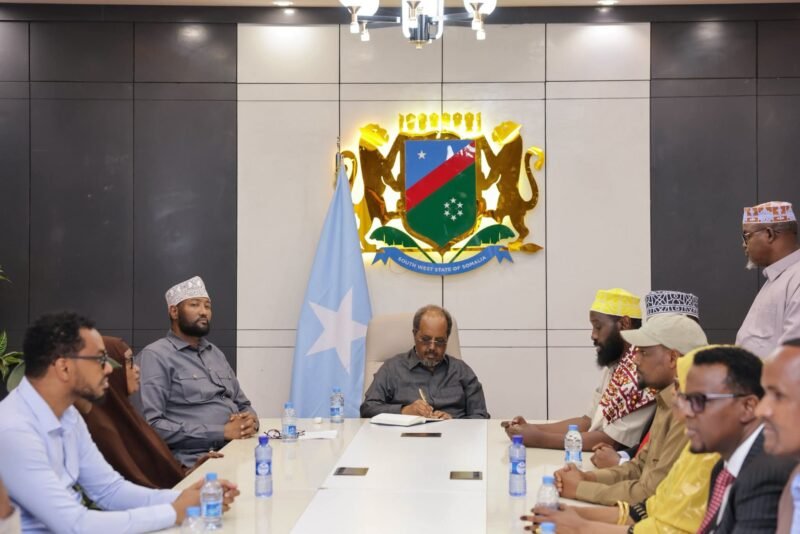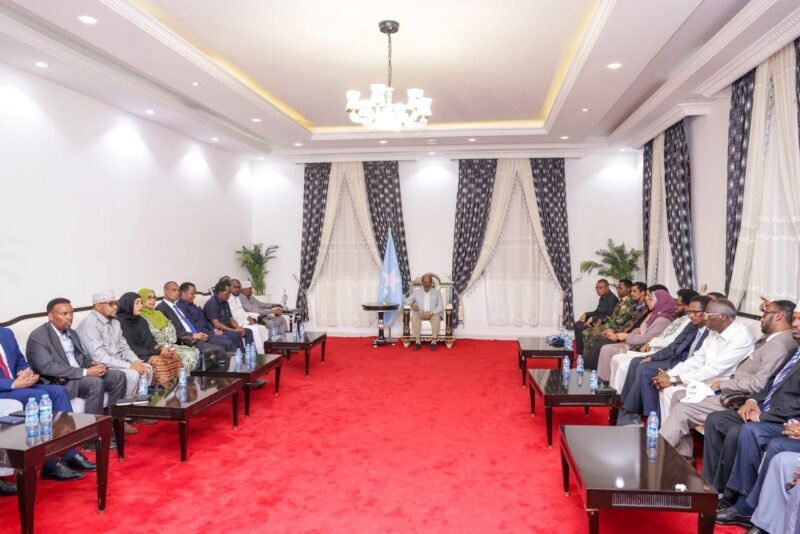
MOGADISHU — Somali President Hassan Sheikh Mohamud has formally instructed several federal cabinet ministers currently participating in the contentious South West State regional presidential contest to immediately return to Mogadishu and resume their official responsibilities. This presidential directive has raised significant political questions, as local observers note that similar recall instructions were not issued to other political contenders whom the President reportedly supports.
Ministers Defy the Recall
According to local media sources, the recall directive specifically applied to ministers who recently traveled to Baidoa via the Burhakabo corridor. Before the recent federal advance toward the regional capital, these officials were reportedly actively organizing local forces.
These ministers, however, have outright rejected the President’s instruction. In a direct political standoff with Villa Somalia, they have clearly stated their unwavering intention to remain stationed in Baidoa until formal regional elections occur or a highly transparent electoral framework is permanently established. They argue this guarantee is necessary to enable their full and fair participation in the regional competition, a demand that echoes broader national debates where the Federal Government is simultaneously pushing for sweeping, transparent electoral reforms across the country.
Mounting Pressure During Transition
The escalating standoff has intensified public and media focus on the President’s favored candidates in the tightly contested race for the vacant South West State presidency. The regional leadership position was left abruptly empty following the controversial removal of former regional president Abdiaziz Hassan Mohamed (Laftagareen) last week.
This complex situation is developing rapidly as President Mohamud continues his extended, on-the-ground presence in Baidoa, where he has spent multiple days attempting to personally direct the fragile political transition in the region.
His high-level intervention occurs at an extremely critical juncture. The federal executive faces mounting pressure from organized opposition groups and several Federal Member States to broker a comprehensive political agreement—one that includes a confirmed, binding electoral calendar. Alternatively, opposition forces are insisting on conducting elections strictly as previously planned, noting that only one month legally remains in the current constitutional term.