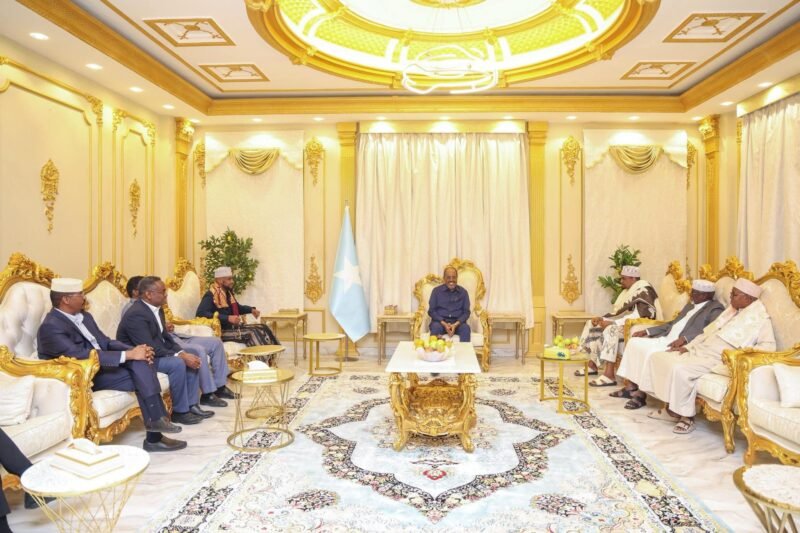
MOGADISHU, Somalia — Somali Member of Parliament Abdirahman Abdishakur Warsame has expressed significant concerns regarding the oil exploration pact between Somalia and Turkey as the drilling vessel Çağrı Bey prepares to commence operations in Somali waters.
The legislator, who serves as the leader of the Wadajir opposition party and is a prominent member of the Somali Salvation Forum, characterized the agreement as “profoundly imbalanced,” warning that it might jeopardize Somalia’s national interests.
MP Details Concerns Over Revenue Sharing
Warsame disclosed that the present terms grant more than 90 percent of the advantages to one party, leaving Somalia with minimal to no substantial earnings from its own natural resources.
He additionally condemned the arrangement for its lack of transparency, highlighting the absence of a well-defined structure for corporate taxation or social investment initiatives for the Somali populace.
The lawmaker emphasized that the arrangement provides no firm assurances for employment opportunities for local residents or the engagement of Somali specialists in the industry.
Timing Sparks Political Debate
The timing of the vessel’s arrival — coinciding with the impending conclusion of President Hassan Sheikh Mohamud’s administration term — has sparked substantial discussion about whether the nation’s long-term wealth is being committed without adequate parliamentary supervision or public accountability.
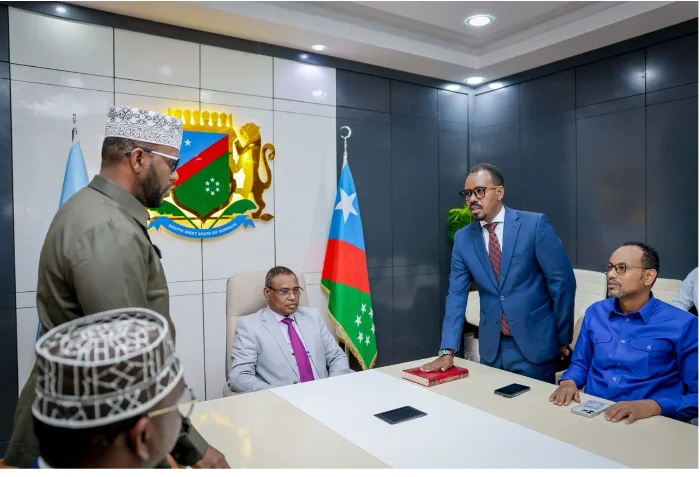
Warsame has been a consistent critic of the federal government’s approach to major national agreements. He previously condemned the Federal Government’s unilateral appointment of an interim administration for South West State, describing the executive action as a blatant and illegal breach of both the Federal and State Constitutions.
At that time, the MP accused President Hassan Sheikh Mohamud of strategically planning interventions to secure his own future re-election and warned that such actions seriously undermine years of work dedicated to national reconciliation and the state-building process founded on power-sharing.
Opposition Political Coordination
Warsame’s criticism comes amid broader political coordination among opposition figures. In October 2025, key opposition figures jointly announced the formation of the Somalia Future Council, a unified platform aimed at steering the country through its next phase of political transition.
The declaration followed a high-level meeting in Nairobi bringing together Puntland President Said Abdullahi Deni, Jubbaland President Ahmed Madobe, former Prime Ministers Hassan Ali Khaire and Abdi Farah Shirdon, and Warsame himself [citation:1]. The group emphasized that the initiative seeks to consolidate national efforts, promote political inclusivity, and present a coordinated front ahead of political negotiations.
The Nairobi dialogue centered on “uniting and strengthening their stance” while pushing for broader negotiations to build nationwide consensus on Somalia’s electoral roadmap.
Transparency Group Issues Warning on Oil Resources
Warsame’s concerns align with warnings issued by governance watchdogs. The Somalia Transparency Initiative has cautioned that while the arrival of the Çağrı Bey indicates tangible progress toward oil production, severe risks stem from improper resource management.
The watchdog organization called on federal authorities to maintain absolute transparency through the immediate public disclosure of oil contracts, the clarification of corporate ownership structures, and the implementation of clear, accountable revenue management systems to safeguard national interests.
The alert from the Somalia Transparency Initiative underscores a commonly acknowledged global hazard known as the “resource curse” — a phenomenon where resource-rich developing nations face rampant corruption, economic disparity, and political instability rather than widespread prosperity.
Parliamentary Oversight Concerns
The lack of legislative scrutiny over major resource agreements has been a recurring theme. In October 2025, Minister of Petroleum and Mineral Resources Dahir Shire met with Speaker of Parliament Sheikh Adan Mohamed Nur Madobe to discuss strengthening legislative support for the country’s petroleum sector.
Shire emphasized at that time that strong parliamentary engagement is essential to advancing resource governance, transparency, and equitable benefit-sharing among all Somali citizens. Speaker Madobe reaffirmed Parliament’s commitment to supporting the ministry’s reform efforts, highlighting the importance of sound laws and oversight mechanisms that attract responsible investment and protect national interests.
Warsame’s Record on Governance and Transparency
The Wadajir Party leader has consistently advocated for transparency and accountability in Somali governance. In October 2025, he warned that forced evictions of vulnerable families in Mogadishu risked creating a humanitarian and security catastrophe, stating that the government’s campaign was “handing Al-Shabaab a powerful recruitment tool on a silver platter”.
He has also jointly called for an end to armed conflicts and urged the Somali government to refrain from involving the national army in politically motivated conflicts, warning that such actions could undermine national unity and stability.
Warsame has joined former President Sharif Sheikh Ahmed and former Prime Minister Hassan Ali Khaire in condemning the “illegal sale, transfer, and modification of public property”, emphasizing that such actions constitute a serious violation of Somalia’s sovereignty and laws.
Government Response and Official Denials
The Somali government has previously moved to contain public criticism over the Turkey energy partnership. Official sources have stated that claims alleging the Turkish government is unilaterally benefiting from Somalia’s natural resources are “baseless and fall within disinformation campaigns aimed at distorting facts and undermining the existing cooperation between the two countries.”
Official sources have clarified that the joint agreement signed between Turkish Petroleum Corporation (TPAO) and the Somali Petroleum Authority explicitly stipulates that natural resources belong to the Somali people, and that exploration and production operations are conducted in accordance with national legal frameworks.
Concerns Over Federal and Regional Tensions
Within Somalia’s complex federal framework, analysts warn that conflicts over resource authority between the central administration in Mogadishu and regional member states could rapidly escalate. This risk is especially high when revenue distribution arrangements are legally ambiguous or viewed as inequitable by local populations.
The drilling vessel Çağrı Bey is expected to commence operations offshore from Galmudug state, drilling the Curad-1 well at a target depth of 7,500 meters — ranking among the deepest offshore drilling efforts globally.
As Warsame and other opposition figures continue to raise concerns over transparency and parliamentary oversight, the eventual outcome of Somalia’s oil exploration will be determined by the quality of domestic governance, robust supervision, inclusive revenue administration, and deep institutional collaboration to guarantee that oil functions as a national benefit rather than a catalyst for political discord and inequality.