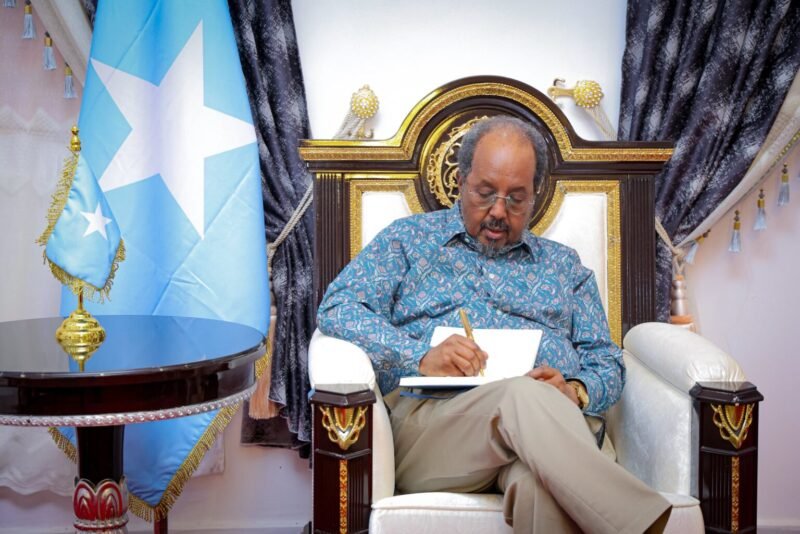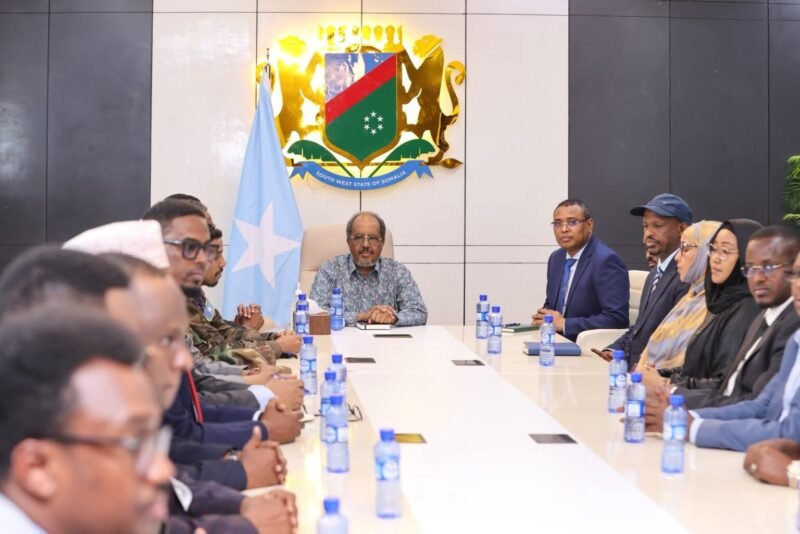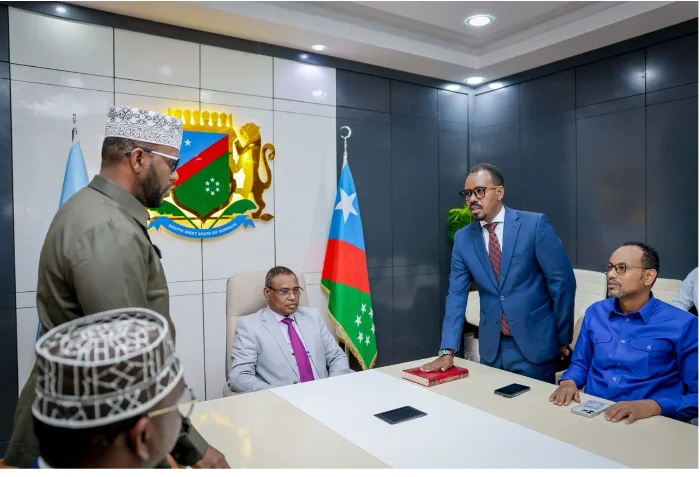
BAIDOA, Somalia — Somali President Hassan Sheikh Mohamud has concluded an extensive visit to Baidoa aimed at solidifying his political support and managing a precarious transition after the federal government’s military operation to seize control of the South West State capital.
The president’s trip occurred shortly after Abdiasis Laftagareen stepped down as regional leader on March 29, fleeing to Kenya when heavily armed Somali National Army forces and allied clan militias overtook the city. Laftagareen’s resignation followed intense, closed-door negotiations with federal officials, who granted him permission to travel abroad without legal restrictions before he boarded a flight to Nairobi.
Leadership Succession Race
The federal intervention has sparked a fierce competition for leadership within Mohamud’s closest associates. Candidates vying for the regional presidency include federal parliamentary speaker Adan Mohamed Nur, Ports Minister Abdulkadir Mohamed Nur, and Livestock Minister Hassan Elay.
Speaker Adan Mohamed Nur (Madobe) has issued a strong call for unity and cooperation among residents of South West State, emphasizing that broad public support is crucial for strengthening stability and governance in the region during this transition. Speaking upon his arrival at Shati Gaduud Airport in Baidoa, the speaker urged local communities to work closely with authorities to advance peace and regional development.
Observers suggest the outcome will likely depend on the president’s personal backing as he works to strengthen federal authority over this semi-autonomous territory.
Electoral Timeline Announced
To legitimize the power transfer, the National Electoral Commission has scheduled parliamentary and district council elections for April 28.
“These elections represent a significant advancement in guaranteeing public involvement and democratic progress in the Southwest,” Commission Chairperson Abdikarin Hassan said, confirming the voting will employ a direct “one-person, one-vote” system.
Allegations of Violence
Nevertheless, the federal authority’s expansion has drawn accusations of unlawful killings. Mahad Abdirahman, the recently dismissed chief of the regional Custodial Corps, has alleged that two civilians belonging to the clan of ousted leader Laftagareen were killed and their bodies burned inside Speaker Madobe’s Baidoa home in what he described as a reprisal attack. The allegations currently remain independently unverified.
Abdirahman also addressed the lack of armed resistance from regional troops, explaining that local forces chose a strategy of survival rather than direct confrontation, noting they were vastly outgunned by a larger federal contingent backed by military aircraft and heavy armored vehicles.
He stated that roughly 2,000 former regional fighters who remain loyal to Laftagareen are currently stationed in nearby Awdinle in a strict defensive posture, with no intention of attacking Baidoa but prepared to defend themselves if federal forces attempt a similar offensive.
Security Conference and Al-Shabaab Threat
At a concluding security conference with senior police and intelligence officials, President Mohamud emphasized the necessity of coordinated measures to prevent the Al-Qaeda-affiliated militant group Al-Shabaab from capitalizing on the political instability.
The meeting, attended by senior military and security officials, focused on stabilizing the Southwest region following recent political upheaval and escalating security threats. According to officials, the president received detailed briefings on plans to intensify operations against Al-Shabaab, strengthen coordination among security agencies, and restore public order in Baidoa.
“We must work together to ensure security and bring all armed forces under official command,” the president told participants, stressing the importance of rebuilding public confidence in state institutions.
High-Stakes Gamble for Federal Government
The planned April elections present a significant gamble for the federal administration. If successful, they would signal an uncommon shift from negotiated power-sharing arrangements to direct electoral processes in one of Somalia’s most strategically important regions.
Analysts say the future of South West State now hinges on President Mohamud’s strategy: whether he will pursue a path of inclusive dialogue to maintain peace or continue a centralized push for political control that risks provoking a regional confrontation.
The scheduled April polls will be closely watched as a critical test of Somalia’s efforts to institutionalize democratic processes and expand direct voting across federal member states.