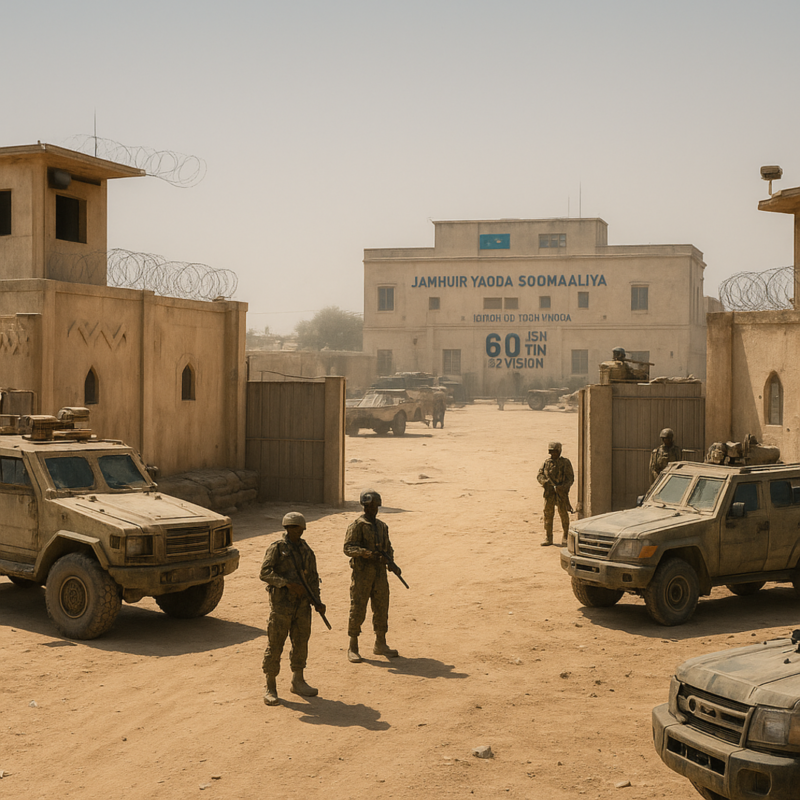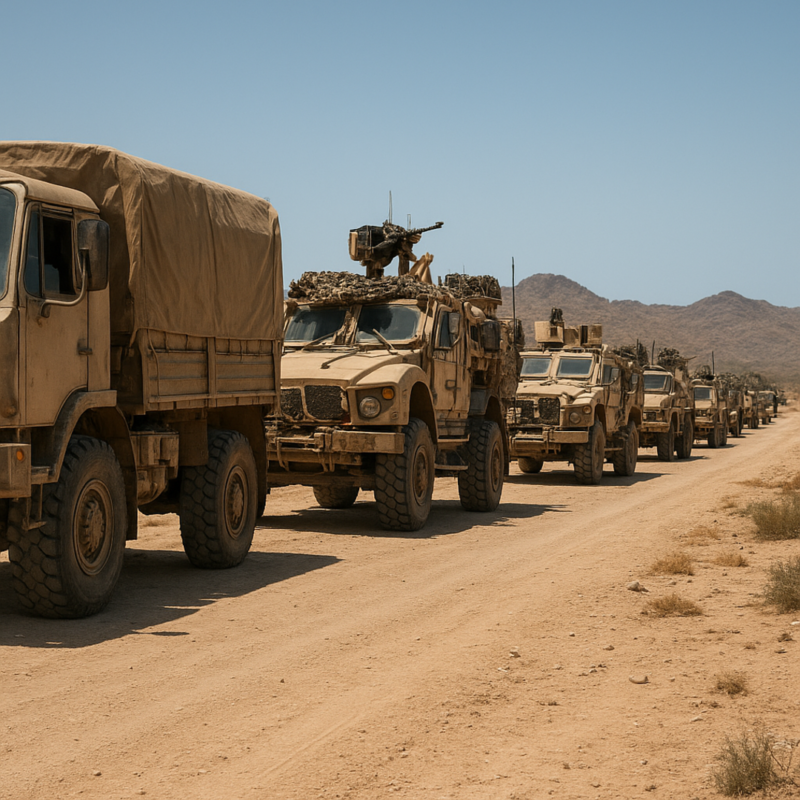
MOGADISHU — Somalia’s federal government has rapidly transported heavy military equipment to the central town of Dhusamareb. Following the recent ousting of a prominent regional official, political commentators believe this strategic step is explicitly designed to aggressively strengthen central authority throughout the federal member states.
Deployments to Galmudug
The armaments, delivered Saturday under strict federal supervision, will reportedly equip approximately 1,000 newly trained soldiers currently stationed near Dhusamareb, the administrative center of Galmudug. This deployment comes shortly after the federal government airlifted additional troops to the nearby district of Guriel. Regional analysts suggest these coordinated actions indicate robust preparations by Mogadishu to extend direct control over the strategic region and potentially reshape its leadership structure.
These intense military developments occurred less than a week after the dramatic military ousting of Southwest State President Abdiaziz Laftagareen, an event that has triggered widespread speculation about similar federal interventions in other areas.
The Precarious Position of President Qoorqoor
Attention has now heavily focused on Galmudug President Ahmed Abdi Qoorqoor. Although he originally came to power with the backing of former President Mohamed Abdullahi Farmajo, Qoorqoor has recently aligned himself closely with current President Hassan Sheikh Mohamud. Qoorqoor has actively backed major federal initiatives, including his vocal endorsement of the government’s highly contentious push for a single-vote (1P1V) electoral system.
Despite this strategic alignment, his political position remains highly precarious. Mahad Salad, the powerful Director General of the National Intelligence and Security Agency (NISA) and a close presidential associate, is increasingly viewed by political analysts as a highly likely successor to the Galmudug presidency. Qoorqoor is scheduled to visit Mogadishu in the coming days for urgent discussions with federal authorities, where he is expected to heavily emphasize his continued support for the federal agenda in an attempt to secure his position.
Regional Pressures and Constitutional Deadlines
Commentators suggest similar political pressure could soon envelop Hirshabelle State. Some observers anticipate the federal government might implement limited universal suffrage elections in specific districts—mirroring a recent municipal vote in Mogadishu that was completely boycotted by opposition groups—to directly influence regional leadership outcomes. Unverified reports even suggest one regional leader has demanded a $2 million settlement in exchange for stepping down and not contesting future elections.
The intricate political maneuvers in central Somalia coincide with ongoing federal efforts to manage the fallout in Baidoa, where federal troops assumed full administrative control last week following a massive military mobilization. Since the takeover, troubling videos have circulated on social media appearing to display widespread looting, alongside concerning reports of retaliatory attacks targeting officials connected to the previous administration.
This aggressive federal push for regional consolidation comes against a strict, ticking constitutional clock. The Federal Parliament’s authority is set to officially expire on April 14, with the President’s term concluding on May 15. Formidable opposition figures, alongside the powerful leaders of Puntland and Jubaland, have fiercely criticized the federal government’s unilateral approach.
They have firmly cautioned that without a comprehensive, consensus-based political agreement on an electoral schedule before the President’s term ends, they may move to establish a parallel national administration, threatening to plunge the country into a severe constitutional crisis.