MOGADISHU — The Federal Government of Somalia, led by President Hassan Sheikh Mohamud, has initiated a new welfare program for families of deceased soldiers, coinciding with the 66th anniversary of the Somali National Army.
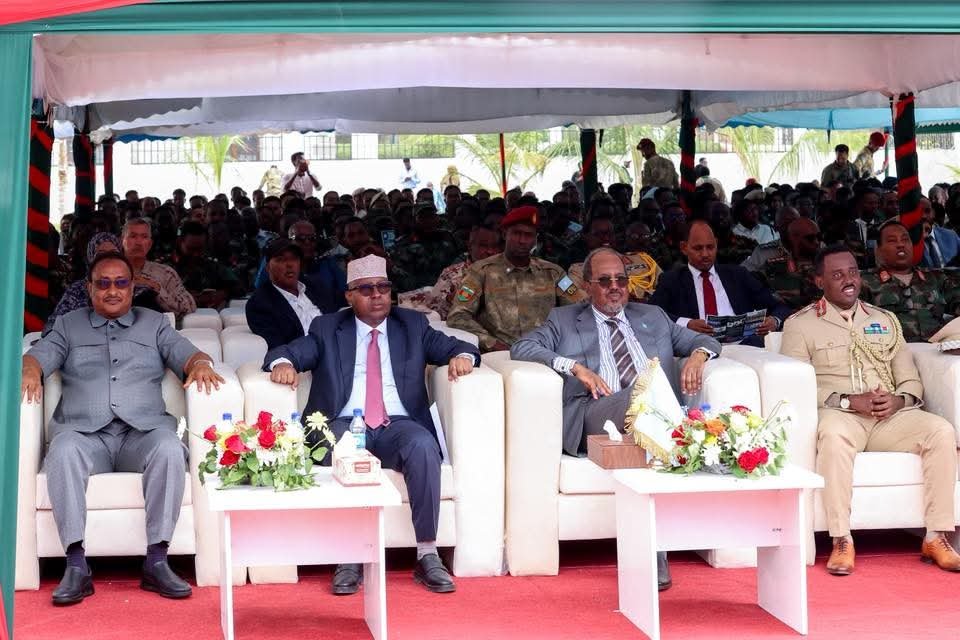
President Mohamud, along with Defense Minister Ahmed Moallim Fiqi and army chief Brigadier General Ibrahim Mohamed Mohamud, laid the groundwork for the Somali National Army Orphans Care Agency headquarters in Mogadishu during Sunday’s commemorative event.
New Agency to Support Military Families
The cabinet-approved agency is established to offer educational resources, care services, and ongoing welfare assistance to children of soldiers who lost their lives in combat operations, according to officials.
This initiative seeks to acknowledge the contributions of military personnel while enhancing institutional backing for their families, particularly children affected by conflict.
The announcement follows ongoing government efforts to reconstruct and enhance the capabilities of the armed forces during continuous operations against Al-Shabaab, which has experienced territorial losses in recent military advances.
Military Parade and Anniversary Celebrations
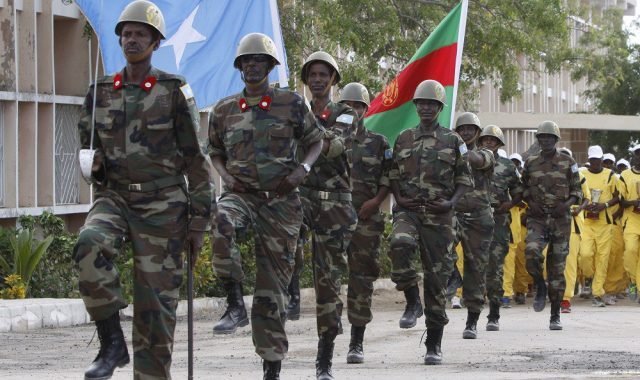
In conjunction with the welfare program, Somalia conducted a military parade in the capital, displaying troops and hardware as part of the annual celebration of the army’s establishment in 1960.
These events collectively honored past sacrifices and demonstrated renewed dedication to improving the well-being and effectiveness of Somalia’s security forces.
Recent Military Achievements
The anniversary comes amid significant military successes for the Somali National Army. Defense Minister Ahmed Moallim Fiqi recently confirmed that government forces have fully secured the strategic arterial road connecting Mogadishu and Baidoa, marking a major development in ongoing national military operations.
“The road is now secure for civilian travel, reestablishing essential transportation between the capital and the Bay region,” Minister Fiqi stated in a national television interview.
Somali National Army Commander Brigadier General Ibrahim Mohamed Mahmoud issued sweeping rank promotions to frontline troops who successfully executed the mission to reopen the vital route, which had suffered under a strict Al-Shabaab blockade since 2009.
“From the depths of my heart, I extend my deepest gratitude. To the best of my ability, I have promoted each of you by one rank, and those officers who led you will receive identical advancements,” Commander Mahmoud stated during a military briefing in Baidoa.
Command Transition and Security Coordination
Prime Minister Hamza Abdi Barre, joined by Defense Minister Fiqi, led the formal command transition ceremony for the Somali National Army in February 2026, marking the official handover of duties from outgoing Chief of Defence Forces Major General Odowaa Yusuf Raage to incoming commander Brigadier General Ibrahim Mohamed Mohamud.
During that ceremony, the Prime Minister instructed the new commander to intensify efforts in rebuilding the army structure, with a focus on national defense, preserving unity, and the total eradication of militant groups.
Commander Mahmoud has also convened high-level security meetings with African Union Support and Stabilisation Mission in Somalia (AUSSOM) leadership to strengthen strategic cooperation and operational partnerships as the country navigates a complex security transition.
Commitment to National Security
The federal government has in recent years prioritized rebuilding the armed forces as part of broader efforts to stabilize Somalia and transition security duties from international partners to national institutions.
Somalia’s military leadership and the African Union mission have agreed to expedite the implementation of the Security Transition Plan and significantly intensify joint military operations against militant groups across the country.
The new orphans care agency represents an additional pillar of the government’s commitment to supporting those who have sacrificed their lives for the nation’s security and stability.