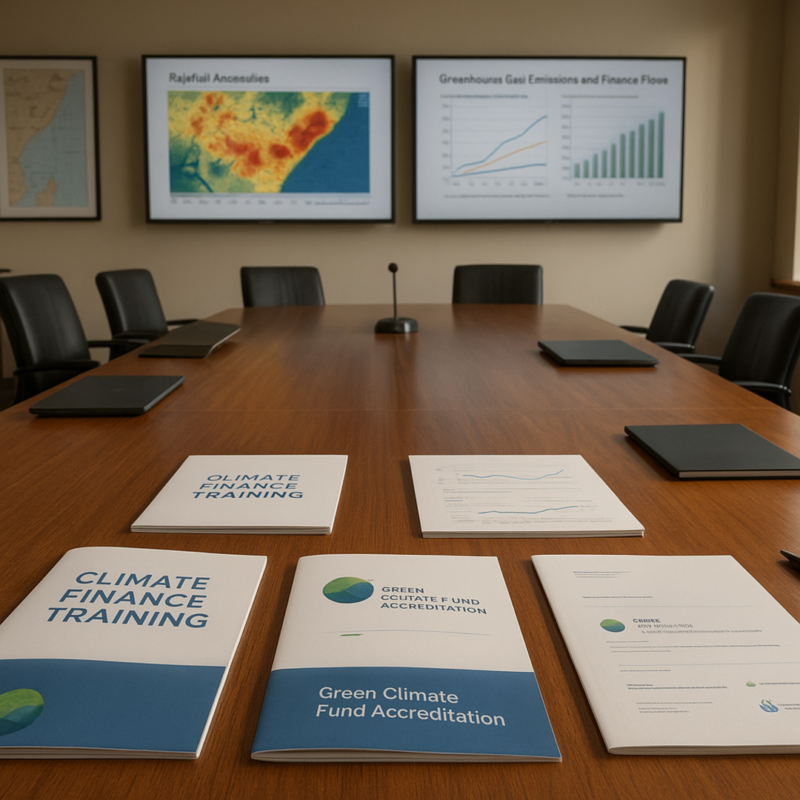
NAIROBI — The Somali National Climate Fund has commenced a significant training initiative in Nairobi, Kenya, focused on enhancing Somalia’s ability to secure international climate funding, officials announced this week.
The Green Climate Fund Direct Access Accreditation Training Program, established through collaboration with the Green Climate Fund (GCF), brings together key national institutions and stakeholders to improve their preparedness for direct accreditation, according to a statement from the Somali National News Agency (SONNA).
Building Institutional Capacity for Climate Finance
The initiative concentrates on providing Somali institutions with the expertise and infrastructure necessary to independently obtain and administer climate resources. Key participants include Somalia’s Ministry of Finance and the Somali Development and Reconstruction Bank, both of which have been selected for the accreditation process. Other national entities with possible accreditation prospects are also involved.
The curriculum addresses vital topics including fiduciary standards, environmental and social protection measures, gender considerations, institutional readiness, and the accreditation pathway. Additionally, the program creates a forum for dialogue and partnership, allowing organizations to synchronize their approaches and enhance coordination.
Previous Efforts to Secure Climate Funding
The Nairobi training follows similar capacity-building efforts in Mogadishu earlier this year. In February, the Federal Government commenced a four-day high-level technical workshop in the capital focused on enhancing the nation’s ability to obtain international climate financing.
That workshop, launched by Liban Absiye, Executive Director of the National Climate Fund, centered on the programming framework of the Green Climate Fund and the validation of two key documents: the Readiness Needs Assessment (RNA) and the Private Sector Engagement Strategy (PSES).
“Enhancing financial preparedness is vital for Somalia as it deals with environmental deterioration,” Absiye emphasized at the February workshop.
Empowering National Institutions
Officials describe the current Nairobi initiative as a substantial advancement toward establishing a resilient climate finance structure in Somalia, enabling national entities to assume primary responsibility for obtaining and efficiently deploying climate funding resources.
The training program aims to align Somalia’s national priorities with global climate funding mechanisms, ensuring the country is well-positioned to secure necessary resources to address environmental challenges such as persistent droughts and floods.
Attendees and collaborators were recognized for their dedication to improving Somalia’s climate adaptability and positioning the nation to more effectively take advantage of worldwide climate finance arrangements.