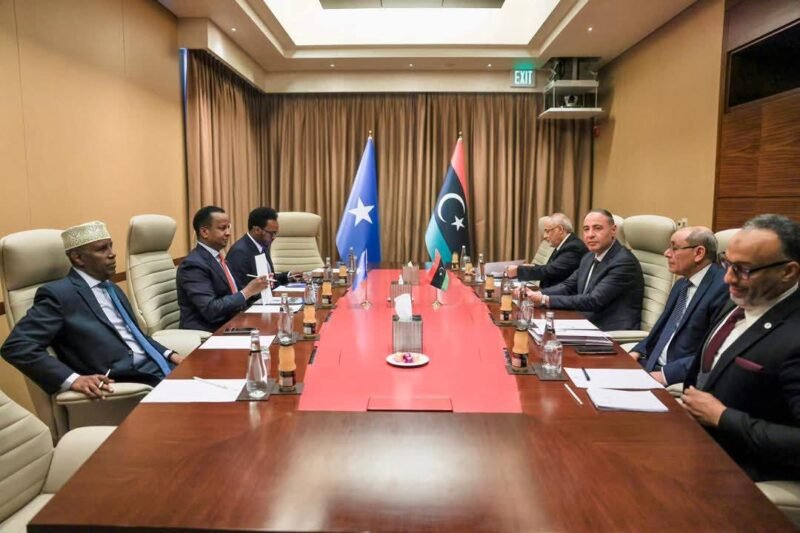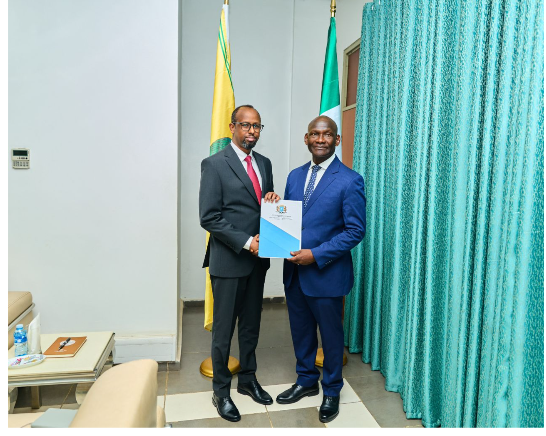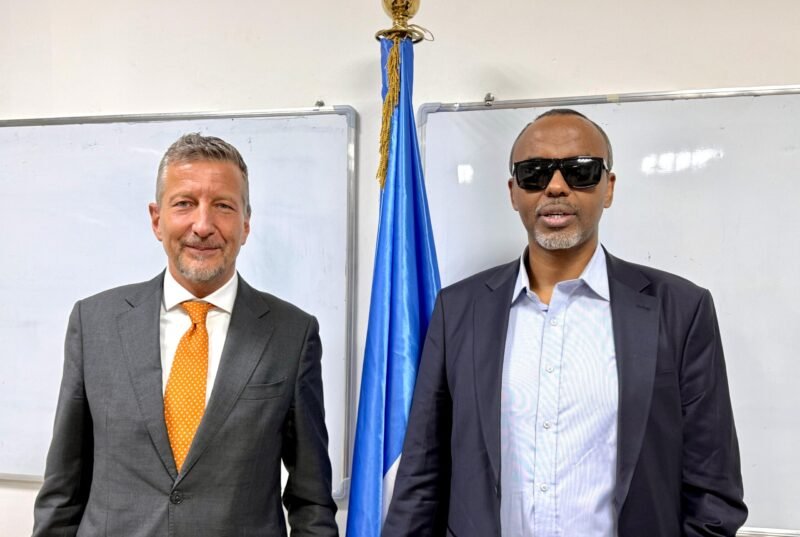
MOGADISHU — The Federal Government of Somalia has officially proposed renewing a long-standing bilateral agreement that would allow the United States military to utilize its national ports and airports. The move is a strategic effort to cement Mogadishu’s position as Washington’s only legitimate security partner in the region, directly countering competing proposals from the breakaway region of Somaliland.
According to a Monday report by Bloomberg, the federal offer revives a historic cooperation framework originally established in 1980. The proposal arrives at a critical juncture, as global powers rapidly increase their security involvement in the Horn of Africa—a region highly valued for its strategic position at the entrance to the Red Sea and its proximity to the ongoing conflict zone in Yemen.
Asserting Federal Sovereignty
“Somalia and the US have an existing cooperation framework, including a 1980 pact on port and airport access for US military needs,” stated Ali Mohamed Omar Balcad, Somalia’s State Minister for Foreign Affairs. “The federal government has recently proposed renewing this agreement, which remains the proper and legal avenue for any security collaboration.”
Somalia’s proactive diplomatic action comes just days after a senior official in Somaliland indicated the self-governing region was willing to provide the United States with exclusive access to critical mineral resources and military facilities as part of a wider initiative to secure formal international recognition.
Mogadishu considers Somaliland an inseparable part of its sovereign territory. The geopolitical landscape was significantly complicated in December when Israel became the first UN member state to formally acknowledge Somaliland as an independent nation, triggering fierce condemnation from the Federal Government.
A Crowded Strategic Corridor
In response to shifting regional dynamics, foreign governments such as Turkey, Egypt, and Saudi Arabia have drastically strengthened their military connections with Somalia over the past year. These nations are drawn by Mogadishu’s strategic location along some of the world’s most vital maritime trade routes. Just across the Gulf of Aden in Yemen, Houthi militants have persistently threatened major shipping channels, further elevating the region’s overall geopolitical importance.
For Washington, its longstanding engagement with Somalia has primarily concentrated on conducting precise counterterrorism operations against the Al-Qaeda-affiliated Al-Shabaab militant group and localized fighters associated with the Islamic State. Recently, the US reaffirmed its “One Somalia” policy while delivering heavy weapons to support the Somali National Army’s ongoing offensives.
A Warning to External Actors
Concluding his remarks, State Minister Balcad issued a stern warning to international partners, stressing that only Somalia’s recognized federal authorities possess the constitutional mandate to establish binding agreements regarding the country’s territory and natural resources.
“Somalia’s position is clear: all agreements involving Somalia’s territory, ports, airspace, or strategic natural resources must be negotiated through the constitutional institutions of the Federal Republic of Somalia,” Balcad declared. “Any declaration by a regional administration suggesting ‘exclusive rights’ in the minerals sector, or attempting to bind external parties, lacks legal standing.”