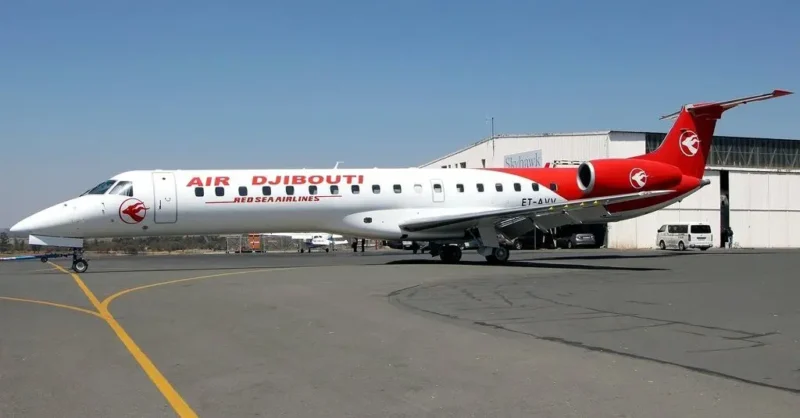
Authorities in the self-declared republic of Somaliland have blocked Djibouti’s flag carrier from landing in the territory, sharply escalating a diplomatic dispute that intensified after Israel recognised Somaliland last month.
The carrier had been running four weekly flights to Somaliland, largely into the capital, Hargeisa.
The ban follows a series of reciprocal diplomatic steps. Somaliland recently pulled its representative from Djibouti, while Djibouti announced the closure of Somaliland’s liaison office, which had operated since 2012.
Djibouti tied its actions directly to Israel’s recognition of Somaliland, calling the move illegitimate, contrary to international law and unacceptable.
Djiboutian authorities have adopted the firmest position among regional nations, contrasting with Kenya and Ethiopia, which have remained largely silent.
Djibouti’s president, a close ally of Somali President Hassan Sheikh Mohamud, has become a leading regional critic of Israel’s decision. Djibouti delivered a strong response at the UN Security Council, signalling determined opposition. Many observers say the liaison office closure was likely done at Somalia’s federal government request.
The deterioration in Djibouti–Somaliland relations is also raising serious security concerns, especially in Somaliland’s western Awdal region. Over a dozen people died last week during violent protests in the regional capital, Borama.
Fears are growing that the diplomatic standoff could worsen already fragile clan relations across Awdal. Some analysts warn Somalia’s federal government may leverage Djibouti’s influence and territory to arm Somaliland opponents in the area, aiming to weaken Somaliland’s control and reduce it to a de facto one-clan enclave.
Somaliland has already lost large parts of Sool region, which it claims as its territory. Those areas are now under the control of a recently created North Eastern State, aligned with Somalia’s federal government.
Amid current tensions, calls are increasing for Somalia’s government to establish a similar federal state in Awdal, using Djibouti’s border access and political backing. However, some analysts caution such a step could complicate an already volatile regional landscape.