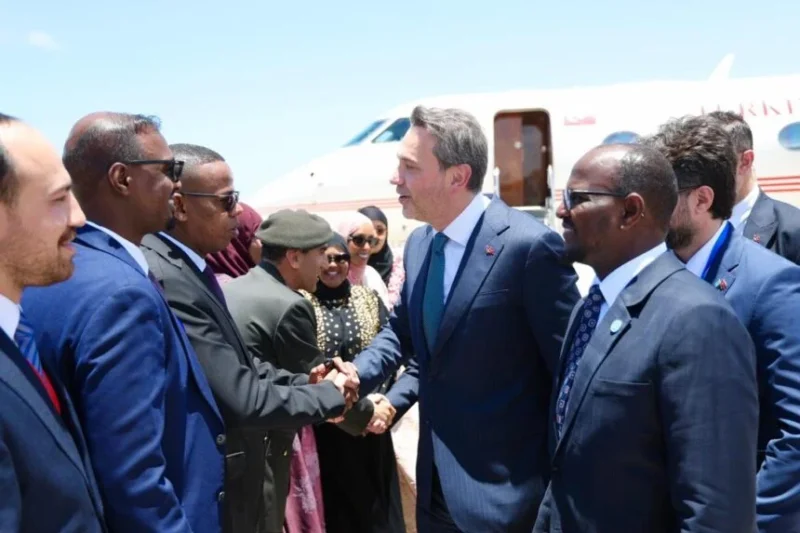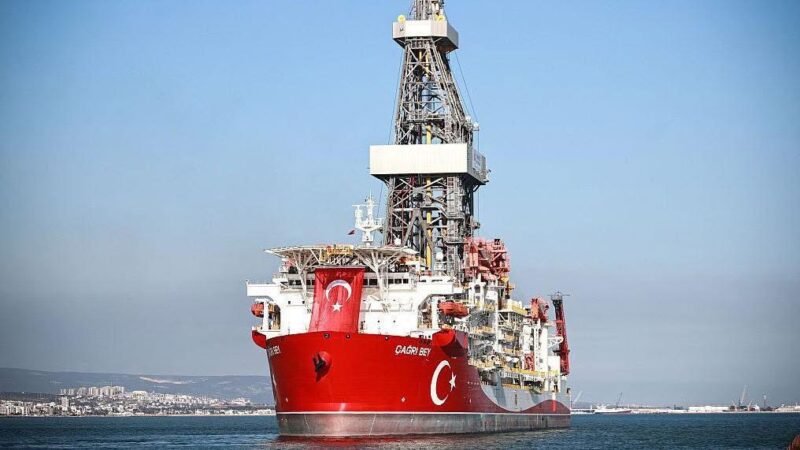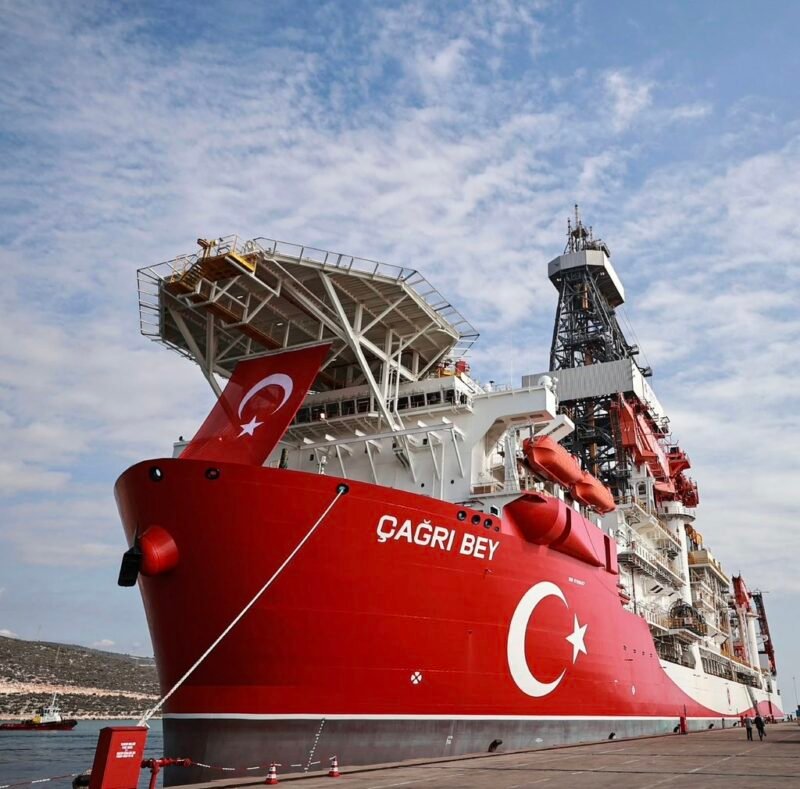
MOGADISHU — The Turkish deep-sea drilling vessel Çağrı Bey has arrived in Mogadishu, marking a historic milestone for Somalia’s entry into offshore oil exploration, officials confirmed Thursday.
The vessel docked at the Port of Mogadishu, where Somali officials are expected to host a formal welcoming ceremony before it commences drilling operations off the nation’s central waters. Turkey’s Energy and Natural Resources Minister, Alparslan Bayraktar, confirmed the vessel’s arrival on social media, describing the mission as opening “a brand new chapter in the energy history of both Turkey and Somalia”.
World’s Second-Deepest Offshore Well
According to the Turkish Ministry of Energy, the Çağrı Bey is scheduled to depart next week for Galmudug state, where operations will commence after months of preparation. The vessel is expected to drill the Curad-1 well, located approximately 372 kilometers off the coast of Mogadishu.
The target drilling depth is 7,500 meters, which would make Curad-1 the world’s second-deepest offshore oil well ever attempted, a technically challenging project that highlights both the magnitude of the operation and its importance. The drilling operation is projected to last 288 days and represents Turkey’s first such endeavor beyond its national borders.
Groundwork Laid by Seismic Surveys
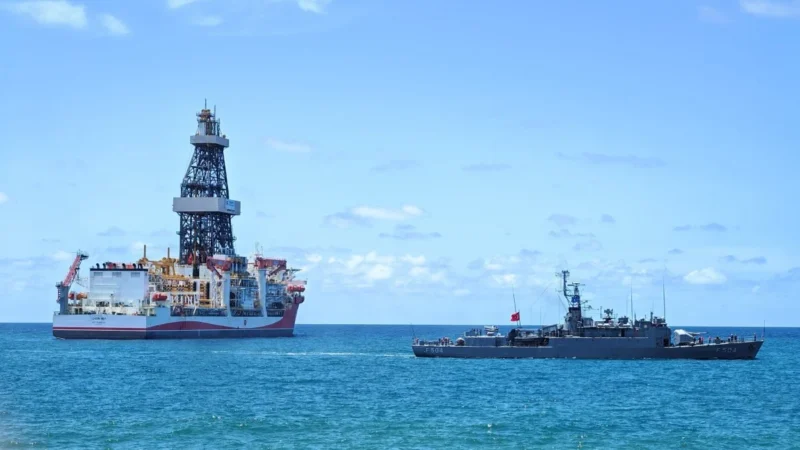
The arrival of the Çağrı Bey follows extensive preparatory work by the Turkish research vessel Oruç Reis, which conducted comprehensive 3D seismic surveys in Somali waters between 2024 and 2025. In October 2025, officials involved in the exploration collaboration confirmed that data analysis from the seismic surveys along the Galmudug coastline was in its final stages, with results scheduled for public release in December 2025. Early indications from the study raised hopes of substantial oil reserves beneath Somalia’s territorial waters.
The 3D seismic survey, conducted by the Oruç Reis, was on track to be completed by the end of 2025, mapping potential oil and gas reserves off Somalia’s coast, particularly near Galmudug.
Historic Energy Milestone
The commencement of active offshore drilling operations represents a strategic victory for the federal administration, demonstrating Mogadishu’s success in leveraging its bilateral alliance with Ankara to secure advanced technological infrastructure.
“This is a historic milestone in our offshore energy journey. A new chapter begins,” Shire stated.
The Çağrı Bey drillship, formerly known as the West Draco, represents a highly sophisticated deep-sea drilling platform managed by the Turkish Petroleum Corporation. After being launched in 2024 to enhance Turkey’s offshore exploration capacities, the vessel is now embarking on its first major foreign assignment in Somalia.
Economic Potential and Governance Concerns
Analysts suggest that successful results could establish Somalia as an oil and gas producer within five years, potentially transforming its economic path. International estimates suggest Somalia possesses billions of barrels of untapped petroleum reserves.
Nevertheless, uncertainties persist. The Somalia Transparency Initiative has warned that while the arrival of the Çağrı Bey indicates tangible progress toward oil production, severe risks stem from improper resource management.
The watchdog organization called on federal authorities to maintain absolute transparency through the immediate public disclosure of oil contracts, the clarification of corporate ownership structures, and the implementation of clear, accountable revenue management systems to safeguard national interests.
“The urgency of these localized relief programs cannot be overstated,” the Transparency Initiative stated, cautioning against the “resource curse”, a phenomenon where resource-rich developing nations face rampant corruption, economic disparity, and political instability rather than widespread prosperity.
Within Somalia’s complex federal framework, analysts warn that conflicts over resource authority between the central administration in Mogadishu and regional member states could rapidly escalate, especially when revenue distribution arrangements are legally ambiguous or viewed as inequitable by local populations.
Geopolitical Significance
The drilling mission comes amid intensifying geopolitical competition in the Horn of Africa. The project follows agreements signed in 2024 between Somalia and Turkey covering both onshore and offshore oil and gas exploration, with a Production Sharing Agreement concluded in 2025 creating the legal and commercial structure to guide exploration activities, infrastructure development, and profit distribution mechanisms.
Turkey has been progressively strengthening its strategic bilateral relations with Somalia for more than a decade, including the operation of a military training base in Mogadishu established in 2017.
It remains unclear how authorities would handle the potential benefits of a discovery, as Somalia continues to face persistent corruption and ongoing disputes over resources, obstacles that have historically hindered attempts to convert natural wealth into widespread prosperity.