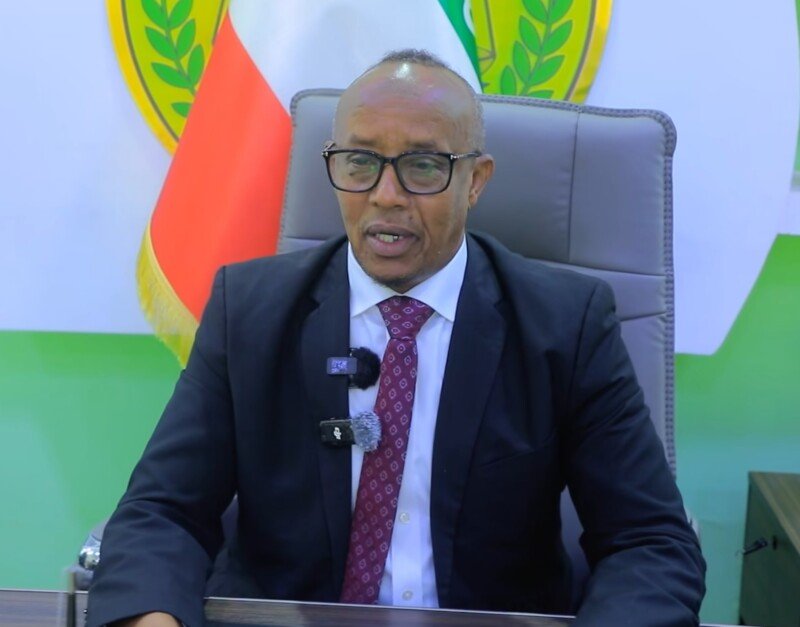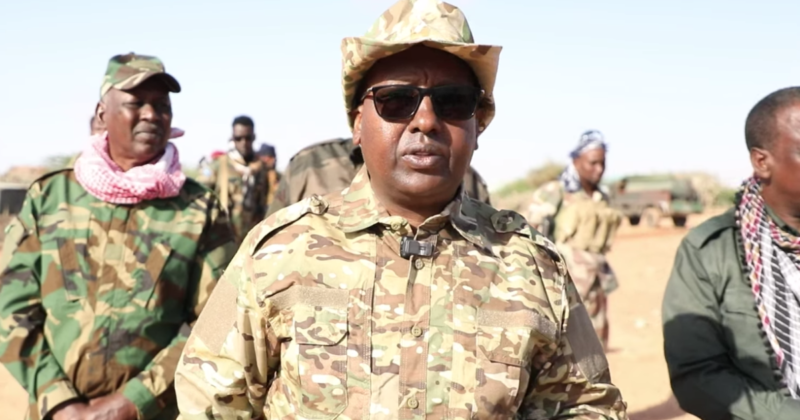
MOGADISHU – Defense Minister Ahmed Moallim Fiqi has accused opposition leaders of collaborating to destabilize the federal government amid escalating tensions following violence in parts of the capital.
In a social media statement, Fiqi claimed certain opposition politicians were partnering with external forces aiming to compromise Somali state institutions and obstruct governmental reforms. The minister offered no substantiating evidence and did not name the nations supposedly involved.
The minister stated that security personnel had successfully controlled the unrest in the city and cautioned against attempts to confront authorities through military action. Fiqi equated the armed factions participating in the disturbances with Sudan’s paramilitary Rapid Support Forces (RSF), which have been engaged in a destructive conflict with the Sudanese military since 2023. He claimed Somali forces had prevented what he termed an effort to destabilize national institutions.
“Some are attempting to mask their activities under the guise of demonstrations or clan mobilization, but their actual goal is to undermine the Somali state,” Fiqi stated. He also called upon young combatants to surrender and enlist in the national security forces, advising them against involvement in actions that might endanger national stability.
Fiqi previously warned opposition groups against mobilizing armed militias ahead of planned demonstrations in early June, saying the federal government would respond forcefully to any attempt to destabilize the country through violence. “We are not attacking the opposition, but if they bring armed militias, we will break their hands,” Fiqi said at that time, while also stating that the government respects peaceful political activity and the constitutional right to protest.
Political Standoff Deepens
The comments emerge during one of the most significant political standoffs in Somalia’s recent history, as relations between the federal administration and opposition factions deteriorate due to disputes over constitutional amendments, electoral processes, and governance reforms.
Intense gunfire and confrontations were reported in various sections of Mogadishu overnight, alarming residents and prompting appeals for moderation from international allies, including the United States and the United Kingdom.
International partners including the UN, African Union, EU, IGAD, the United States, and the United Kingdom have urged renewed dialogue between the Somali government and opposition groups following the collapse of US and UK mediated talks. The negotiations ended without a breakthrough on May 15, the same day President Hassan Sheikh Mohamud’s four-year term expired under the 2012 Provisional Constitution.
Opposition Rejects Allegations
Opposition figures have dismissed allegations from government representatives, maintaining that their actions are focused on protecting constitutional principles, political liberties, and transparent electoral procedures. They have charged the administration with attempting to silence opposition and limit lawful political engagement.
Former president Sharif Sheikh Ahmed has sharply criticised Hassan Sheikh Mohamud, whose term expired on May 15, accusing him of violating the constitution. Sharif warned that Somalia is entering a dangerous political phase and called for a broad political agreement on elections rather than any attempt to extend the government’s term in office.
Security Concerns and Regional Analysts
The mutual recriminations highlight increasing political polarization in Somalia as the nation simultaneously faces substantial security threats, including persistent military campaigns against the extremist group Al-Shabaab. Security analysts indicate that extended political tensions could divert focus from counterinsurgency operations and potentially complicate wider state-building and governance initiatives supported by international partners.
The Puntland administration has accused President Hassan Sheikh Mohamud of unlawfully remaining in office following the expiration of his four-year term, which it said coincided with the end of the mandates for Somalia’s federal institutions. Puntland maintained that the federal institutions have lost their constitutional legitimacy.
Looking Ahead
As of Thursday, there were no signs that authorities and opposition representatives had initiated fresh discussions to alleviate tensions, though diplomatic representatives and international organizations have persisted in advocating dialogue as the optimal approach to settling the disagreement. The United States and United Kingdom have both issued statements expressing alarm over the violence and calling for restraint.
Western diplomats have reportedly warned that any violence stemming from political disputes could trigger international measures against those deemed responsible, while indicating that Somalia’s state-building efforts could not indefinitely depend on external financial support.
Recommended Reading On ftlsomalia.com:
- Somalia Defense Minister Warns Opposition Against Armed Protests Ahead of June 4 Demonstrations
- International Community Urges Renewed Dialogue Between Somali Government and Opposition Groups
- Ex-Somali Leader Sharif Sheikh Ahmed: Hassan Sheikh Stands Where Political Downfall Could Begin
- Puntland Accuses Hassan Sheikh of Remaining in Office Illegally