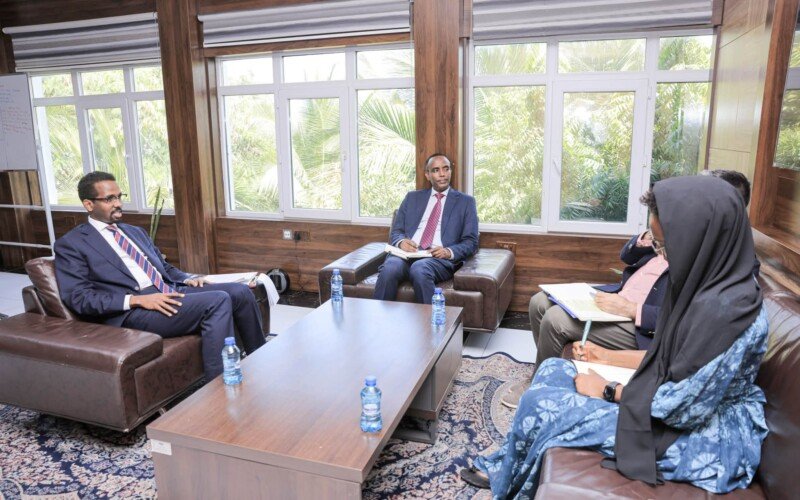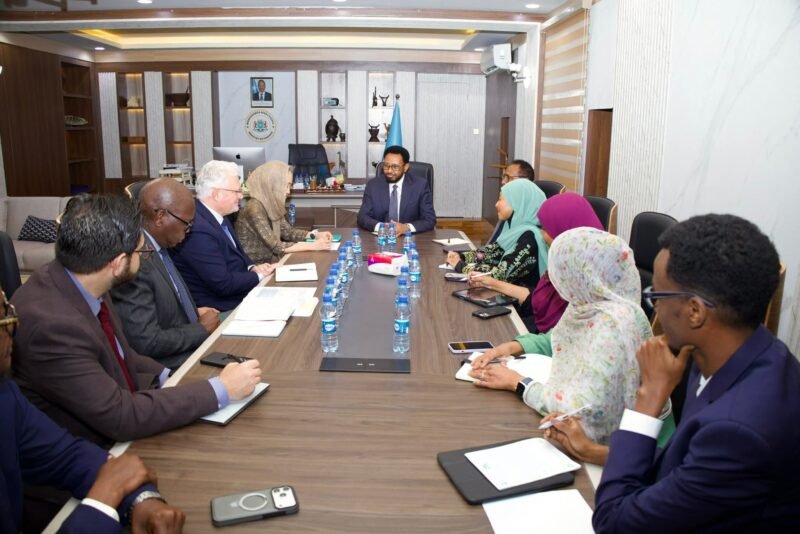
MOGADISHU: The Minister of Finance, Bihi Iman Egeh, conducted a productive meeting at the ministry’s headquarters with a senior United Nations delegation comprising Shoko Noda, Assistant Secretary-General of the United Nations and Director of the Crisis Bureau at the United Nations Development Programme (UNDP), and Lionel Laurens, the UNDP Resident Representative for Somalia.
The conversation focused on current economic developments, with particular attention to the effects of droughts, floods, and climate change on the national economy. Both parties examined optimal strategies for enhancing economic resilience and promoting sustainable development initiatives nationwide. The dialogue highlighted the need to strengthen collaboration between the Federal Government of Somalia and UNDP, with both parties emphasizing the necessity of expediting development programs and fostering recovery and economic expansion.
The meeting follows a recent high-level engagement between UNDP and Somalia. The Federal Government is enhancing its strategic collaboration with the United Nations Development Programme, with talks centered on expanding cooperation in line with Somalia’s national priorities, covering development, election preparedness, and humanitarian response. The UN leadership praised Somalia’s increasing influence at the United Nations Security Council and its recent membership in the East African Community (EAC), recognizing these as important achievements in the nation’s international relations.
Strengthening Somalia-UNDP Partnership
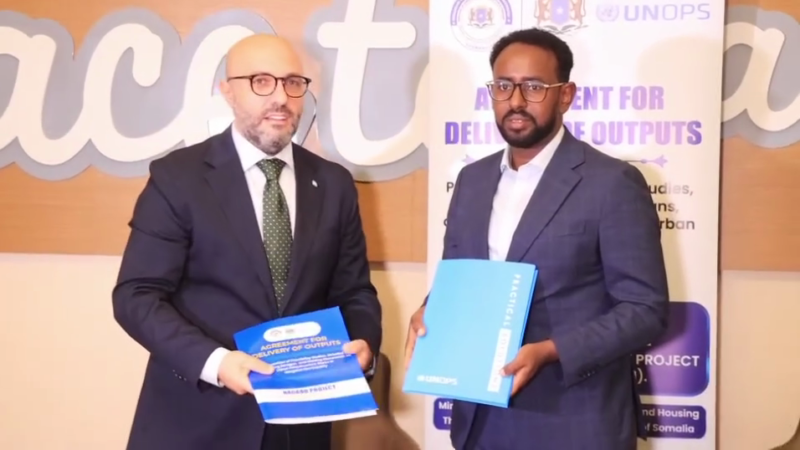
Minister Egeh and UNDP have previously signed a letter of agreement to promote risk-informed and gender-responsive development financing. The agreement was signed in Mogadishu by Minister Egeh and the UNDP Somalia Resident Representative, Lionel Laurens, marking a strategic effort to align Somalia’s public finance architecture with peacebuilding and resilience goals, especially in the context of climate and gender vulnerabilities. “This agreement reaffirms our commitment to inclusive and sustainable financing that responds to the needs of all Somalis,” Egeh said at the signing.
The World Bank has also been a key partner in addressing climate challenges. Minister Egeh held high-level discussions with the World Bank’s Somalia Country team, headed by Country Manager Hideki Matsunaga, earlier this year. A primary focus of that meeting was identifying immediate financial and strategic response measures to tackle the persistent drought conditions impacting vulnerable communities across the country, exploring mechanisms to rapidly mobilize climate financing and emergency response funds.
The Federal Government has consistently prioritized climate resilience in its economic planning. Somalia recently launched a new climate resilience initiative named “Activating Climate Resilient Agricultural Livelihoods in Somalia” (ACALS) to support farmers and pastoralists as the country faces persistent droughts and extreme weather conditions. The program, supported by the African Development Bank and implemented by the World Food Programme and UNOPS, aims to assist approximately 30,000 individuals, with particular attention to women and youth.
UNDP Somalia has also been conducting inclusive consultations to shape its Country Programme Document for 2026-2030. The consultations align future priorities with Somalia’s national development agenda and Vision 2060, ensuring that international support complements domestic priorities and avoids administrative overlap.
Economic Reforms and Domestic Revenue Growth
Under Minister Egeh’s leadership, the Ministry of Finance has made significant strides in fiscal reform. Somalia’s domestic revenue has increased by 80 percent over the past three years, attributing the rise to the government’s stronger efforts to enhance internal revenue collection and decrease reliance on foreign aid. “We concentrated on growing domestic revenue instead of relying on external funding. We created new regulations, resulting in an 80 percent rise in domestic revenue over the past three years,” Egeh stated. Officials indicate that the federal government intends to reduce external borrowing and prevent debt accumulation, considering bolstered domestic revenue key to strengthening the country’s fiscal standing and funding operations with minimal donor dependence.
The Federal Government has also formalized major partnerships to boost economic growth. The Federal Government, through the Hormuud Salaam Foundation (HSF), formalized a major partnership with UNDP to accelerate inclusive economic growth, foster entrepreneurship, and open new opportunities for young Somalis. The agreement focuses on job creation, small business development, and sustainable livelihood projects that can reduce dependence on aid while encouraging self-reliance. For many in Somalia, where more than 70 percent of the population is under 30, this partnership represents a pathway for young men and women seeking stability and purpose after decades of conflict.
The Ministry of Finance has actively engaged with international financial institutions to transition from emergency aid dependency to sustainable, long-term economic growth. Minister Egeh traveled to Washington, D.C. to attend the Spring Meetings of the World Bank and the International Monetary Fund (IMF), where he held high-level discussions on economic reforms and private sector investment. The discussions focused on the economic impact of global challenges, including security concerns, shifting geopolitical dynamics, and the effects of climate change, all of which continue to directly influence Somalia’s economic outlook.
The meeting between Minister Egeh and the UNDP leadership underscores the government’s determination to address economic challenges through strategic partnerships and policy reforms. Both sides agreed to continue their close collaboration on development programs, climate adaptation strategies, and economic resilience initiatives. The engagement signals that while international aid is shrinking, the government is methodically integrating external support into its national development architecture, with the National Transformation Plan (NTP 2025-2029) serving as the guiding framework for all development partnerships.