MOGADISHU — Somalia has entered a period of political uncertainty after the mandate of the Federal Parliament officially expired on April 14, possibly triggering a wave of resignations by lawmakers and heightening concerns of a constitutional vacuum.
The four-year terms for both the House of the People and the Upper House ended without a clear electoral roadmap in place, reviving memories of the 2021 political standoff when prolonged disputes over delayed elections escalated into armed clashes on the streets of Mogadishu between the administration of then-President Mohamed Abdullahi Farmaajo and opposition forces.
Government Reassures International Partners
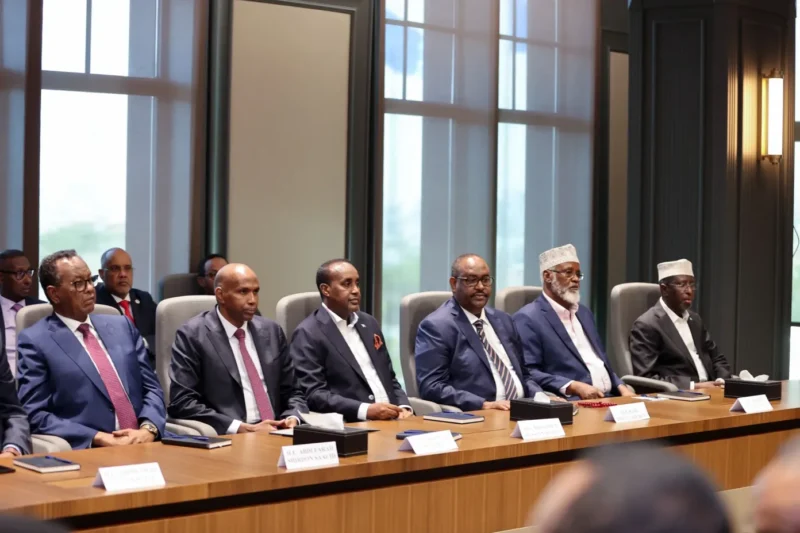
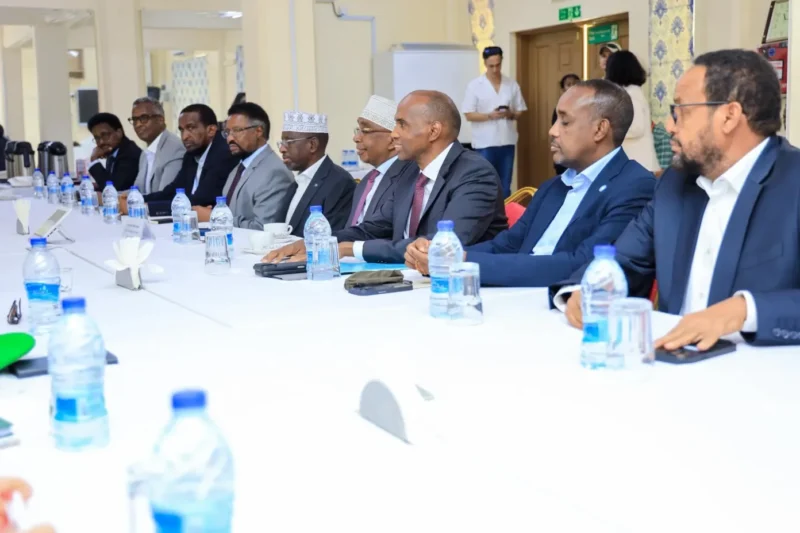
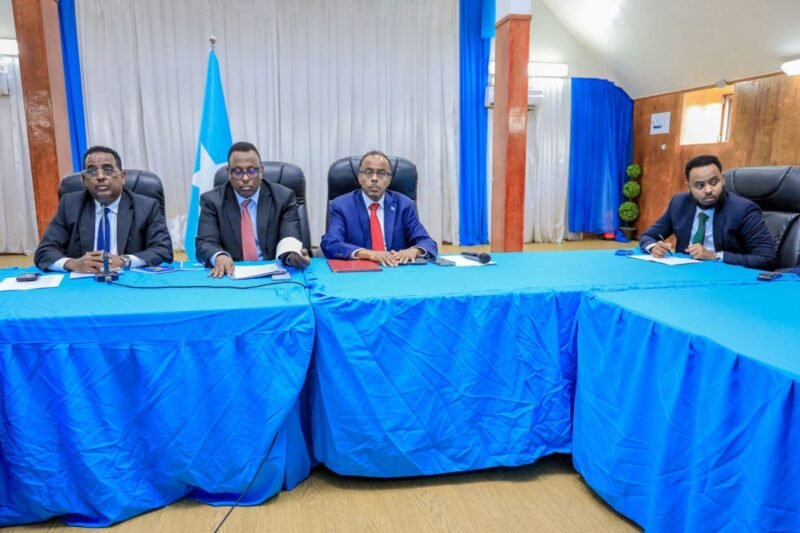
In response to the escalating political crisis, senior Somali officials convened a meeting with foreign ambassadors at the Halane diplomatic compound in Mogadishu to reassure international partners that the government remains within legal parameters.
Interior Minister Ali Yusuf Hosh, Justice Minister Hassan Moalim, and State Minister for Foreign Affairs Ali Omar Mohamed conveyed to diplomats that both the legislature and executive will continue in office for one year after a new constitution came into force in March.
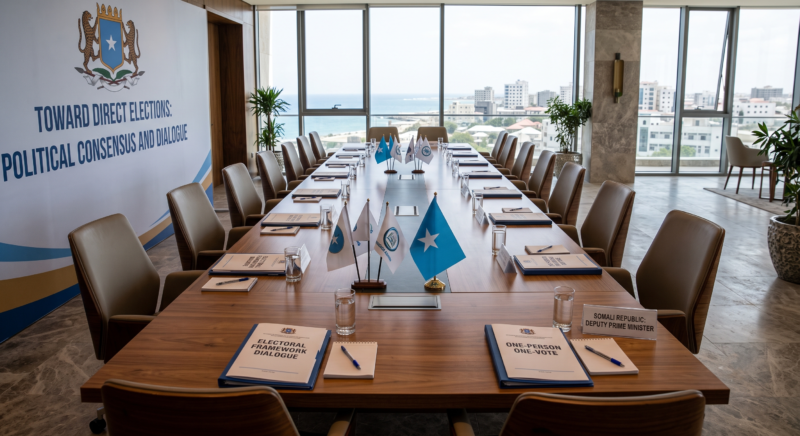
According to officials, the government is proceeding with plans for elections based on one-person, one-vote, beginning at the regional level with state presidents and local councils before progressing to federal polls.
Constitutional Framework and Term Extensions
Speaker of Parliament Adan Madobe has announced that Parliament would extend its stay in office by one year, a move aimed at facilitating the federal government’s transition to a “one-person, one-vote” electoral system.
The speaker, speaking during celebrations marking the adoption of the new constitution, stated that the revised framework extends parliamentary and presidential terms to five years and takes effect immediately, effectively adding another year to the mandates of both institutions.
However, the extension has drawn immediate criticism from opposition figures and regional leaders. Several members of Parliament are possibly considering announcing their resignations as their legal mandate ended.
Opposition Warns of Constitutional Vacuum
In a statement, former President Mohamed Abdullahi Farmaajo warned that Somalia is drifting into a dangerous phase that could undermine national security, unity, and the foundations of statehood amid continuing uncertainty over the electoral process.
He argued that parliament is central to the legality of state institutions, cautioning that with its mandate now expired and no successor legislature in place, the country risks entering legal and institutional ambiguity marked by weakened accountability and potential abuse of power.
Their position is anchored in Somalia’s 2012 provisional constitution, which sets four-year terms for both parliament and the presidency.
A consultative conference in Kismayo held in December 2025 issued a communiqué explicitly rejecting any extensions of constitutional mandates, warning that term extensions would generate political instability, constitutional vacuums, and potential security hazards.
The conference established January 20, 2026, as a deadline for President Hassan Sheikh Mohamud to convene an inclusive national conference with all Somali political stakeholders to resolve electoral and constitutional disagreements.
Electoral Model Dispute Remains Unresolved
“Those advocating for indirect elections are individuals pursuing their own agendas. The public interest is what truly matters,” the president stated.
Referencing over twenty signed agreements that establish the frameworks for direct elections, President Mohamud asserted that reverting to the clan-based indirect voting model is highly impractical. “Indirect elections are a relic of the past; they are no longer relevant,” he declared.
The Council has endorsed an alternative, indirect electoral framework featuring wider representation than previous cycles, targeting completion prior to May 15.
Funding Challenges and Accusations
During the diplomatic briefing, government ministers requested international support, urging partners to provide necessary financial resources for conducting the electoral process. However, funding remains a significant challenge, with the federal government yet to obtain required commitments from donors to execute its plan.
Further complicating matters, opposition leader Abdirahman Abdishakur has accused President Mohamud of funding his election agenda through public land sales, suggesting this approach aims to implement universal suffrage on the government’s terms.
Presidential Term Approaches Expiry
The legislative crisis is compounded by a looming executive deadline. President Mohamud has just 30 days remaining in his term, with no visible preparations underway for a presidential election by the May 15 deadline.
The federal government maintains that the extension is a constitutional necessity to prevent a power vacuum while finalizing the national electoral framework for 2027.
The Somali Future Council has accused the federal administration of employing the Somali National Army for narrow political objectives, warning that such tactics critically endanger years of hard-won progress in rebuilding Somalia’s security institutions and risk reigniting widespread internal conflict.
International Community Monitoring Crisis
With parliament’s mandate now expired and the presidency due to reach its term limit in one month, Somalia is facing widening political uncertainty and an increasingly unclear path toward elections.
Despite repeated warnings from opposition figures and regional authorities, officials in Mogadishu have yet to present a broadly accepted framework to resolve the deepening constitutional and political impasse.
The international community, including the United States, European Union, and United Nations, continues to monitor the situation closely. The image of a collapsing parliament comes shortly after the US suspended certain assistance due to corruption concerns, prompting concerns that international partners may be compelled to reassess their engagement strategies.
The ministers during the Halane briefing requested international support, urging partners to provide necessary financial resources for conducting the electoral process. However, funding remains a significant challenge, with the federal government yet to obtain the required commitments from donors to execute its plan.