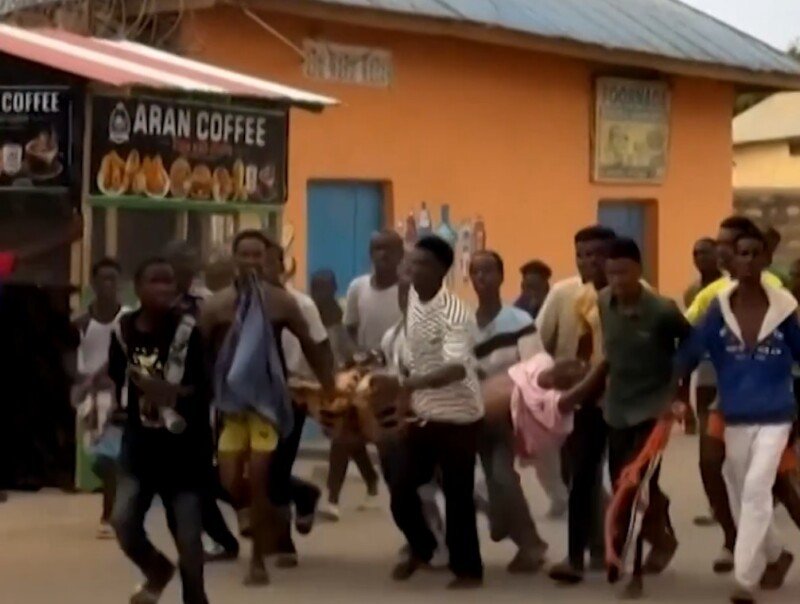
BAIDOA — Heavy clashes broke out in Baidoa this week, between Somali federal troops and armed opposition groups, leaving a number of civilians injured as rival forces battled for control of the strategic city.
Forces loyal to former South West State President Abdiaziz Hassan Mohamed Laftagareen launched an assault on positions held by federal forces and troops aligned with the South West State administration, triggering intense fighting that involved heavy weapons and sent residents fleeing for safety . The clashes began in the early hours of the morning, with gunfire and explosions heard across the city .
Videos circulating online appeared to show armed fighters and military vehicles entering parts of Baidoa, the administrative capital of South West State and Bay region . Residents reported that the fighting was concentrated in the Towfiiq neighbourhood, with civilians remaining indoors amid fears that the violence could spread .
The Somali National Army, however, described the incident differently, saying its forces had repelled an attack by Al-Shabaab militants targeting Baidoa . In a statement, the army command said its forces had been on high alert and confronted the attackers after they attempted to seize positions in the city .
The SNA confirmed that it had successfully repelled an attack by Khawaarij militants on the city, dealing a significant blow to the insurgents who had been attempting to destabilise the region . According to the statement, the militants who launched the assault were forced to retreat, leaving behind dead bodies, weapons, and vehicles .
The Federal Government said nearly 30 Al-Shabaab fighters were killed in the attack, though the claim could not be independently verified and details about the identities of those killed were not provided .
Laftagareen’s supporters have rejected the federal government’s characterization of the fighters as Al-Shabaab. A spokesperson for Laftagareen claimed in a Facebook post that forces loyal to the former president had captured Baidoa and called on federal troops to surrender . Residents confirmed that heavy fighting erupted as SNAF forces clashed with armed militias loyal to Laftagareen, alongside Al-Shabaab elements .
The clashes come amid a deepening political dispute in South West State, where the federal government-backed administration of Sheikh Aadan Mohamed Nur (Madoobe) has been seeking to consolidate its authority since taking office in July 2026. Laftagareen was removed from office in March 2026 after federal forces seized control of Baidoa, prompting him to resign and sever ties with Mogadishu .
South West State has been a battleground for political rivalries, with the region’s instability compounded by federal interference and ongoing clan dynamics that have complicated counter-terrorism efforts . The current leadership has consistently called for a fair process, aiming to hold the region’s elections as scheduled, in line with the shift to a universal suffrage system .
Baidoa hosts hundreds of thousands of displaced people, and one in four children at displacement sites there are severely malnourished, according to a July survey by Médecins Sans Frontières. The renewed violence raises concerns about the safety of aid operations serving Baidoa’s large displaced population. The city is home to international peacekeepers and humanitarian agencies and is one of Somalia’s largest cities, with a population of over a million people .
Critical Note
The fighting in Baidoa highlights the dangerous intersection of political rivalry and military confrontation in South West State. While the federal government frames the clashes as a counter-terrorism operation, the involvement of forces loyal to Laftagareen points to a deeper political crisis that cannot be resolved through military means alone. The competing narratives, one portraying the attackers as Al-Shabaab militants, the other as legitimate political opposition, reflect the deep mistrust that has come to define the relationship between Mogadishu and its regional adversaries.
The civilian toll of this confrontation is already evident, with reports of stray bullets killing residents in their homes and exacerbating an already dire humanitarian situation in a city that hosts hundreds of thousands of displaced people. The international community must press for de-escalation and dialogue, while the federal government must address the grievances that have driven Laftagareen and his supporters to take up arms. Without a political settlement, the cycle of violence and displacement in South West State is likely to continue, with civilians bearing the heaviest burden.