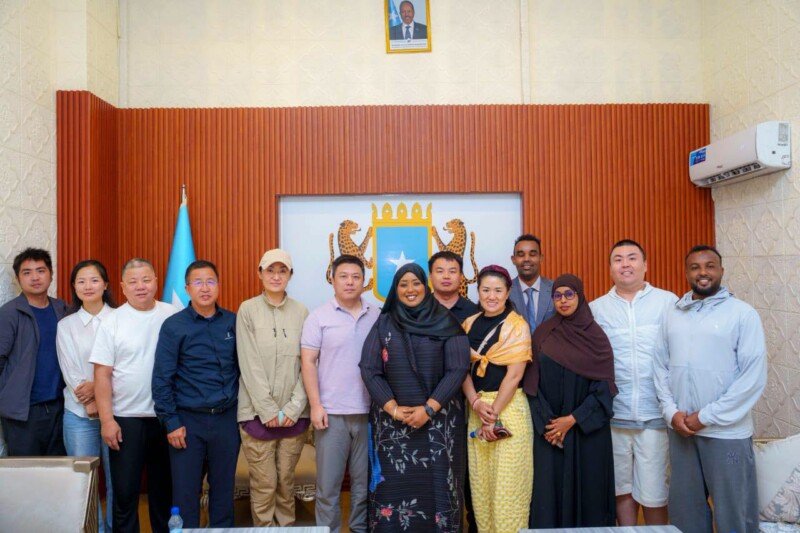
MOGADISHU — A high-level Chinese business delegation has arrived in Mogadishu to participate in the Somalia-China Trade Conference, which is set to open on Tuesday, marking a significant step in deepening economic ties between the two nations.
The delegation was received at Aden Adde International Airport by Somalia’s Ambassador to China, Dr. Hodan Osman Abdi, along with officials from the Ministry of Commerce and Industry.
Ambassador Hodan has been a key figure in promoting economic diplomacy between Somalia and China. At the African Day celebration in Beijing in May 2026, she expressed strong support for China’s new zero-tariff policy on exports from all 53 African countries with diplomatic ties, noting that it would help bring more Somali products, including fish, camel meat and camel milk, into the Chinese market and create new income and employment opportunities for Somalis.
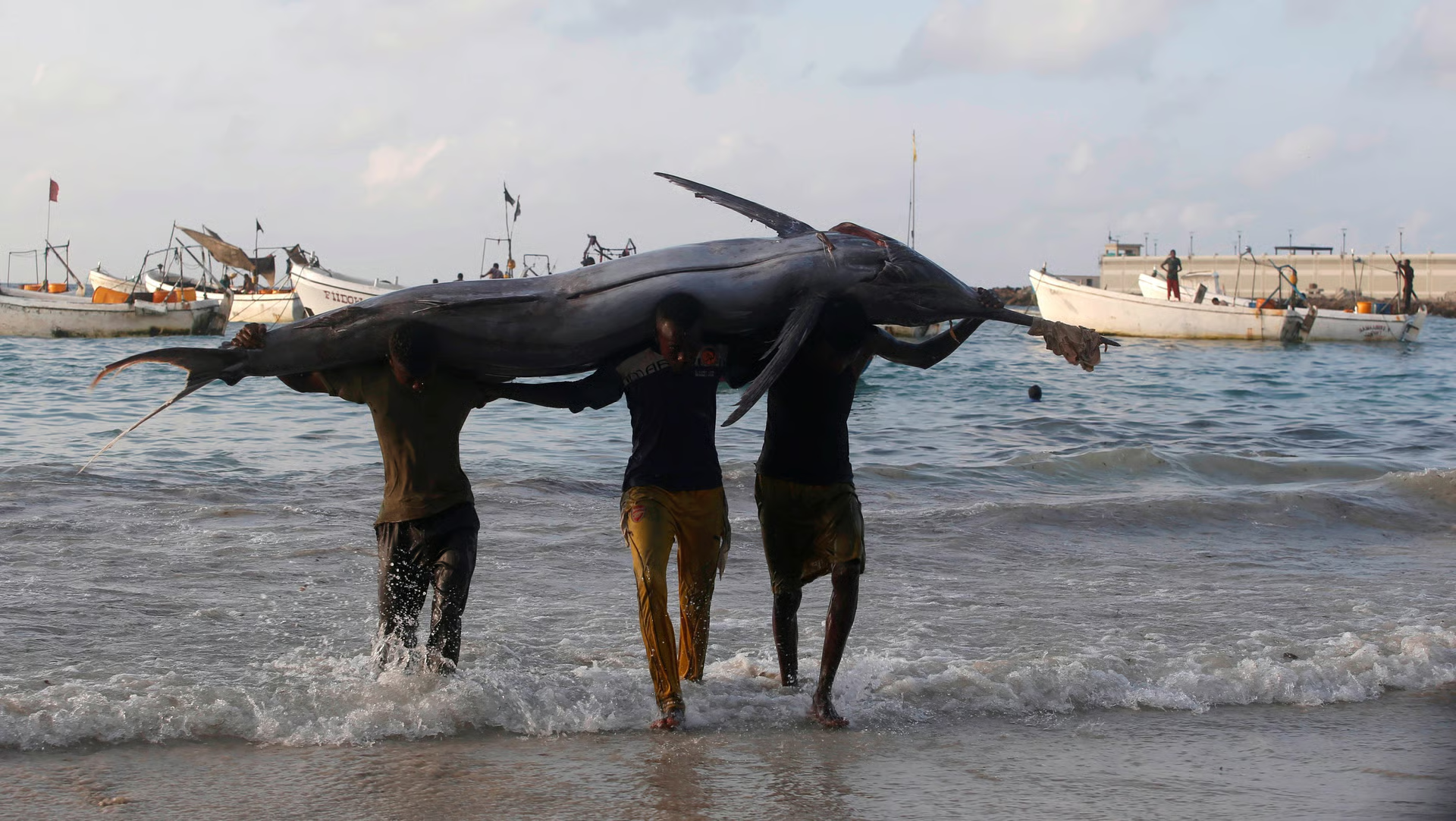
Somalia is set to begin exporting fish and other seafood products to China in September 2026, following the implementation of a tariff-free agreement signed between the two countries in July 2026. The agreement allows Somali fishery products, including tuna and other seafood, to enter the Chinese market duty-free. Director General of the Ministry of Fisheries and Blue Economy, Abdi Dirshe, described the deal as a historic step aimed at boosting the blue economy, creating jobs, and attracting investment in cold storage and supply chain infrastructure.
The fisheries agreement was officially signed on July 13, 2026, between Somalia’s Minister of Fisheries and Blue Economy, Ahmed Hassan Adan, and China’s Ambassador to Somalia, Wang Yu. Minister Ahmed Hassan Adan described the agreement as a major victory for Somalia, particularly for fishermen, traders and all stakeholders in the fisheries sector, noting that it strengthens economic ties between the two countries and opens a new chapter of cooperation and investment beneficial to both nations.
China extended its zero-tariff policy to all 53 African nations with diplomatic ties on May 1, 2026, eliminating customs duties on 100 percent of tariff items for imported products. The initiative is seeking to boost trade, promote industrialization, and broaden market access for African goods. Somalia is positioned to substantially benefit from this policy, which establishes new pathways for exporting its abundant resources.
Ambassador Hodan has been actively expanding Somalia’s diplomatic engagement across Asia. In August 2025, she formally presented her credentials to Japan as a non-resident ambassador, marking a milestone for Somalia’s expanding diplomatic engagement in East Asia. In November 2025, she opened the Annual China-Africa Legal Cooperation Forum in Beijing, urging deeper legal and institutional collaboration between African nations and China to strengthen mutual trust and sustainable development.
President Hassan Sheikh Mohamud has hosted Ambassador Wang Yu at Villa Somalia for bilateral talks, reflecting the strengthening of bilateral ties between the two countries. The discussion underscored their newly elevated Strategic Partnership, announced during the Forum on China-Africa Cooperation (FOCAC) Summit. The talks touched on the importance of improved Somalia-China relations in boosting economic recovery by enhancing trade, investment, and economic resilience to foster self-reliance.
Chinese Ambassador Wang Yu has also engaged with regional leaders, meeting with SSC-Khaatumo leader Abdulkadir Ahmed Aw-Ali to discuss deepening cooperation between Somalia and China under the FOCAC framework. The two sides explored opportunities for collaboration on critical infrastructure projects aimed at improving connectivity, economic development, and service delivery in SSC-Khaatumo and broader regions of Somalia.
Expanding Economic Cooperation
Somalia and China have also enhanced collaboration on natural resources and technical skills. Ambassador Hodan has engaged in dialogue with representatives from the China Geological Survey, focusing on capacity building, professional training, technical expertise sharing, and institutional strengthening for Somali entities involved in natural resources and environmental conservation.
The growing number of Somali students pursuing higher education in China has been described as a heartening reflection of the deepening ties between the two peoples. The strong personal rapport between Ambassador Hodan and Chinese officials, combined with the enthusiasm of the Somali diaspora in China, ensures that the bonds forged will continue to flourish, opening new avenues for cooperation in trade, education, infrastructure development and cultural exchange.
Critical Note
The arrival of the Chinese business delegation and the upcoming trade conference reflect the growing economic engagement between Somalia and China. China’s zero-tariff policy and investments in infrastructure offer significant opportunities for Somalia’s economic development. However, the impact of these initiatives will depend on the Somali government’s ability to create an enabling environment for investment, address governance challenges, and ensure that the benefits of economic growth reach ordinary Somalis.
Somalia’s reliance on China for trade, investment, and humanitarian assistance also raises questions about the balance of influence and the need for transparency in bilateral agreements. The Chinese government has consistently supported Somalia’s territorial integrity and sovereignty, particularly in opposing any recognition of Somaliland or other separatist claims. This diplomatic support is significant, but Somalia must ensure that its growing relationship with China does not come at the expense of other important partnerships or its own long-term development interests.
As Somalia and China celebrate over six decades of diplomatic relations, the challenge remains to translate diplomatic goodwill into tangible economic benefits for both populations. The Somali government must continue to pursue diversified partnerships and ensure that economic cooperation with China is transparent, accountable, and aligned with the country’s development priorities.
Recommended Reading On ftlsomalia.com
- Somali Embassy Celebrates African Day in Beijing
- Somalia to Begin Fish Exports to China Under Tariff-Free Deal
- Somalia, China Sign Landmark Fisheries Agreement
- China Extends Zero-Tariff Trade to All 53 African Nations
- Somalia and China Enhance Collaboration on Natural Resources
- President Mohamud Hosts Chinese Ambassador at Villa Somalia
- SSC-Khaatumo Leader Meets Amb. Yu to Discuss Infrastructure