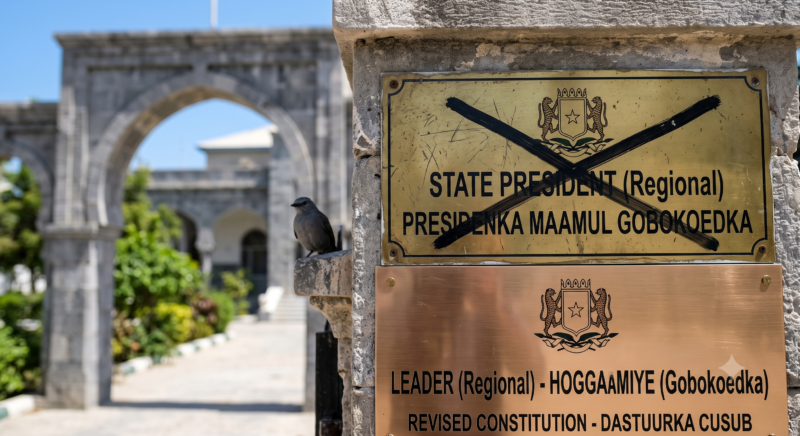
MOGADISHU – The Federal Government of Somalia has officially abolished the use of the title “president” for leaders of federal member states, announcing that they will now be referred to as “leaders” (hoggaamiye) in line with the recently adopted constitutional amendments.
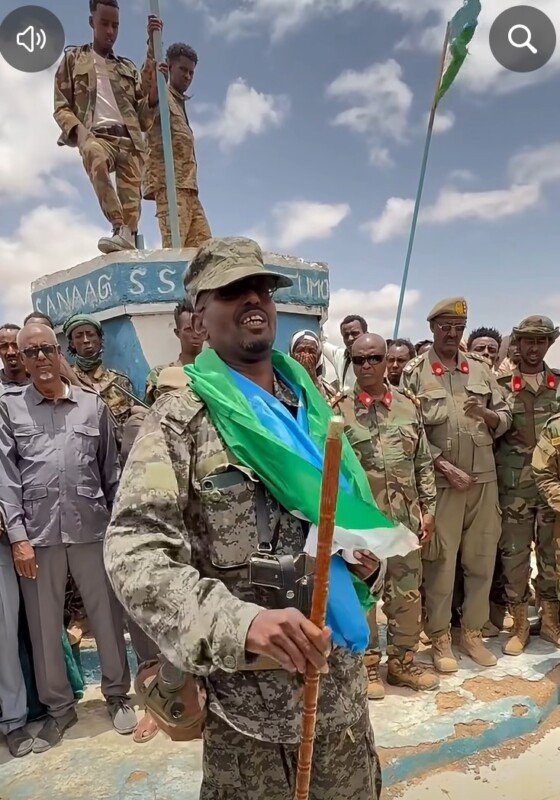
Interior Minister Ali Yusuf Ali (Hosh) announced the change, stating that the new designation applies to all federal member states, including Jubaland and Puntland, which have rejected the new constitution and remain in open dispute with the federal government.
“We have moved away from ‘president.’ The leaders of federal member states are now ‘leaders,’ and that is how they will be addressed,” Minister Hosh said. “Even those who are absent and in opposition—all of them are leaders.”
According to the proposed constitutional amendments, the presidents of the Federal Member States (FMS) in Somalia are to be known as leaders. The amendment applies to all five FMS or regional states: Galmudug, HirShabelle, Jubaland, Puntland, and Southwest.
Constitutional Changes and Regional Opposition
The new constitution, which was passed by parliament despite strong opposition, formally strips regional state leaders of the title “president” and reclassifies them as “leaders.” Regional leaders had long been referred to as presidents, but the constitutional amendments have now standardised their designation at the federal level. The change is intended to reflect the hierarchical relationship between federal institutions and federal member states.
The constitutional amendments were adopted by parliament amid fierce opposition from regional leaders, with Jubaland and Puntland rejecting the changes as a violation of the federal system. The amendments formally ended the country’s provisional era and established a new constitutional framework.
The new constitution has significantly expanded the powers of the federal presidency, allowing for unlimited political parties and promoting political pluralism, while also centralising authority in Mogadishu.
Political Context of the Title Change
The decision to change the title of regional leaders comes amid escalating political tensions between the federal government and federal member states over the constitutional review process. The amendments, which were pushed through parliament by the federal government, have deepened the rift between Mogadishu and regional administrations.
Puntland has formally rejected the constitutional amendments, with President Said Abdullahi Deni stating that his administration does not recognise any constitution other than the 2012 Provisional Constitution. The opposition Somali Future Council has also condemned the amendments as an attempt to dismantle the federal system.
Regional states and opposition figures have argued that the new constitution undermines federalism and concentrates excessive power in the hands of the federal presidency.
International and Domestic Reactions
The international community has called for renewed dialogue between the Somali government and opposition groups, expressing concern over the escalating political tensions. The United Nations, African Union, European Union, IGAD, the United States, and the United Kingdom have all urged Somali leaders to return to negotiations.
Prime Minister Hamza Abdi Barre has previously rejected the re-election of Jubaland President Ahmed Madobe, citing constitutional concerns, further highlighting the strained relations between the federal government and regional states.
Implications of the Title Change
The federal government argues that the change is a technical matter reflecting the constitutional hierarchy, while critics view it as a symbolic move to diminish the status of regional leaders and centralise authority. The opposition sees it as part of a broader effort by President Mohamud’s administration to weaken the federal system and assert control over federal member states.
Jubaland has declared independence from Somalia’s federal system, and Puntland has withdrawn recognition of the federal government, underscoring the depth of the political crisis.
Way Forward
The federal government’s decision to rename regional leaders is likely to further strain relations with federal member states, particularly Puntland and Jubaland, which have already withdrawn recognition of the federal government. The move underscores the growing divide between Mogadishu and regional administrations as Somalia navigates a contentious constitutional transition. The practical enforcement of the title change remains uncertain, as regional leaders are expected to continue using their preferred designations.
Recommended Reading On ftlsomalia.com:
- FMS Presidents to be Called Leaders
- A Fractured Milestone: Somalia Adopts Constitutional Amendments as Regional Leaders Reject Vote
- New Constitution Boosts Presidential Powers, Sparking Political Tensions Across Somalia
- Puntland Rejects Federal Constitution Amendments and Electoral Models
- Regional States and Opposition Say New Constitution Undermines Federalism
- Jubbaland Declares Independence From Somalia’s Federal System