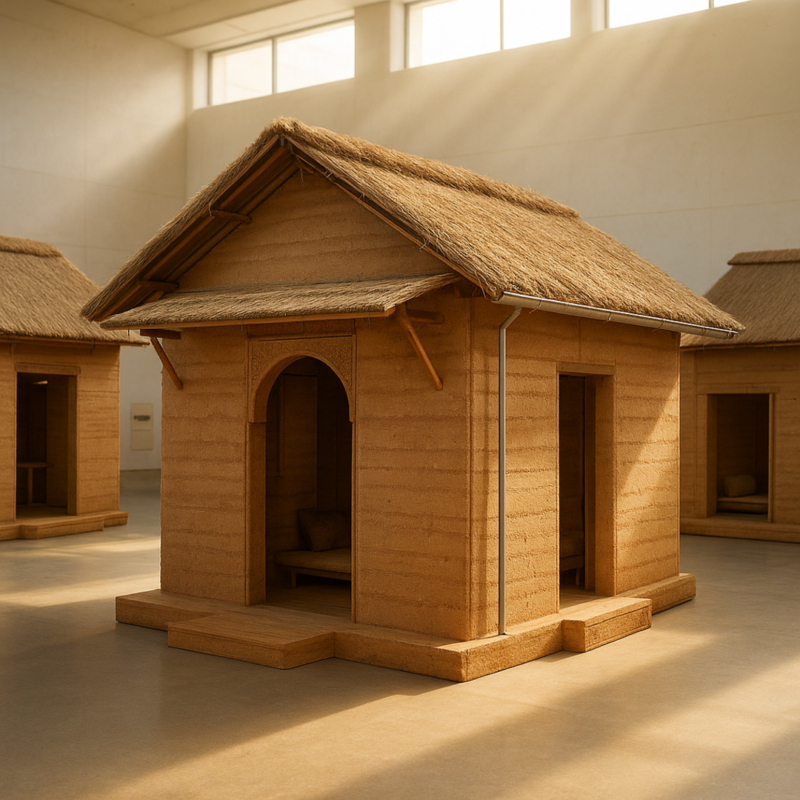
MOGADISHU, Somalia – University students, architects, and design experts from Somalia and internationally have introduced a new generation of affordable shelter designs combining sustainability and scalability with cultural authenticity.
The announcement, made at an exhibition in Mogadishu hosted by the Ministry of Public Works, Reconstruction and Housing and the International Organization for Migration (IOM), represents significant progress in creating localized shelter solutions for displaced Somalis under the Homegrown, Sustainable, and Scalable Shelter Solutions initiative started in April 2025.
Collaboration Between Somali and International Institutions
Over the past 10 months, Somali students from Somali National University, SIMAD University, Benadir University, and City University collaborated with international partners from YACademy in Bologna, Italy. Five working groups, guided by prominent national and international architects, reimagined shelter designs for Somalia’s internally displaced communities. The objective was to develop innovative, affordable, context-specific, and sustainable shelter prototypes addressing Somalia’s complex challenges, including family growth, land tenure, climate vulnerability, and material access.
The event highlighted a significant advance in developing locally tailored shelter solutions for Somalia’s displaced residents through the Homegrown, Sustainable, and Scalable Shelter Solutions initiative. Students from Somali National University, SIMAD University, Benadir University, and City University collaborated with international peers from YACademy in Bologna, Italy, within five working groups led by renowned architects to rethink shelter design for Somalia’s internally displaced populations.
Winning Designs and Special Recognitions
From five working groups and multiple submissions, three leading designs, including earth-based shelters, were chosen by a panel of national and international experts for their practicality, creativity, and innovation.
Special recognition was given to Hoy – A Place to Return To and An Inclusive Design, both mixed groups led by Dr. Salma Samar Damluji; and Flexible, Dynamic, and Breathable Shelters, a mixed group led by Anteo Taro Sanada. Additionally, Low-cost Housing Design, a national group mentored by Abdullahi Abdulrahman Muhdin, Liban Ali Sahal, and Abdikafi Elmi Abdishakur, received an honorable mention.
Three leading designs, including earth-based shelters, were chosen for their feasibility, originality, and innovation by a panel of national and international experts. The working groups received guidance from leading experts such as Abdifatah Abdiaziz of the Somali Institute of Architects, Dr. Yusuf Omar of the Heritage Institute for Policy Studies, Omar Degan of the DO Architecture Group, and Enrique Sevillano Gutierrez of CRAterre.
Minister Highlights Somali Talent and Global Collaboration
“This initiative demonstrates that Somali talent, with global collaboration opportunities, can lead in designing dignified, sustainable, and climate-resilient shelters for communities in need,” stated H.E. Dr. Elmi Mohamud Nur, Somalia’s Minister of Public Works, Reconstruction, and Housing.
Technical Design Framework
Participants operated under a unified technical design framework to create modular and expandable shelter solutions at three levels: unit, plot, and cluster, in four distinct locations: Baidoa, Doolow, Bossaso, and Mogadishu. Each prototype addressed social, environmental, and technical aspects specific to Somalia’s displacement situations, disasters, and climate challenges.
“These designs mark a paradigm shift in scalable approaches that can revolutionize shelter construction in Somalia, with people, local material production, sustainability, cultural relevance, and dignity at the core,” expressed Manuel Marques Pereira, IOM Somalia’s Chief of Mission.
Funding and Support
The initiative received funding through the Saameynta Programme via the Somalia Joint Fund, with support from Swiss Development Cooperation, the Netherlands, and Norway, demonstrating a shared dedication to promoting locally-led, scalable, and sustainable displacement solutions.
The initiative received funding through the Saameynta Programme via the Somalia Joint Fund, Swiss Development Cooperation, the Netherlands, and Norway, underscoring a collective commitment to advancing locally led, scalable, and sustainable solutions to displacement.
The Saameynta Programme, which means “lasting solutions” in Somali, has been actively empowering communities across Somalia, focusing on creating durable solutions for displaced populations through economic empowerment and sustainable development initiatives.
Looking Ahead
The exhibition marks a significant milestone in Somalia’s efforts to develop locally appropriate shelter solutions for its internally displaced population. The winning designs will now be further developed for potential implementation in displacement-affected communities across the country.
The Homegrown Shelter Initiative demonstrates that sustainable, dignified, and culturally appropriate housing is possible when Somali talent is combined with international expertise and adequate funding. As Somalia continues to face climate shocks and displacement pressures, such innovative approaches to shelter construction offer a path forward that prioritizes dignity, sustainability, and local ownership.
Recommended Reading On ftlsomalia.com: