MOGADISHU — The Federal Ministry of Health and Human Services has achieved a significant milestone in Somalia’s maternal and reproductive health initiatives by completing and technically validating the National Comprehensive Postabortion Care (PAC) Guideline Package .
This package is a component of Somalia’s national strategy aimed at decreasing preventable maternal illness and death linked to pregnancy loss, miscarriage, incomplete abortion, and associated complications .
The Ministry’s Family Health Department spearheaded the development of this national package, receiving technical and implementation assistance from Ipas and the International Rescue Committee (IRC) . Dr. Abdulrazaq Yusuf Ahmed acted as the National Lead Consultant in creating the nine documents that constitute the comprehensive guideline package .
An executive report confirms that Somalia has finalized both the development and technical validation of a nationally owned PAC guideline and comprehensive package . This inclusive process involved collaboration among government institutions, Federal Member States, health professionals, academics, civil society organizations, women and youth forums, and development partners .
National Package for Standardized, Respectful, and Evidence-Based Care
The finalized package encompasses nine key national documents:
– National Comprehensive Postabortion Care Guideline
– Participant Manual
– Facilitator Manual
– Training Curriculum
– Competency Assessment Tool
– Supportive Supervision Tool
– PAC Register
– Validation Meeting Report
– Feedback Matrix from the Validation Meeting
Collectively, these documents establish a harmonized national framework for clinical care, training, competency assessment, supervision, documentation, reporting, and quality improvement . They aim to assist Somali healthcare professionals, Family Health Departments, maternity services, and sexual and reproductive health programs in providing effective, ethical, respectful, and evidence-based postabortion care .
The package is founded on Somali cultural values, ethical principles, and national health priorities, while maintaining alignment with international best practices and relevant World Health Organization (WHO) guidance on reproductive, maternal, newborn, child, and adolescent health .
Inclusive National Validation Process
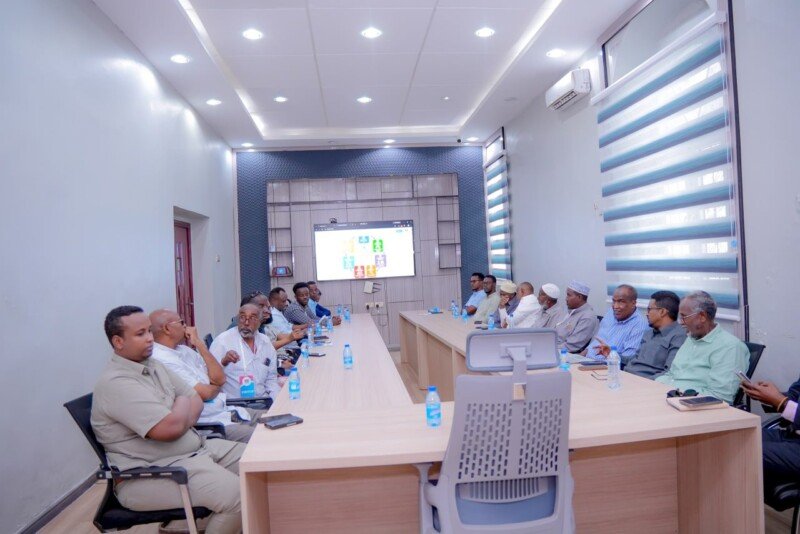
The guideline package underwent review and validation during a three-day national validation workshop in Mogadishu from April 19-21, 2026 . The workshop convened representatives from the Federal Ministry of Health, Federal Member States, Banadir Regional Administration, hospital and health facility managers, clinicians, midwives, nurses, academics, professional associations, health information and monitoring officers, civil society organizations, women and youth forums, and technical partners .
Participants examined the documents through a structured and participatory approach. Comments, technical recommendations, and suggested revisions were recorded in a feedback matrix and integrated into the final package . This process enhanced the scientific quality, national ownership, operational feasibility, and implementation readiness of the guidelines .
Recognition of National Leadership and Partner Support
Dr. Abdulrazaq Yusuf Ahmed expressed gratitude for the confidence placed in him by Ministry leadership .
“It is a great honor to present the final package of the National Comprehensive Postabortion Care Guideline, which contributes to Somalia’s national initiative to reduce preventable maternal mortality causes during pregnancy and associated complications,” he stated .
Special appreciation was extended to Dr. Naima Abdulkadir for her leadership, technical oversight, and quality assurance throughout the process . Recognition was also given to Dr. Abdulkadir Wehliye Afrah for his technical expertise, coordination support, and contribution to harmonizing and validating the documents .
The Ministry also acknowledged the contributions of Edward Ngia, Marian Hassan, Evans Ogotti, Ifrah Yusuf, Lucy, and Abdullahi Ali, along with the broader Ipas and IRC teams, for their technical guidance, financing, coordination, facilitation, and sustained commitment . IRC played a vital role in organizing the validation workshop and supporting stakeholder engagement, while Ipas provided essential technical guidance to ensure the package reflects evidence-based standards and practical implementation needs .
Previous Health Sector Achievements
The development of the PAC Guideline Package builds on previous milestones achieved by the Ministry of Health. In November 2025, Dr. Yaqut Mohamed Moallim, Deputy Head for Administration and Finance of the WHO Somalia Liaison Office, presented letters of recognition from the World Health Organization to the Minister of Health, Dr. Ali Haji Adam Abubakar, acknowledging exceptional efforts in polio eradication and the expansion of immunization services nationwide WHO Honours Somali Health Leaders for Polio Eradication and Immunisation Success.
In December 2025, the ministry convened a landmark conference in Mogadishu to launch the National Ten-Year Mental Health Strategic Framework (2026-2035), a comprehensive plan to transform the country’s mental health services from baseline emergency care to fully functional, integrated care systems across the country Somalia Launches 10-Year Mental Health Strategy in Landmark Conference.
The Ministry of Health also held a high-level summit in Dhusamareb, the administrative seat of Galmudud State, to kick off the Somalia Health Inclusivity Project (SHIP) Somalia Launches Initiative to Accelerate Healthcare Upgrades, aimed at improving health outcomes for the country’s most vulnerable groups, particularly women, children, and marginalized communities .
Maternal and Child Health in Somalia
The maternal mortality rate in Somalia remains among the highest in the world, with limited access to quality reproductive health services, particularly in rural and conflict-affected areas, contributing to preventable deaths. The lack of standardized guidelines, limited training for healthcare providers, and weak health systems have been identified as key barriers to improving maternal health outcomes .
The National Comprehensive Postabortion Care Guideline Package is designed to address these gaps by providing a standardized framework for clinical care, training, and quality improvement. By equipping healthcare providers with the necessary knowledge and skills, the package aims to reduce preventable maternal deaths and improve health outcomes for women across the country .
Next Steps Toward National Rollout
With technical validation finalized and stakeholder recommendations incorporated, the national PAC package is now prepared for formal signing, endorsement, and nationwide implementation . Implementation will involve cascade training, supportive supervision, mentorship, competency-based assessment, enhanced documentation, and integration into routine health information systems .
The package is anticipated to enhance healthcare provider competence, improve service quality, increase referral readiness, standardize clinical and reporting practices, and help reduce preventable maternal illness and deaths throughout Somalia .
Commitment to Universal Health Coverage
This milestone represents a substantial achievement for Somalia’s health sector, demonstrating the impact of national leadership, technical partnerships, inclusive consultation, and evidence-based policy development in advancing maternal health and Universal Health Coverage .
The Ministry of Health has reaffirmed its commitment to strengthening the country’s health systems and improving access to quality healthcare for all Somalis. The development and validation of the PAC Guideline Package marks a significant step forward in Somalia’s journey toward achieving Universal Health Coverage and reducing preventable maternal deaths in line with the Sustainable Development Goals .
The Federal Government continues to work closely with international partners, including the World Health Organization, UNICEF, UNFPA, and other development partners, to strengthen the country’s health systems and improve health outcomes for all Somalis .