MOGADISHU: The World Food Programme (WFP) has warned that Somalia stands at the threshold of a severe hunger catastrophe that could deteriorate into famine without immediate financial support. Matthew Hollingworth, WFP Assistant Executive Director who recently toured Somalia, reported that six million people in the country are experiencing acute food insecurity as a result of the combined impacts of drought, conflict, and insufficient funding.
Hollingworth highlighted that approximately 1.9 million children are suffering from acute malnutrition, with hundreds of thousands facing the most severe form of this condition. “The indicators are clear. Hunger is increasing. Survival mechanisms are failing. And time is running out,” he stated. New findings from the Integrated Food Security Phase Classification (IPC) report indicate that 1.84 million children under five are projected to suffer from acute malnutrition during 2026, with approximately 500,000 facing life-threatening severe malnutrition.
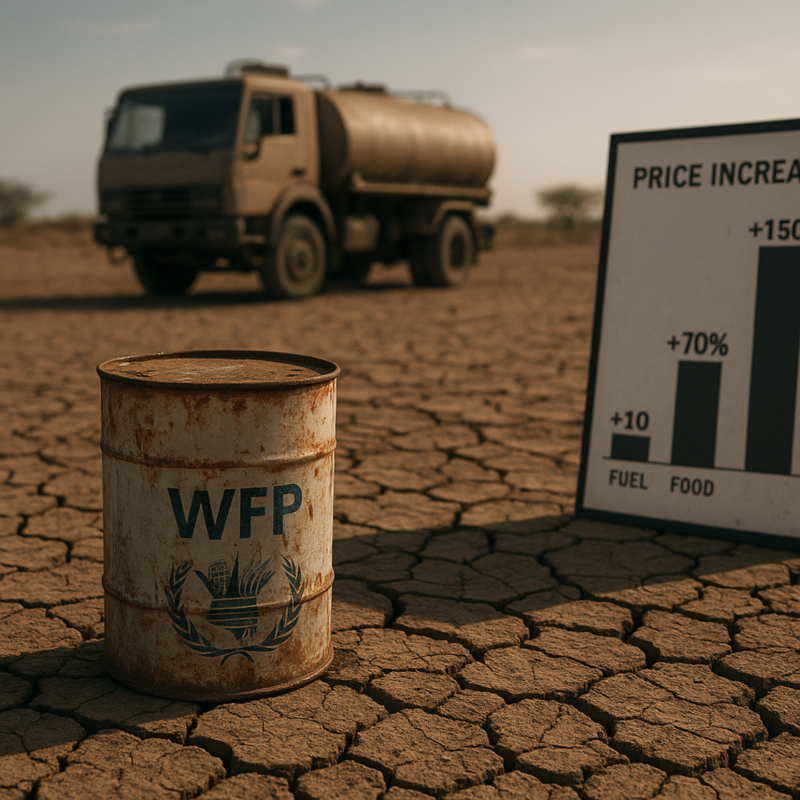
The repercussions from the crisis in the Middle East are causing food prices to surge by 70 percent in certain regions, while fuel costs have jumped by 150 percent. According to findings from the National Bureau of Statistics, Somalia’s imports have declined by 40 percent due to disruptions linked to the Hormuz Strait crisis, with food prices increasing by 10 percent and healthcare service costs rising by 14 percent. These increases are hindering supply chains and making the distribution of critical aid more costly within the country, according to Hollingworth.
As a result of a serious resource deficit, the WFP has had to cut back on assistance. Essential support is currently only reaching one in ten individuals requiring help, a pattern that mirrors conditions leading up to the 2011 famine and the 2022 near-famine scenario, the WFP cautioned. The UN agency is urgently appealing for $95 million to sustain critical food and nutrition operations in Somalia through August 2026, warning that its lifesaving programs could be forced to shut down without immediate funding. The number of emergency food aid recipients has already fallen from 2.2 million in early 2025 to just over 600,000 currently.
Shipping disruptions linked to the Middle East crisis have also critically worsened the supply situation for therapeutic foods, with the cost of a single carton of peanut-based therapeutic paste rising to $200 from $55, meaning available funds now provide enough for only 83 children instead of 300. Approximately 4.4 million Somalis are expected to face “Crisis” or worse food insecurity between April and June 2026, with 3.6 million people already facing crisis-level hunger. The WFP has confirmed that it currently possesses the necessary personnel and logistical infrastructure on the ground to scale operations back up immediately. However, without urgent donor pledges, Somalia risks a rapid deterioration into catastrophic hunger, carrying potentially grave humanitarian and security repercussions for the entire Horn of Africa.
Recommended Reading on ftlsomalia.com:
- Somali Premier Discusses Food Security with WFP Team
- World Food Program Urgently Appealing for $95 Million
- Somalia’s Planning Minister Holds Talks with WFP Team
- War Impact Worsens Somalia’s Child Malnutrition Crisis
- UN Data: 6.5 Million Somalis Face Severe Hunger Amid Drought
- Somalia’s Humanitarian Crisis Worsens as Acute Hunger Doubles