GENEVA – A Somali delegation led by the Minister of Communications and Technology, Mohamed Adam Maalim (Soomaali), has participated in the International Dialogue on Artificial Intelligence (AI) Governance, held at the United Nations Office in Geneva.
The conference, which was opened by UN Secretary-General António Guterres, brought together ministers, senior government officials, technology experts, and representatives from UN member states to discuss the challenges and opportunities posed by rapid advances in artificial intelligence.
Minister Maalim addressed the forum, stating that while AI presents significant opportunities for improving public services, economic growth, and innovation, it requires a governance framework built on international cooperation and collective action. He noted that developing countries, including Somalia, continue to face challenges in infrastructure, energy, data, and AI-related skills, and called for strengthened international cooperation to ensure that all nations benefit equitably from AI’s potential.
Somalia has been taking steps to advance its digital transformation, with the government emphasising the importance of collaboration between the public and private sectors to improve service delivery and customer convenience through technology.
Somalia’s Growing Role in Global Tech Governance
The minister reaffirmed Somalia’s commitment to working with the United Nations and international partners to build an AI framework that is safe, trustworthy, inclusive, and aligned with sustainable development and public welfare. Somalia’s participation in the Geneva summit marks the first time the country has taken part in a global AI governance forum.
Somalia has been recognised as the world’s top performer in telecommunications regulatory reform by the International Telecommunication Union, reflecting the significant progress the country has made in ICT regulation between 2007 and 2024, with its score rising from 0.0 to 77.5 percent.
Somalia is positioning itself as a key innovator in the East African Community’s digital transformation strategy, with the Somali delegation presenting a comprehensive plan for artificial intelligence adoption at the East Africa Science and Technology Commission summit.
The National Communications Authority has previously signed a Cooperation Agreement with the International Finance Corporation aimed at boosting Somalia’s connectivity and digital innovation, strengthening telecommunications infrastructure, and expanding internet access.
Digital Integration and Infrastructure Development
Somalia has been actively pursuing digital integration through regional initiatives. The government has convened consultations with internet service providers to discuss the Horn of Africa Digital Integration Project, a regional initiative aimed at boosting digital connectivity and economic integration across East Africa.
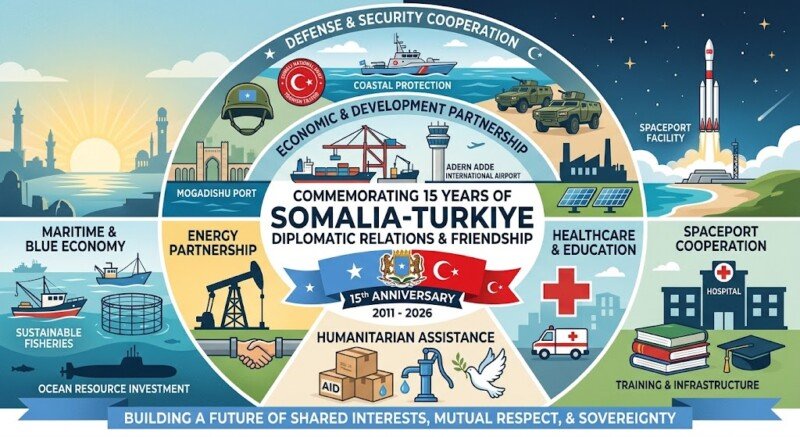
Somalia and Turkey have signed a Memorandum of Understanding to strengthen bilateral cooperation in electronic communications, encompassing satellite communications regulation, cybersecurity and network resilience, spectrum management, broadband infrastructure development, and internet governance.
Hormuud Telecom and the German Agency for International Cooperation (GIZ) have signed a landmark agreement to develop an inclusive digital economy in Somalia, focusing on expanding cross-border payment systems, enhancing digital literacy, and fostering AI training programs tailored to boost youth employment.
Way Forward
The minister’s participation in the Geneva summit reflects Somalia’s growing engagement in international discussions on technology governance and its commitment to leveraging digital transformation for development. As Somalia continues to modernise its communications infrastructure and regulatory frameworks, its involvement in global AI governance is expected to deepen, positioning the country as an active participant in shaping the future of technology policy.
Recommended Reading On ftlsomalia.com:
- Somalia Named World’s Top ICT Regulatory Reformer by ITU
- Somalia Leads AI Integration in East African Community
- Somalia Engages at WSIS+20 to Advance Digital Transformation
- Somalia Steps Up Digital Transformation Drive
- Somalia and Turkey Sign Telecommunications MoU to Strengthen Regulatory Cooperation