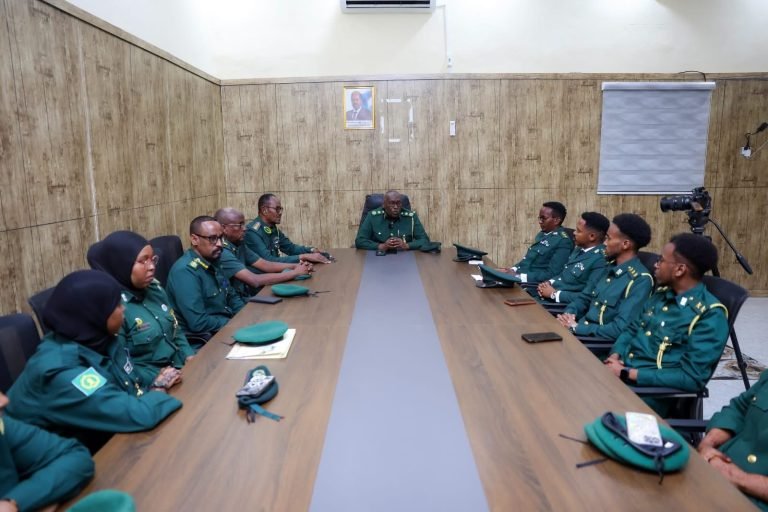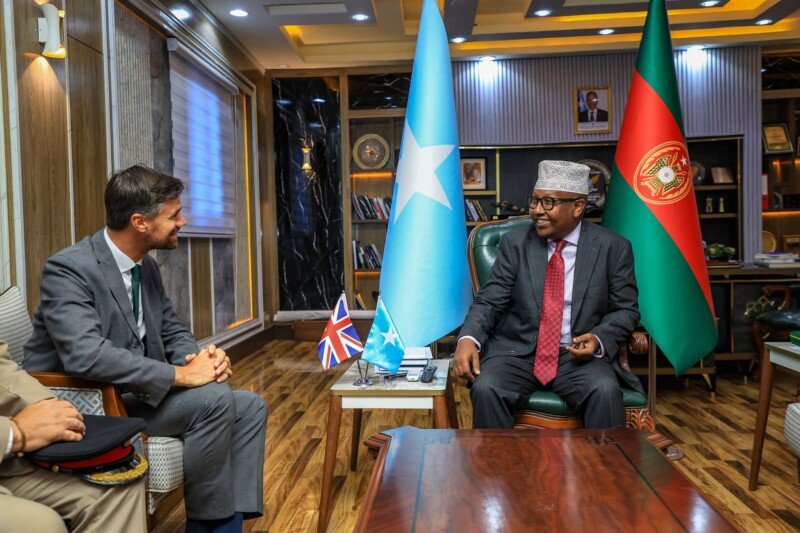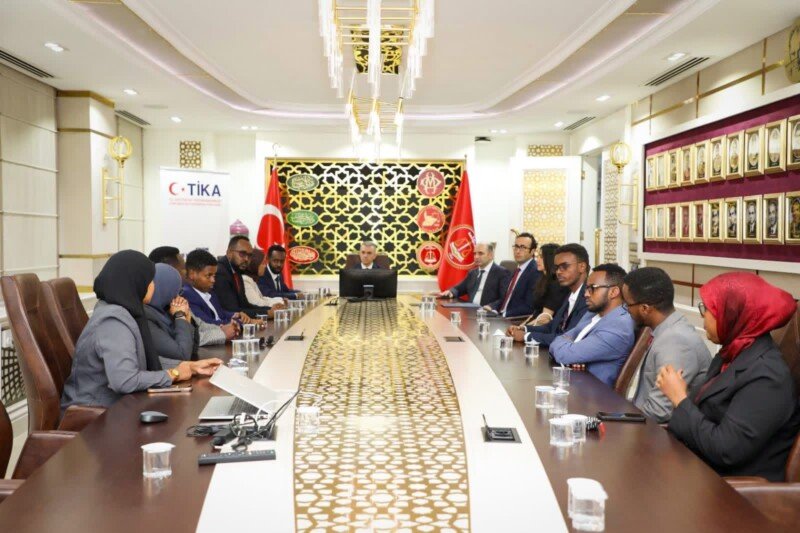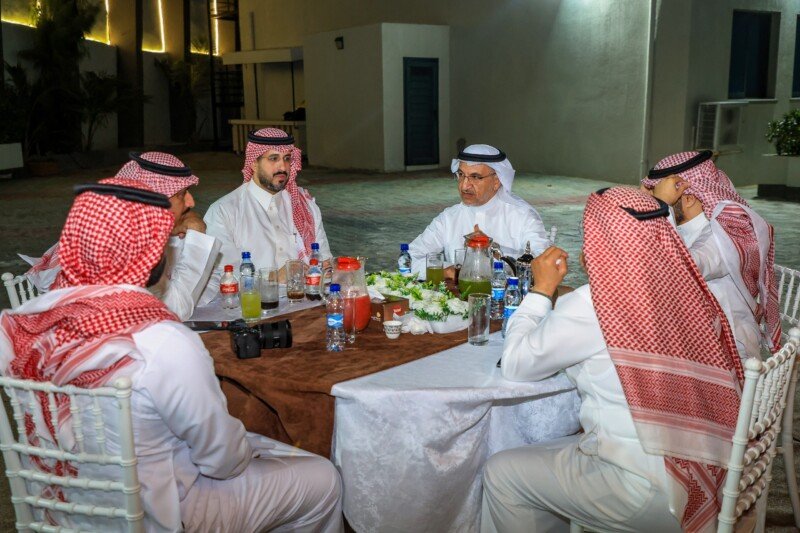
MOGADISHU — Somalia’s Minister of Defence, Ahmed Moallim Fiqi, accompanied by the Commander of the Somali National Army, Brigadier General Ibrahim Mohamed Mahmoud, hosted a dinner in honour of the Secretary-General of the Islamic Military Counter-Terrorism Coalition (IMCTC), Major General Mohammed bin Saeed al-Moghedi, and his delegation currently visiting Mogadishu.
The visit is part of the IMCTC’s engagement in Somalia, which includes the launch of strategic initiatives under the coalition’s programme, notably the “Peace Journalists” initiative aimed at strengthening the role of media in countering violent extremism. The dinner was attended by Somalia’s Ambassador to Saudi Arabia, Mohamed Amin Sheikh Osman, commanders of the Somali National Army divisions, Somalia’s focal point for the IMCTC, the Director General of Defence at the Ministry of Defence, and other senior military officials.
The Federal Republic of Somalia and the IMCTC are committed to strengthening cooperation in counter-terrorism, countering violent extremism, and implementing initiatives to ensure peace, security and stability in Somalia and the broader region.
Deepening Counter-Terrorism Cooperation
The dinner follows the launch of the Peace Journalists Programme, which aims to strengthen the role of journalists and media organisations in preventing extremism and terrorism while promoting peace, social cohesion and public awareness. Forty participants are taking part, drawn from government media, the media of the federal member states, private television and radio stations, and social media influencers.
The wider IMCTC programme covers the training and equipping of the armed forces, rehabilitation programmes addressing ideology, economic security, and the judicial handling of terrorism cases and money laundering, involving the Military Court and the Ministry of Justice. Among the institutions receiving projects are the ministries of Defence, Internal Security, Information, Finance and Endowments, the Tubsan agency, the Stabilisation Fund, the National Security Office, Immigration and Communications.
The programme is structured across four domains: ideology, communications, counter-terrorist financing and the military, following the coalition’s own structure. The IMCTC holds memoranda of understanding with the United States, the United Kingdom and France as supporting countries, and with the United Nations Office of Counter-Terrorism.
The launch follows a consultative meeting held in September 2025, chaired by Deputy Defence Minister Idiris Osman Haji, which focused on coordinating national efforts for the effective rollout of IMCTC-supported projects in 2026.
Saudi Arabia’s Growing Role in Somalia
The IMCTC is a Saudi-led coalition of 41 countries established in 2015 to coordinate counter-terrorism efforts across the Islamic world. Its engagement in Somalia comes amid growing Saudi influence in the Horn of Africa. Somalia signed a military cooperation agreement with Saudi Arabia in February 2026, formalized by Defence Minister Fiqi and his Saudi counterpart Prince Khalid bin Salman in Riyadh.
Somalia stands as a founding member of the Saudi Arabia-led coalition. The bilateral agreement on defence cooperation includes provisions for military training, equipment modernization, and intelligence sharing. Defence Minister Fiqi previously hosted the Saudi ambassador to discuss security and defence cooperation, praising the Kingdom’s contributions to counter-terrorism operations and efforts to improve the Somali National Armed Forces’ capacity.
Critical Note
The engagement of the IMCTC in Somalia represents a significant expansion of the country’s counter-terrorism partnerships, adding to existing cooperation with Turkey, the United States, and other international partners. The focus on media and communications alongside military operations reflects a welcome recognition that defeating extremism requires more than just military force.
However, the absence of published budgets and selection criteria for the Peace Journalists Programme raises questions about transparency and accountability. The government’s claim of closing hundreds of websites and accounts belonging to armed groups, while difficult to verify, suggests progress in countering extremist messaging. Yet the broader programme’s success will depend on whether it can deliver lasting institutional capacity and genuine community engagement, rather than serving primarily as a diplomatic gesture.
The Somali government must ensure that these initiatives are implemented transparently and effectively, with clear benchmarks for success. The international community should support these efforts while maintaining robust oversight to ensure that resources reach the intended beneficiaries and that the programme contributes meaningfully to Somalia’s long-term stability and resilience.
Recommended Reading On ftlsomalia.com
- Islamic Military Coalition Launches ‘Peace Journalists’ Programme in Mogadishu
- Somali Defense Minister Meets IMCTC Leadership in Saudi Arabia
- Somalia Signs Military Pact with Saudi Arabia in Riyadh
- Somalia Aligns Counter-Terror Priorities Ahead of 2026 IMCTC Project Rollout
- Fiqi Welcomes Saudi Ambassador to Boost Defence and Security Ties