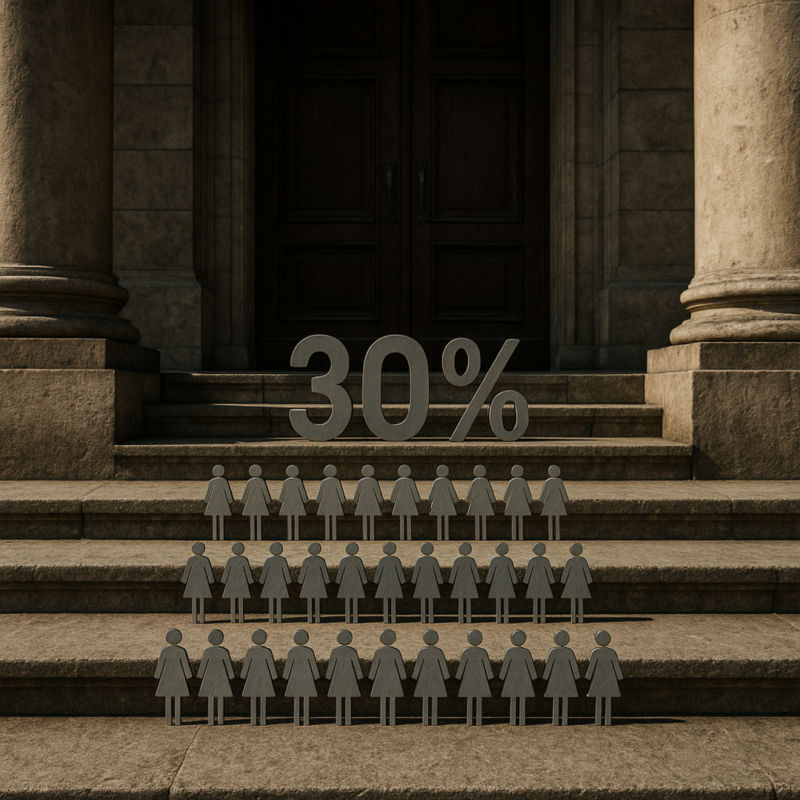
BAIDOA – The recently announced list of members for the South West State House of Representatives has revealed a significant gap in the implementation of the 30 percent women’s quota, with female representation falling well below the constitutional threshold.
According to the National Independent Electoral and Boundaries Commission (NIEBC), 92 lawmakers have been declared elected out of the total 95 seats in the regional parliament. However, only 16 of these seats have been allocated to women. This means women currently constitute approximately 17 percent of the parliament – far below the 30 percent quota agreed upon in Somalia’s political framework.
Quota Shortfall Reflects Persistent Implementation Gaps
To fully meet the quota, women were expected to secure at least 28 seats. The current figures therefore reveal a deficit of 12 seats. The Federal Elections Implementation Team (FEIT) had previously warned regional states against failure to implement the 30 percent women representation, urging delegates to respect the mandatory quota. However, the South West State results suggest those warnings were not sufficiently heeded.
The shortfall is particularly striking given that during the voter registration phase, more women registered than men. The NIEBC reported that among the 376,212 registered voters, 211,496 were women (56 percent) and 164,716 were men (44 percent). Female voters turned out in large numbers, yet their representation in the regional parliament does not reflect their participation at the polls.
The Federal Government has previously faced similar challenges at the national level, where the country only elected 64 female MPs out of 245 Lower House seats – just 19 percent, falling far short of the 30 percent target agreed upon by leaders in recent years. The South West State outcome suggests that regional states continue to struggle with the same implementation gaps.
Legal Framework and Political Will
Despite legislative progress, the translation of legal commitments into electoral outcomes remains uneven. A mandatory 30 percent women’s quota has been integrated into both the Electoral Law and the Political Parties Law – a historic structural move toward ensuring inclusive, nationwide political engagement. The meeting between Deputy Prime Minister Salah Ahmed Jama and UN Women officials highlighted ongoing efforts to enhance collaboration between Somalia’s government and international partners to safeguard and empower Somali women.
The Minister of Family and Human Rights Development, Khadija Mohamed Al-Makhzoumi, convened a high-level consultative session in Baidoa engaging directly with local women’s organizations to examine the current status of women in South West State. Central to her address was the successful establishment of the 30 percent women’s quota – yet the election results now raise urgent questions about why that legal framework failed to translate into actual seats.
During the same meeting, Al-Makhzoumi detailed new legislation addressing gender-based violence, the federal ban on female genital mutilation (FGM), and the comprehensive Family Law, all of which have substantially enhanced legal protections for women. The Federal Cabinet has recently approved sweeping national policies that also touch on strengthening governance and security, reinforcing the broader state-building framework.
Civil Society and International Concerns
This situation has raised concerns among civil society groups and advocates for women’s political participation, who contend that the persistent failure to implement the quota compromises efforts toward inclusive governance and equal political representation in Somalia. The electoral commission has not yet provided public explanations for the shortfall in women’s representation.
International partners have previously raised concern over Somalia’s inability to achieve the 30 percent quota at the federal level, calling upon stakeholders to apply “urgent corrective measures.” With the South West State results now official, those concerns are likely to intensify.
The shortfall also comes despite the Supreme Court’s formal approval of the South West State election results. The Supreme Court of Somalia formally approved the final outcomes of the local council and legislative elections, granting full legal authority to the newly elected regional leadership, confirming the legal and procedural soundness of the democratic processes throughout the state’s administrative districts and constituencies.
Seats Remain Unfilled, Final Outcome Uncertain
The NIEBC has confirmed that 92 lawmakers have been declared elected out of the total 95 seats, meaning three seats remain unfilled. The commission has not clarified whether these vacancies could be used to address the quota shortfall or whether they will be filled through additional electoral processes.
The Women’s Peace and Protection Joint Programme (WPP-II), a two-year initiative supported by the United Nations and implemented by UN Women and the UNDP, plans to reach up to 42,000 people across the nation, focusing on at-risk populations such as internally displaced persons, minority communities, and women with disabilities. The initiative aims to broaden women’s involvement in leadership and decision-making processes while backing legal and policy frameworks intended to enhance protection and inclusion.
The Ministry of Family and Human Rights Development has held senior-level meetings with UN Women officials, renewing their joint dedication to promoting women’s empowerment and gender equality throughout Somalia. Talks focused on intensifying collaboration to expand gender initiatives, including those enhancing women’s involvement, legal safeguards, and economic empowerment.
President Hassan Sheikh Mohamud had earlier praised the peaceful conduct of the Southwest elections, describing them as a milestone in Somalia’s political development. However, advocates for women’s rights argue that any democratic milestone must be measured not only by peaceful turnout but also by the inclusiveness of the institutions produced.
As Somalia continues its transition toward a permanent national democratic system, advocates are urging the NIEBC and political stakeholders to provide a clear explanation for the shortfall and to commit to corrective measures in future electoral cycles.
Recommended Reading On ftlsomalia.com:
- Deputy Prime Minister Meets UN Women Delegation to Boost Women’s Empowerment Efforts
- Minister Convenes Women’s Groups in Baidoa to Discuss Challenges and Opportunities
- FEIT Warns Regional States against Failure to Implement 30% Women Quota
- International Partners Concerned at Somalia’s Inability to Achieve 30 Percent Women Quota
- Somali Supreme Court Validates South West State Election Results