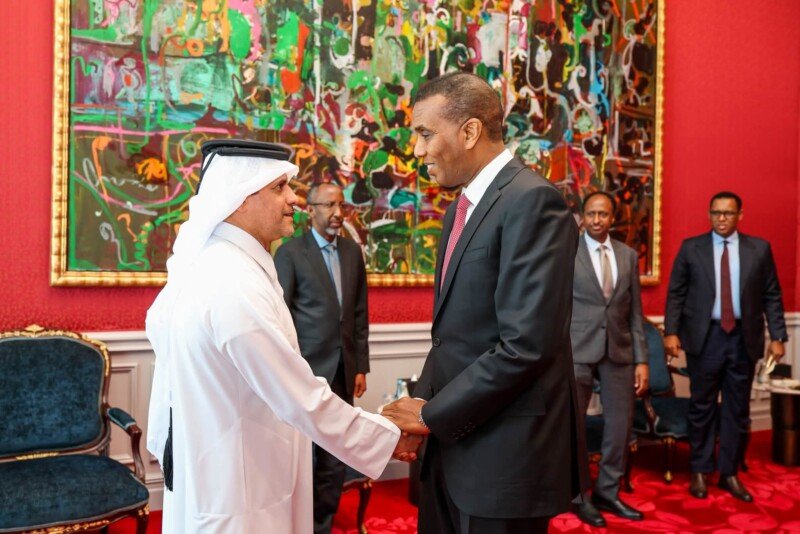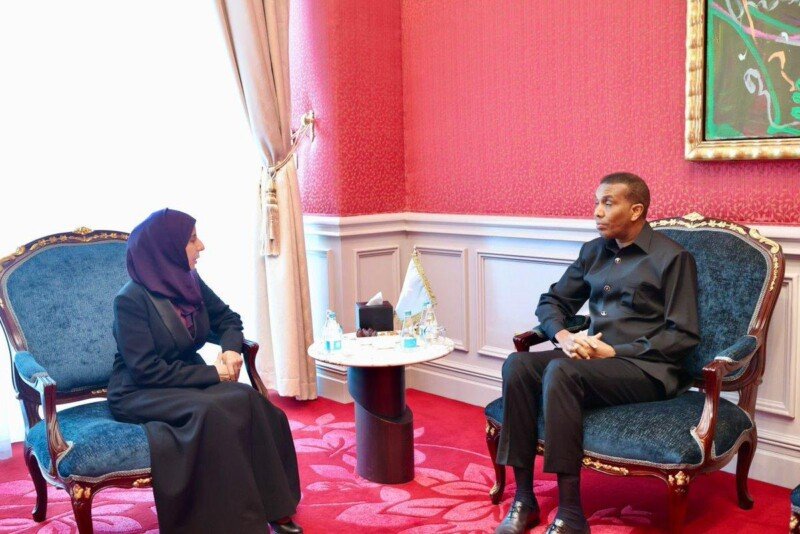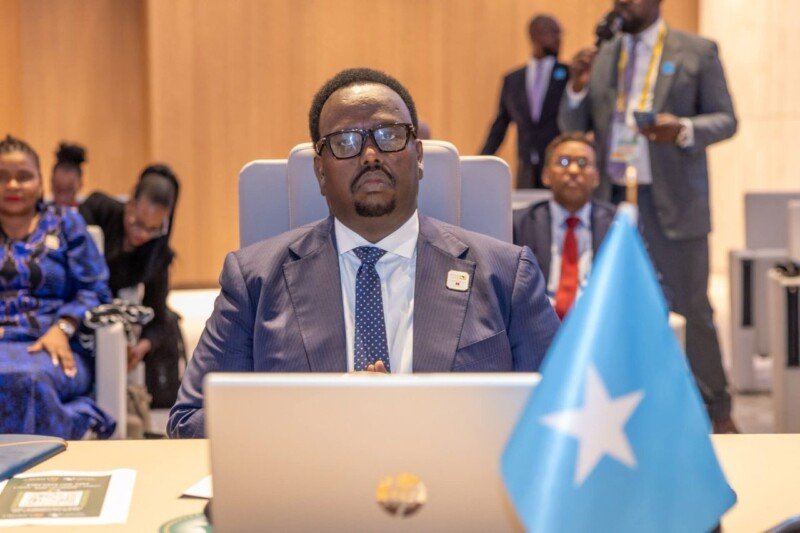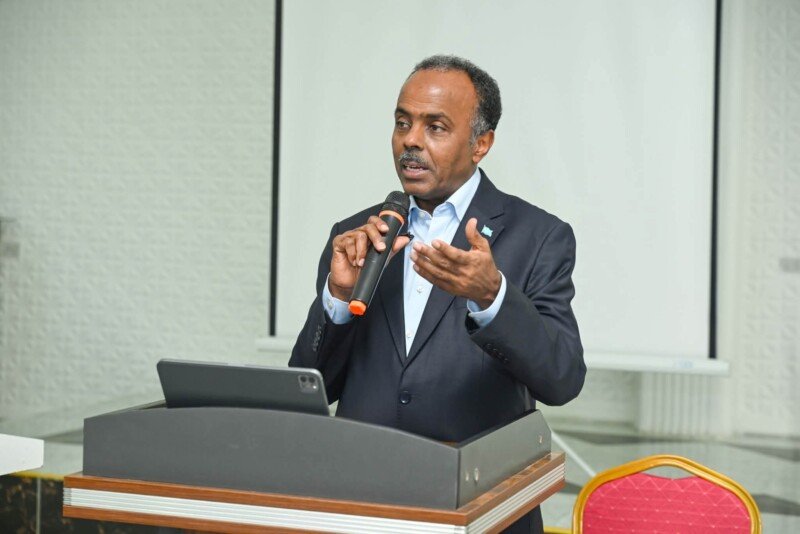
CAIRO — Somalia’s State Minister for Foreign Affairs and International Cooperation, Ali Mohamed Omar (Cali Balcad), has called on Arab states to use their relations and influence to prevent Israel’s recognition of the breakaway region of Somaliland from escalating into a broader recognition campaign .
In exclusive remarks to Asharq Al-Awsat, Omar explained that his country is in direct contact with the administration of US President Donald Trump to express its rejection of this recognition . Last December, Israel became the first UN member state to recognize Somaliland, followed by the exchange of ambassadors and the opening of a Somaliland embassy in Jerusalem, along with an official visit by the region’s president to Israel .
Omar has previously stated that Mogadishu’s diplomatic efforts had prevented a potential cascade of recognitions that could have followed Israel’s landmark decision. According to Omar, several nations had been considering recognition, but Somalia’s sustained diplomatic outreach convinced them to withhold formal endorsement . “We have been working to ensure that Somaliland is not recognised. Many countries were considering the matter, but the efforts of the Ministry of Foreign Affairs and the national leadership led to them not joining,” Omar said .
Omar accused Israel and the UAE of leading a coordinated campaign to persuade other nations to recognise Somaliland, leveraging diplomatic and financial resources to advance the secessionist agenda . “They have approached many countries and are spending a lot of money. We are closely monitoring and working to counter these efforts,” he stated .
Omar stressed that Somalia would take “very seriously” any attempt by a foreign country to establish a military or intelligence presence on Somali soil without the consent of the Federal Government, warning that “militarizing this issue would be dangerous for Somalia and the wider region” .
Regarding the Arab reaction, Omar stated: “The immediate Arab response was important, because it very clearly confirmed that Israel’s decision did not change the international or regional consensus on the territorial integrity of Somalia” . He added that “the goal is not just to issue condemnations, but to prevent a single unilateral recognition from turning into a wider campaign” .
The joint statement condemning Israel’s move was signed by 15 Arab and Muslim nations, including Oman, Kuwait, Saudi Arabia, Egypt, Somalia, Sudan, Libya, Bangladesh, Algeria, Turkey, Indonesia, Pakistan, Mauritania, Jordan, and the Palestinian Authority . They described the move as a “flagrant violation” of Somalia’s sovereignty and territorial integrity .
Omar noted the ongoing “regular engagement in dialogues with the United States regarding Somalia’s sovereignty, security, and broader strategic relationship,” adding that “we take any discussion of recognition seriously, and we are aware that there are members of Congress calling for a change in U.S. policy” . However, he stressed that “the Trump administration clearly supports a unified Somalia,” and that “the United States continues to recognize the sovereignty and territorial integrity of the Federal Republic of Somalia, including Somaliland” .
Israel’s Expanding Presence in Somaliland
Investigative reporting has revealed that Israel has established an intelligence presence at Berbera International Airport in Somaliland and is holding ongoing discussions about the possible creation of an Israeli military base . According to Drop Site News, multiple current and former officials confirmed that Israel already has an intelligence footprint at Berbera Airport, with a unit of Somaliland’s presidential guard having returned from training in Israel .
Somaliland President Abdirahman Mohamed Abdullahi (Irro) has rejected claims that Israel is establishing military bases or intelligence facilities in the breakaway region, even as he confirmed that security cooperation between the two sides is expanding . “At the moment, Israel has no troops in Somaliland, but I cannot say what may happen in the future,” Irro said .
The deepening ties have drawn sharp criticism from regional actors opposed to closer ties with Israel. The African Union, IGAD, Qatar, Saudi Arabia, Jordan, Iraq, China and others have all rejected the move . Even the United States, while not formally condemning the recognition, has reaffirmed its “One Somalia” policy and declined to follow Israel’s lead .
Israeli Foreign Minister Gideon Sa’ar has stated that agreements with Somaliland do not include any provision for relocating people from Gaza to Somaliland, addressing allegations from several Arab nations and the Somali government that Israel had ulterior motives in recognizing Somaliland .
Critical Note
Omar’s interview reflects Mogadishu’s continued diplomatic offensive to counter Israel’s recognition of Somaliland and prevent a domino effect. While the immediate Arab response was significant in reaffirming the international consensus on Somalia’s territorial integrity, the long-term effectiveness of this strategy remains uncertain. Israel’s recognition has already produced tangible results, including the exchange of ambassadors and security cooperation, and Somaliland continues its campaign for further recognition.
The United States remains a critical player. While the Trump administration has officially reaffirmed its support for Somalia’s unity, pressure from pro-Israel figures and some Republican lawmakers continues to grow. Somalia’s diplomatic engagement with Washington must be sustained to prevent a shift in U.S. policy. Furthermore, the Somali government’s ability to maintain its territorial integrity will depend not only on international diplomacy but also on addressing internal grievances and strengthening governance within the country.
Somalia’s deepening ties with Turkey and Egypt, along with its strategic partnership with Saudi Arabia, represent a hedging strategy against Ethiopian and Emirati influence in the region. However, these partnerships must translate into tangible support on the ground, including effective deployment of Egyptian forces under AUSSOM and sustained Turkish investment in Somalia’s security and development. The effectiveness of these partnerships will be measured by their impact on Somalia’s security and economic development.