MOGADISHU — Türkiye’s deep-sea oil and gas exploration drilling off the coast of Somalia is progressing ahead of schedule and could be completed by the end of September, according to the Somali Petroleum Authority Director General Abdulkadir Adan .
Speaking to the Somali National News Agency (SONNA), Adan said the drilling had reached a depth of around 3,000 meters and was proceeding rapidly and without technical difficulties. The operation was initially scheduled to be completed in October, but the current pace could bring completion forward by about a month. “Completion by the end of September is possible. October had previously been set as the target completion date,” he said.
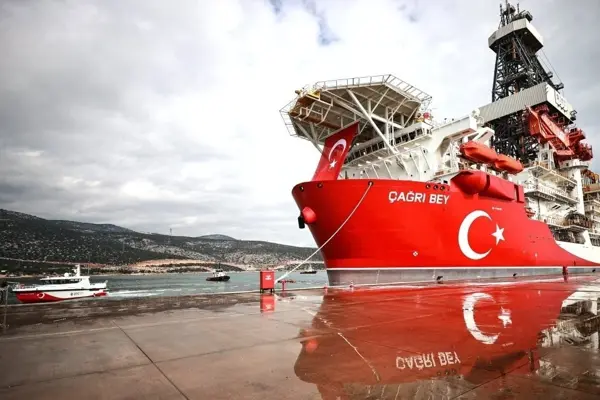
The operation marks the culmination of a historic energy partnership between Mogadishu and Ankara . The Çağrı Bey drillship, formerly known as the West Draco, represents a highly sophisticated deep-sea drilling platform managed by the Turkish Petroleum Corporation, embarking on its first major foreign assignment in Somalia .
Between 470 and 480 personnel are working aboard the drilling and support vessels, with Turkish nationals accounting for around 20 percent of the workforce. No accidents or technical problems have been reported so far, and the operation is being conducted in line with safety and technical standards.
Turkish President Recep Tayyip Erdogan has described the venture as having “historical importance,” emphasizing that it represents Turkey’s first deep-sea drilling initiative beyond its own national borders . “Providing weather conditions allow, we anticipate concluding the drilling process within a six to nine month timeframe,” Erdogan stated .
Türkiye’s seventh-generation ultra-deepwater drillship Çağrı Bey is conducting exploration drilling at the Curad-1 well, around 370 kilometers offshore from Mogadishu . The operation aims to drill approximately 4,000 meters below the seabed and reach a total depth of 7,500 meters, which would make Curad-1 the world’s second-deepest offshore well .
A Historic Energy Partnership
Türkiye and Somalia signed an intergovernmental agreement and memorandum of understanding on oil and gas cooperation in March 2024, followed by a production-sharing agreement covering three offshore blocks in July . Türkiye’s Oruç Reis seismic research vessel subsequently collected three-dimensional seismic data across 4,464 square kilometers in the three blocks over a period of 234 days . After nearly seven months of surveys and data analysis, Curad-1 was selected for drilling following the identification of promising geological structures .
President Hassan Sheikh Mohamud officially launched the advanced Turkish offshore drilling vessel during a high-level ceremony at the Port of Mogadishu, formally marking the beginning of Somalia’s deep-sea hydrocarbon exploration . “The Federal Government is committed to responsible and transparent extraction of natural resources for the direct benefit of Somali citizens,” the president said .
Turkey’s Energy and Natural Resources Minister Alparslan Bayraktar, who attended the ceremony, confirmed that the deployment of the Çağrı Bey and the start of offshore drilling operations demonstrate the successful achievement of the common energy and economic goals between the two countries .
Somali Petroleum and Mineral Resources Minister Dahir Shire Mohamed has described Türkiye as a “brotherly country” that had stood by Somalia since the 2011 humanitarian crisis and said ties had expanded steadily over the past decade . “We are very positive that we will have some positive outcome towards the end of this year,” he said regarding the drilling results .
Somalia’s Ambassador to Turkey, Fathudin Ali Ospite, has described the presence of the Çağrı Bey off Somalia’s coastline as a pivotal moment in the nation’s journey toward economic self-sufficiency, emphasizing that the exploration initiative is anticipated to generate employment for Somali youth and enhance professional capabilities within the energy sector .
“Beyond direct job creation, this collaboration is likely to foster broader economic expansion by attracting investments, bolstering local industries, and increasing government revenues,” Ambassador Ospite explained .
Controversy and Transparency Concerns
However, the petroleum initiative has coincided with significant internal political tensions in Mogadishu. Somali opposition figures have alleged that Ankara openly favors President Hassan Sheikh Mohamud, whose term officially ended on May 15, suggesting that Turkey’s measures could support an authoritarian regime during a critical constitutional period .
Somali Member of Parliament Abdirahman Abdishakur Warsame has expressed significant concerns regarding the oil exploration pact, characterizing the agreement as “profoundly imbalanced” and warning that it might jeopardize Somalia’s national interests . Warsame disclosed that the present terms grant more than 90 percent of the advantages to one party, leaving Somalia with minimal to no substantial earnings from its own natural resources .
Somali Senator Professor Abdi Ismail Samatar delivered harsh condemnation, stating: “Turkish vessels are prospecting and drilling for oil in Somali waters. This is exceptionally alarming as the entire affair is illegal. President Erdogan and his people know that the so-called defense and petroleum agreements between Türkiye and Somalia are fraudulent” .
The Somalia Transparency Initiative has cautioned that while the arrival of the Çağrı Bey indicates tangible progress toward oil production, severe risks stem from improper resource management . The watchdog organization called on federal authorities to maintain absolute transparency through the immediate public disclosure of oil contracts, the clarification of corporate ownership structures, and the implementation of clear, accountable revenue management systems to safeguard national interests .
Critical Note
The progress of the Çağrı Bey drilling operation represents a significant milestone for Somalia’s long-stalled energy sector. However, the partnership with Türkiye raises important questions about transparency and the equitable distribution of future revenues. The Petroleum Ownership Management and Revenue Sharing Agreement between the Federal Government and its Member States enshrines that Somalia’s mineral and natural resources are owned by the Somali people and mandates how future revenues will be shared. Yet the implementation of this framework remains untested.
The Somali Petroleum Authority has emphasized that the fiscal and regulatory regime is designed to be “internationally competitive to attract investment, whilst delivering an equitable proportion of any future revenues to the Somali people.” However, the lack of public disclosure regarding the specific terms of the production-sharing agreement and the potential allocation of revenues raises concerns about transparency and accountability.
While the government has touted the potential for job creation and economic growth, the broader benefits for ordinary Somalis will depend on the effective management of resources and the prevention of corruption. The Somali government must ensure that the energy partnership with Türkiye serves the long-term interests of the Somali people and that the revenues generated are used to address the country’s pressing development needs, rather than enriching a narrow elite.
Recommended Reading On ftlsomalia.com
- Turkey to Finish Somalia Offshore Drilling in 6-9 Months
- Turkish Drillship Arrives in Mogadishu for Historic Offshore Drilling
- Somalia’s Oil Discovery Transforms Global Energy Dynamics
- Turkish Energy Delegation Arrives in Mogadishu for Historic Drilling
- Turkish Drillship to Begin Offshore Oil Operations in Somalia