MOGADISHU: As Somalia edges closer to a political cliff‑edge with President Hassan Sheikh Mohamud’s term set to expire on May 15, contradictory reports have emerged over the role of the United States in trying to resolve the deepening electoral crisis. One detailed account claims Washington is hosting direct talks between the federal government and opposition leaders inside the heavily fortified Halane compound on May 13. Another, attributed to a U.S. diplomat and supported by a Somali government minister, flatly denies any direct American mediation – while acknowledging that diplomatic conversations continue.
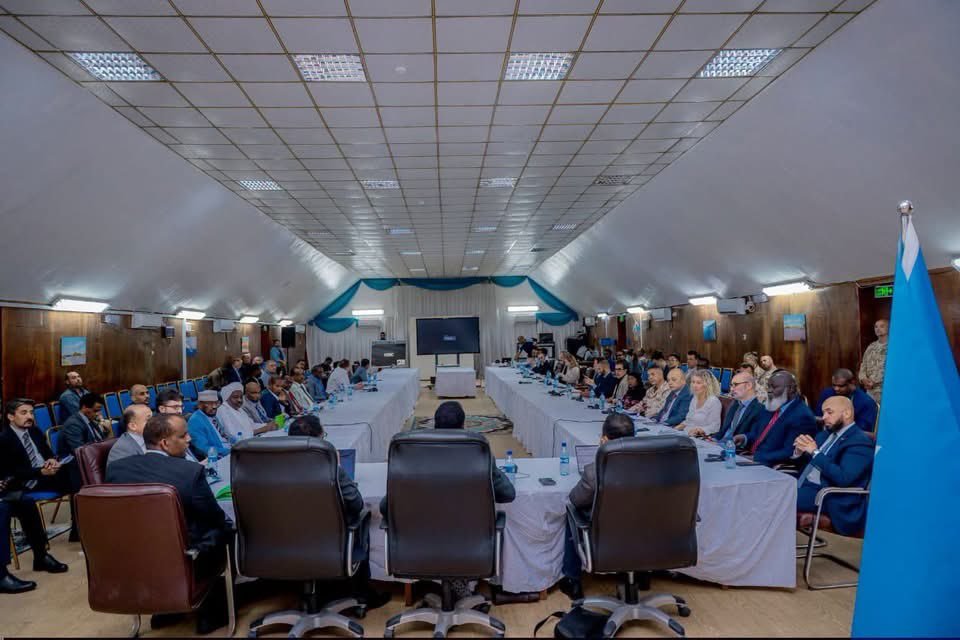
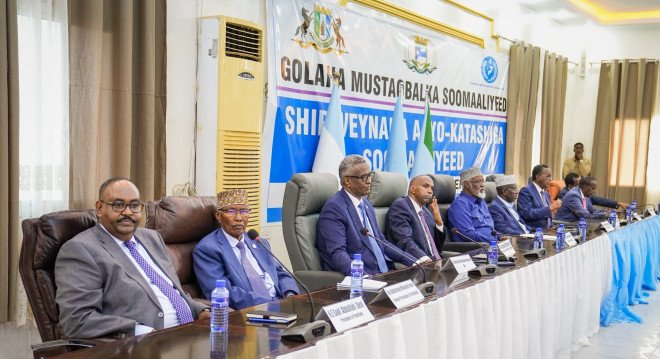
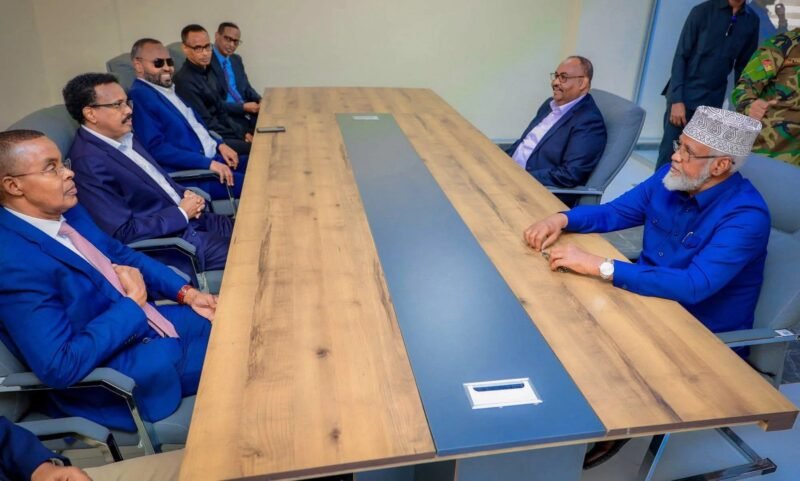
According to a report by Somaliguardian, the United States is set to mediate high‑stakes talks between the Somali federal government and opposition leaders in Mogadishu on May 13. The meeting, to be held inside the Halane compound at Mogadishu’s Aden Adde International Airport, would mark the first formal American mediation in Somalia’s intensifying political dispute. The facility houses several foreign diplomatic missions, including the US embassy, and is regarded as the most secure zone in the Somali capital. The report named President Hassan Sheikh Mohamud and Prime Minister Hamza Abdi Barre as representing the federal government, while the opposition Somali Future Council delegation would include Puntland leader Said Abdullahi Deni and former president Sharif Sheikh Ahmed.
A separate report by Goobjoog News confirmed that Puntland and Jubaland leaders are expected to arrive in Mogadishu on May 13 as part of ongoing diplomatic efforts led by the United States Embassy in Somalia to ease mounting political tensions over the country’s electoral process. According to sources familiar with the developments, the embassy has extended invitations to the leaders of Puntland and Jubaland, members of the Future Forum, and opposition politicians in an effort to create conditions for dialogue and political consensus.
However, the U.S. government has now moved to clarify its position. Chargé d’Affaires Justin Davis, the acting U.S. ambassador to Somalia, told Dawan Africa that Washington is not hosting or leading any mediation. “We have been talking to both sides for a while to better understand the situation,” Davis said. “We would welcome the opportunity to see the Federal Government of Somalia and the political opposition engaged in dialogue, but the United States is not hosting and is not leading mediation. The future of Somalia is in the hands of the Somali people and their leaders. International actors will not solve this issue.” Davis added that the U.S. position has not changed: “The Somali people must choose their own leadership, and the specific electoral process and timeline are matters for them to determine.”
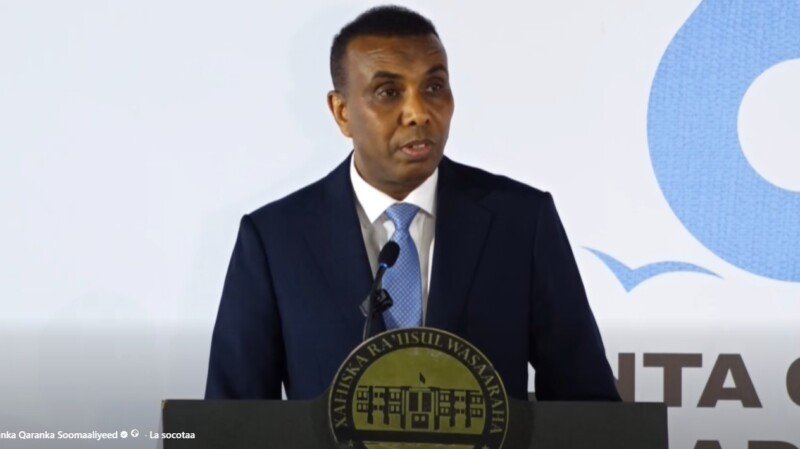
Somalia’s State Minister for Foreign Affairs, Ali Balcad, on Monday likewise denied reports that the US Embassy in Mogadishu was preparing to host talks between the federal government and opposition leaders. Speaking at X space, Balcad said there were no plans for a meeting on May 13 and rejected claims that Washington was directly engaging in Somalia’s escalating political tensions. He also accused some opposition members of sending letters to foreign embassies based inside the Halane compound, as well as to the World Bank, requesting that financial support to Somalia be suspended during what they described as a transitional political period.
The contradiction may be more semantic than substantive. It is possible that the US is providing advice and encouragement, and a secure venue if needed, while insisting that Somali actors lead the negotiations. A US diplomat might honestly say that Washington is not “mediating” or “hosting” even if its embassy is facilitating a meeting. Alternatively, the denial may be a deliberate diplomatic move to lower expectations or to pressure Somali leaders to resolve their differences without relying on external rescue.
The diplomatic maneuvering comes against a backdrop of escalating political tensions in Mogadishu. A planned opposition protest on May 10 failed to materialize after the government imposed a security lockdown, deploying heavily armed forces across the capital and blocking access to rally sites. The federal government said it had designated Engineer Yarisow Koonis Stadium as the approved venue for any public gathering, but opposition organizers announced plans to hold protests across 22 locations in the capital, which authorities said would have risked security and public order.
President Mohamud has repeatedly defended plans to transition Somalia towards a one‑person, one‑vote electoral system, a long‑promised democratic reform that supporters argue would strengthen political legitimacy and move the country away from its clan‑based indirect voting structure. The president invited the Somali Future Council to a national consultative meeting scheduled for May 10, but the opposition conditioned its participation on a halt to what it described as electoral activities and securing impartial mediation. The council has warned that after May 15 it will take measures to prevent a power vacuum or unconstitutional rule.
With the president’s term scheduled to end on May 15, the political climate in Mogadishu remains highly volatile. Opposition leaders have declared that President Mohamud will lose his legal authority after May 15 unless national elections are conducted or a constitutional alternative is agreed upon. Forced evictions and land disputes have become a central flashpoint, and international partners including the United Nations and the European Union have called for restraint and urged all parties to engage in constructive dialogue. Whether Washington will play any formal role in facilitating talks, and whether such engagement can break the deadlock, will become clear in the coming days.
Recommended Reading on ftlsomalia.com:
- Somalia Braces for Protests as Deadly Clashes Grip Mogadishu
- Federal Government Says Measures Safeguarded Order as Opposition Protest Fails
- President Hassan Invites Future Council to National Consultative Meeting
- Opposition Council Warns of Political Crisis as Election Deadlines Loom
- Opposition: President’s Mandate Expires May 15 Without Elections
- Evictions in Mogadishu Ignite Fierce Political Showdown