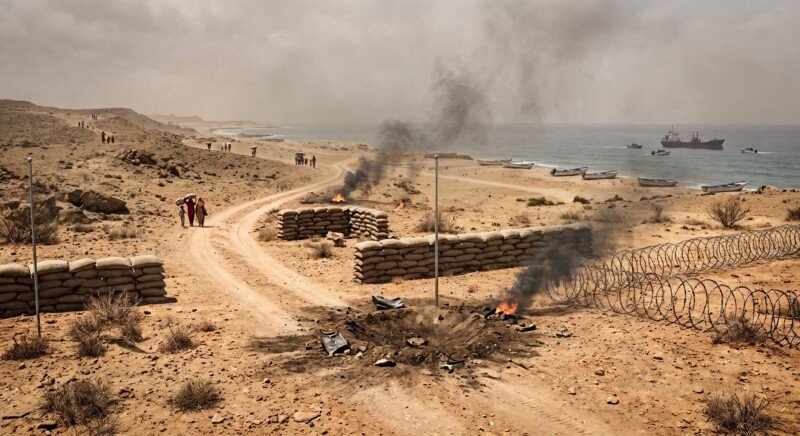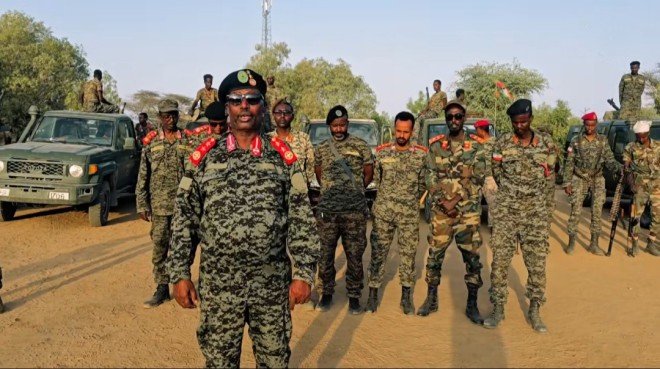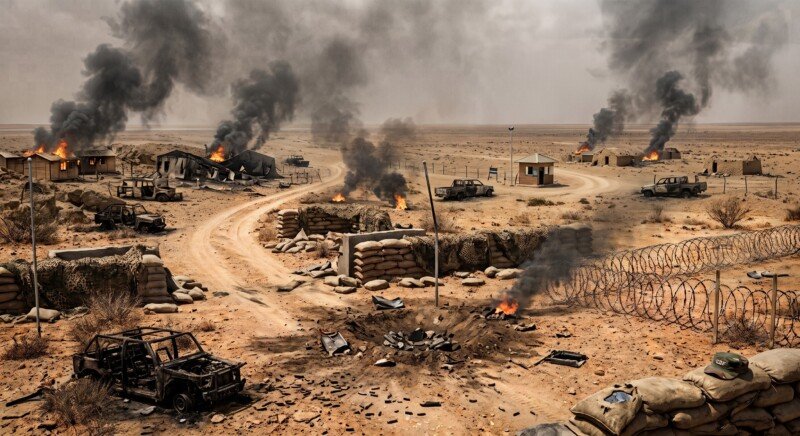
NAIROBI — Al-Shabaab militants launched two separate attacks on Kenyan Defense Forces (KDF) positions overnight, targeting Yunbis in Fafi, Garissa County, and Sheekh Barow and Fino in Lafey, Mandera County, according to local reports.
In Yunbis, local sources said gunfire was heard during the fighting and a fire broke out inside the camp. The militants claimed one KDF soldier was killed and another wounded. In Mandera, militants also attacked KDF positions around Sheekh Barow and Fino, with heavy gunfire reported during the clashes.
The attacks come amid a sharp increase in Al-Shabaab activity across Kenya’s northeastern border counties, particularly Mandera, where KDF positions and patrols have faced repeated attacks in recent weeks. The group has frequently exploited the porous border to launch attacks on military bases and civilian targets in counties such as Mandera, Wajir, and Garissa .
Kenya’s border with Somalia stretches 680 kilometers and has historically been a conduit for informal trade, livestock movement, and family ties across communities that share cultural and clan links. However, security concerns have led to prolonged closures and restrictions .
A Pattern of Cross-Border Violence
The latest attacks are part of a long-running pattern of cross-border violence since Kenya deployed troops to Somalia in 2011 under Operation Linda Nchi. Kenya’s elite Special Operations Group (SOG) had conducted a planned operation against an Al-Shabaab encampment in Mandera County earlier this month, killing 11 militants and wounding seven others. The operation, launched in the early hours of the morning, targeted approximately 30 Al-Shabaab fighters who were reportedly preparing a terror attack on one of the villages in Mandera County .
Heavy fighting also erupted between Al-Shabaab and Kenyan forces near the town of Dhaashow in Garissa County, with the group claiming to have inflicted significant casualties. A separate intelligence-led security operation in the Esagur Cutline area targeted a militant hideout where approximately 30 fighters had assembled to coordinate planned attacks against communities in Mandera County.
Former Deputy President Rigathi Gachagua has leveled explosive accusations against President William Ruto, alleging clandestine dealings with Somalia-based militant group Al-Shabaab. Speaking at a Democracy for Citizens Party event in Nyeri, Gachagua claimed that President Ruto secretly met with Al-Shabaab operatives in Mandera, raising serious questions about national security and Kenya’s counterterrorism policy.
The Somalia-Kenya border at Mandera was scheduled to be reopened after a 10-year closure, with Kenyan authorities announcing plans to rehabilitate the Customs Border Control Point to curb illicit trade, including the smuggling of goods, drugs, counterfeit products, and illegal weapons .
Kenyan Defense Minister Aden Duale has previously called for increased collaboration in the fight against terrorism along the Kenya-Somalia border, visiting terrorist hotspots including Kiunga/Ras Kamboni, Liboi-Harhar/Dhobley, and Mandera/Belet Hawo towns. Duale assured that Kenya would cooperate with Somali security and intelligence agencies better to ensure that the border remains safe for all .
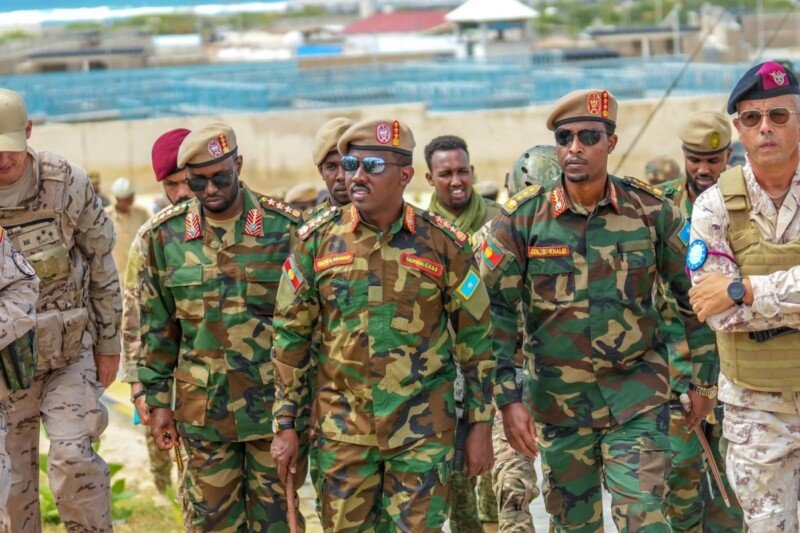
Prime Minister Hamza Abdi Barre met with Kenya’s Ambassador to Somalia, Cyprian Kubai Iringo, to discuss strengthening bilateral cooperation, with a particular focus on security, economic development, and diplomatic relations. Prime Minister Barre briefed the ambassador on the progress of ongoing military efforts to secure the country and underscored the importance of close coordination between Somalia and Kenya in safeguarding their shared border and promoting regional stability .
The United States and Kenya have launched a $71 million initiative to upgrade the airfield at Manda Bay, a facility situated directly adjacent to the Somali border. While the project focuses on infrastructure in Kenya, analysts view the move as part of a major strategic realignment by US Africa Command (AFRICOM) to encircle Al-Shabaab threats originating from Somalia, while simultaneously reducing reliance on Djibouti .
A Somali military court previously jailed an Al-Shabaab militant who was accused of attacking the US base in Lamu, Kenya, in January 2020. The attack, which killed a US soldier and two contractors, was the first of its kind Al-Shabaab had carried out in Kenya against US forces .
Critical Note
The double attack on KDF positions in Garissa and Mandera underscores the persistent threat posed by Al-Shabaab along the Kenya-Somalia border. The group’s ability to launch coordinated attacks on multiple positions simultaneously demonstrates continued operational capability despite years of counter-terrorism efforts.
Kenya’s military presence in Somalia, while aimed at securing its own borders, has made it a primary target for Al-Shabaab. The porous border and the group’s ability to regroup and launch attacks suggest that military solutions alone are insufficient. As the Garissa University attack of 2015 demonstrated, Al-Shabaab’s reach extends far beyond the border regions, with the capacity to strike deep inside Kenyan territory.
Enhanced intelligence sharing and joint security cooperation between Nairobi and Mogadishu will remain critical to countering the shared threat . However, the cycle of violence is likely to continue unless both governments address the underlying governance deficits and economic marginalization that enable Al-Shabaab to recruit and operate .
The lack of an official statement from Kenyan authorities on the latest attacks means the full extent of the casualties and damage remains unclear, a troubling pattern that leaves communities in the dark about their own security .
Recommended Reading On ftlsomalia.com
- Al-Shabaab Attacks Kenyan Security Posts in Mandera
- Heavy Clashes Erupt Between Al-Shabaab and Kenyan Forces
- Kenya’s Special Operations Group Strikes Al-Shabaab Base
- Somali Premier, Kenyan Diplomat Discuss Security Cooperation
- US Shifts Al-Shabaab Combat Operations from Djibouti to Kenya
- Duale Calls for Increased Collaboration Against Terrorism