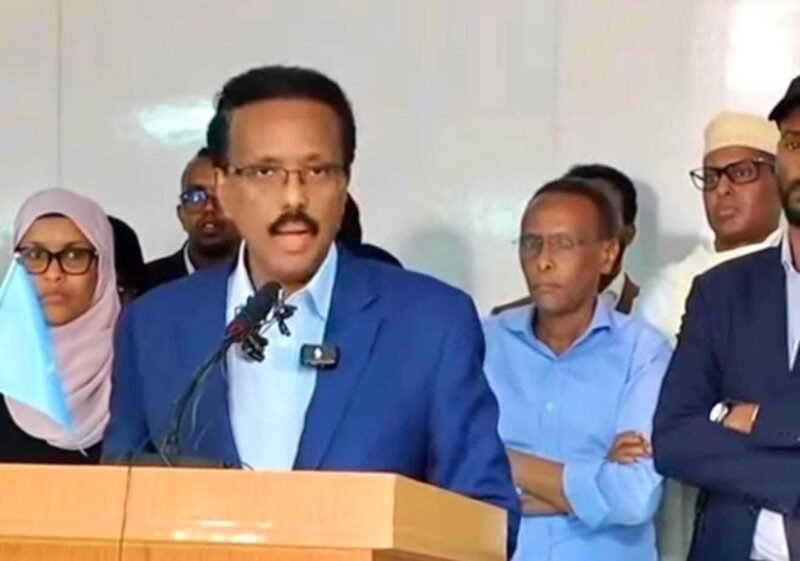
MOGADISHU: Former President Mohamed Abdullahi Farmaajo has called on President Hassan Sheikh Mohamud to establish an inclusive electoral framework before his term concludes on May 15, warning that a lack of consensus could trigger further instability. The appeal comes as political tensions intensify, with opposition factions and federal authorities deadlocked over electoral procedures and constitutional revisions ahead of the fast‑approaching deadline.
“Next Friday, May 15, 2026, marks the final legitimate day of President Hassan Sheikh’s tenure,” Farmaajo said in an official statement. “During his final week, he should prioritize establishing an inclusive electoral system involving all stakeholders.” Farmaajo, who held the presidency from 2017 to 2022, also demanded the immediate and unconditional release of journalists and civil society advocates detained amid recent political conflicts. He alleged that the current administration has breached constitutional principles and is advancing toward autocratic governance. “He should also free all unlawfully detained civil society representatives and journalists,” Farmaajo emphasized.
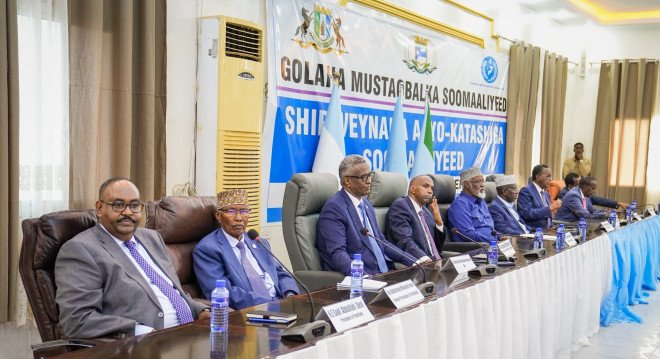
Despite the impending conclusion of the presidential term, government and opposition forces remain at a standstill. Critics of President Mohamud have voiced concern that the absence of a consensus‑based approach for the upcoming electoral model could result in a constitutional vacuum and national discord. Opposition leaders have already declared that President Mohamud will lose his legal authority after May 15 unless national elections are conducted or a constitutional alternative is agreed upon. The Somali Future Council has warned that after that date it will take measures to prevent a power vacuum or unconstitutional rule.
Farmaajo’s statement aligns with growing calls from opposition figures and civil society for a negotiated political settlement. The Somali Future Council has previously voiced deep concern over substantial delays in the electoral process, accusing senior government officials of neglecting their constitutional obligations. Opposition leaders have also called for an indirect voting system and an independent mediator, while the government has insisted on a one‑person, one‑vote model.
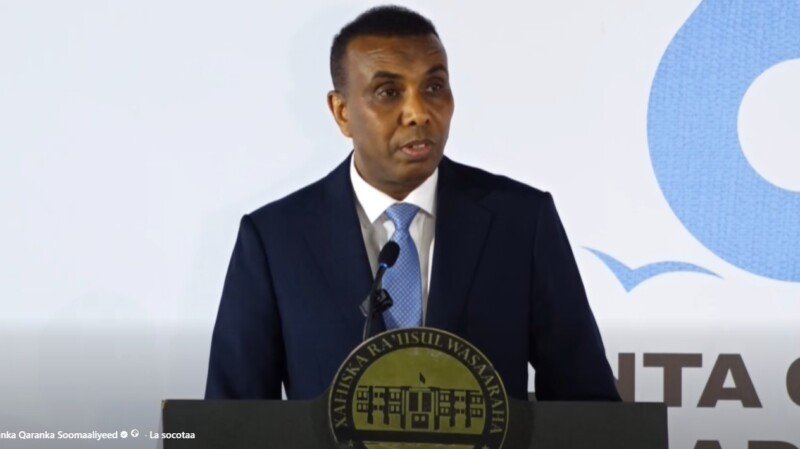
Government authorities did not immediately respond to Farmaajo’s remarks. In recent weeks, the administration has defended its attempts to modify the electoral process, asserting that the changes are essential for national security and for establishing universal direct voting. Somalia has historically struggled to implement a “one‑person, one‑vote” system, often relying on a complicated indirect method that involves clan leaders and regional delegates. President Mohamud has repeatedly reaffirmed his commitment to universal suffrage, describing it as essential for democratic progress.
The former president’s intervention adds to mounting political pressure as the May 15 deadline approaches. Senior government officials have previously suggested that the administration could remain in power for up to two additional years, a position opposition leaders have rejected. Farmaajo’s call for the release of detained journalists and activists also echoes recent concerns raised by media freedom organisations. Goobjoog Media Group has condemned the detention of journalist Rowdo Hassan Taakilo, describing it as part of a wider pattern of press suppression. Recent media arrests have sparked widespread outrage, with former President Sharif Sheikh Ahmed describing the incidents as a “calculated assault on free speech.”
With the scheduled national consultative meeting on May 10 and the term expiration only five days later, the political landscape remains highly fluid. Whether President Mohamud will heed Farmaajo’s call for an inclusive framework remains to be seen, but without a last‑minute breakthrough, Somalia appears poised for a deepening constitutional and political crisis.
Recommended Reading on ftlsomalia.com:
- Opposition: President’s Mandate Expires May 15 Without Elections
- Opposition Council Warns of Political Crisis as Election Deadlines Loom
- Opposition Seeks Indirect Voting System as Future Council Sets Conditions
- President Stands Firm on One‑Person, One‑Vote Elections
- Goobjoog Media Group Condemns Detention of Journalist
- Media Arrests Ignite Outrage in Mogadishu