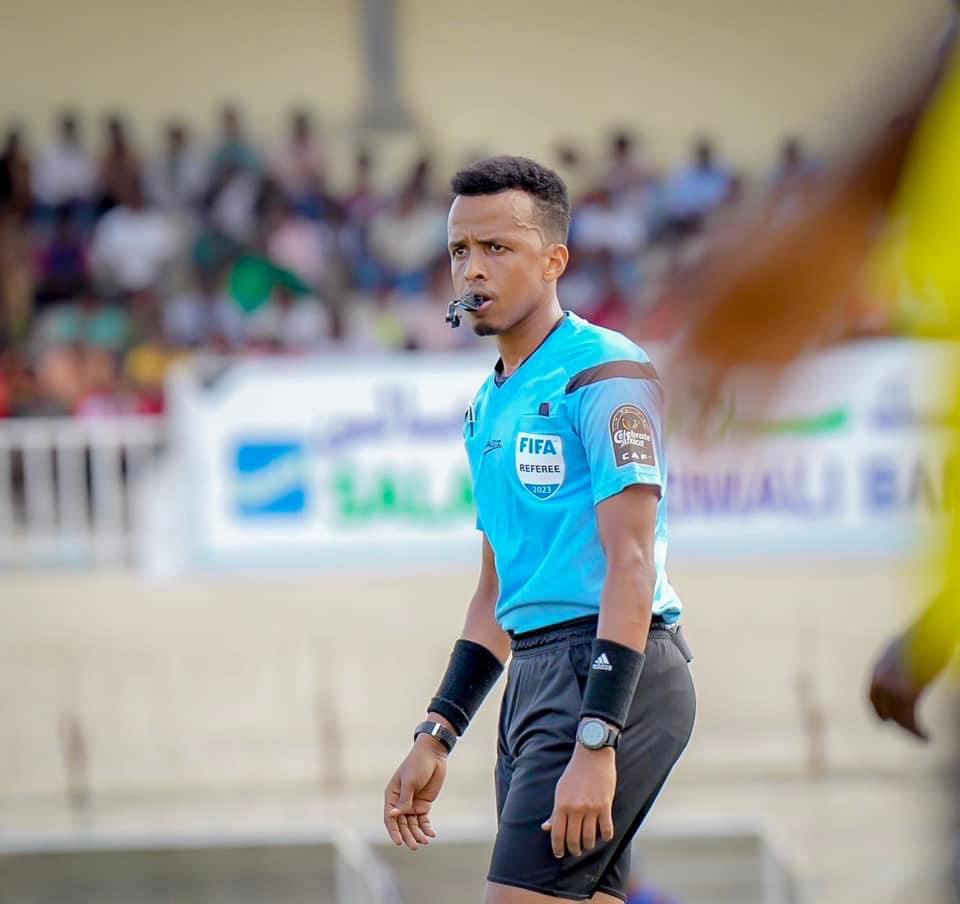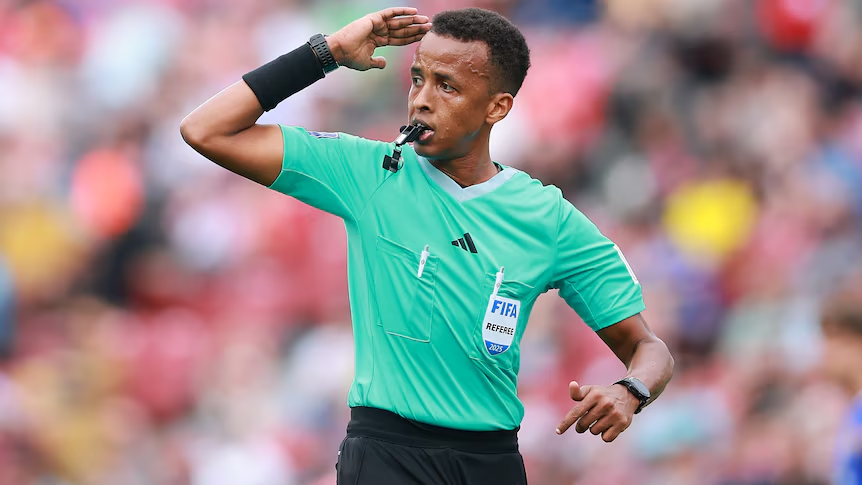
MOGADISHU – Somali international referee Omar Abdulkadir Artan, Africa’s best male referee of 2025, was denied entry to the United States at Miami International Airport despite holding a valid visa and being set to become the first Somali official to referee at a FIFA World Cup. The decision has sparked international outrage and exposed what critics call a blatant double standard in how FIFA and host nations treat different countries based on political considerations.
Artan, 34, arrived in Miami from Istanbul after being issued a visa by the Embassy in Kenya. According to Artan, he was subjected to an 11-hour interrogation by border officials who questioned him about Somali politics and the Al-Shabaab militant group. Despite presenting FIFA documentation and photographs from his refereeing career, he was placed in a holding cell and deported on a flight back to Istanbul.
“I’m just simply a referee who’s trying to live his dream, the biggest dream of my life, to come to the World Cup,” Artan told The New York Times. “I think that they have a problem with my country.”
The Trump administration defended the decision, with a US official stating that Artan was denied entry due to “derogatory information, including association with suspected members of terror organisations.” However, no specific details about these alleged associations were provided, and Artan maintains he knows nothing about such groups.
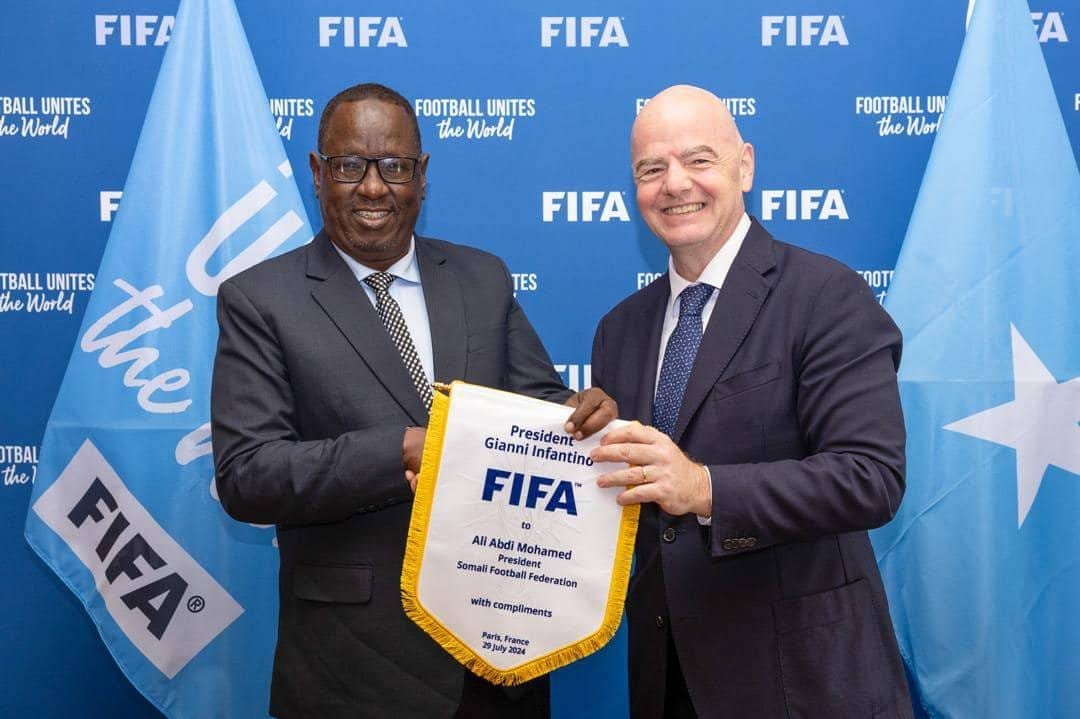
FIFA has previously invested heavily in Somali football development, granting the Somalia Football Federation $4.5 million through its Forward Development Programme, one of the largest direct investments in the country’s football development in recent years. The funds were designed to strengthen football infrastructure, governance, and youth programs in Somalia, where sports have long struggled under the weight of conflict and inadequate facilities.
Indonesia Stripped of Hosting Rights for Refusing Israel
The treatment of Artan stands in stark contrast to how FIFA has handled other political controversies. FIFA stripped Indonesia of the hosting rights for the Under-20 World Cup after the governor of Bali refused to allow the Israeli team to stay in the country. Indonesia does not have any formal ties with Israel, and some of its population had taken part in pro-Palestine protests amid the ongoing conflict.
FIFA was essentially forced to cancel the official draw for the tournament due to the refusal. The governing body then handed the hosting rights to Argentina, while Israel finished third in the tournament eventually won by Uruguay. FIFA’s decisive action against Indonesia demonstrated that the organization is willing to intervene forcefully when its member associations are perceived as violating the principle of non-discrimination.
In August 2025, the Italian Football Coaches Association penned an open letter calling for Israel’s suspension from international football. Yet Israel continues to compete in both UEFA and FIFA competitions, currently playing its home matches in Hungary. The Palestinian federation called for a vote to exclude Israel at FIFA’s congress in Bangkok in May 2024, but FIFA postponed the decision.
Russia Remains Banned, Israel Competes Unimpeded
The double standard becomes even more glaring when comparing the treatment of Russia and Israel. Russia has been banned from both FIFA and UEFA-sanctioned competitions since its full-scale invasion of Ukraine in 2022, with the ban still in place for the 2026 World Cup. Russian teams have been excluded from all international competitions, and the country was disqualified from the 2022 World Cup play-offs.
Yet Israel, despite being a party to an ongoing conflict that has resulted in tens of thousands of civilian casualties in Gaza, faces no such sanctions. Calls for Israel’s suspension have been growing, including from the Italian Football Coaches Association, but FIFA and UEFA have taken no action.
UEFA President Aleksander Čeferin, when pressed on the topic, said: “For now, this is our decision. It is very difficult for me to comment on what could happen in the future. I think the time has come when we have to stop pretending that we are a sports organisation that lives on another planet.”
Trump’s Racially Charged Comments About Somalia
The rejection of Artan must be viewed against the backdrop of President Donald Trump’s derogatory comments about Somalia and its people. In December 2025, just two days before the World Cup draw, Trump made inflammatory statements about an immigration enforcement operation being planned in Minnesota, home to a large community of Somalis.
“With Somalia, which is barely a country, you know, they have no anything. They just run around killing each other. There’s no structure,” Trump said. The president added that the Somali immigrants should “go back to where they came from” and that the US would “go the wrong way if we keep taking in garbage into our country.”
In June 2025, Trump placed a full entry ban under any visa category covering 12 countries, including Somalia and three World Cup finalists: DR Congo, Iran and Haiti. While the order carves out an exemption for World Cup athletes and staff, border officers retain wide discretion to wave people through or turn them back, a loophole that effectively neutralizes any protection for officials from banned nations.
Somalia’s sporting ambitions have extended beyond men’s football, with the national women’s team traveling to Djibouti to play friendly matches marking the first such fixtures in the country’s history. The team played its first match, demonstrating Somalia’s commitment to developing football across all levels despite limited resources.
Andrew Giuliani, who leads the White House Task Force on the World Cup, told BBC World Service: “While I can’t go into the derog on that I can tell you it was the right decision by customs and border patrol and I support that decision.”
FIFA’s Hollow Words and Loss of Control
FIFA has attempted to distance itself from the controversy, stating that it “is not involved in host country immigration processes, including visa adjudications” and that it was informed by US authorities that Artan’s “status will not be changed at present.” However, this position stands in stark contrast to FIFA’s previous statements about the importance of access for World Cup participants.
When Trump first took office in 2017 and implemented a travel ban on seven majority-Muslim countries including Somalia, FIFA President Gianni Infantino suggested such a move could invalidate a country’s World Cup hosting rights. “It’s obvious when it comes to Fifa competitions, any team, including the supporters and officials of that team, who qualify for a World Cup, need to have access to the country, otherwise there is no World Cup,” Infantino said at the time.
Those words now seem hollow. As Piara Powar, executive director of discrimination campaign group Fare, told the BBC: “Never have we seen the farce of an official Fifa referee being refused entry as he arrives for final preparations. It is pretty clear that the fears of an ideological and discriminatory visa policy from the US government is being realised.”
Former Arsenal and England striker Ian Wright posted on Instagram: “Every few hours it’s another story, another story about fans denied, players denied, officials denied, journalists denied, now refs. This is a World Cup of chaos.”
Broader Pattern of Discrimination Against African Nations
Artan’s case is not isolated. The Trump administration’s travel restrictions place full bans on dozens of African nations including Somalia, Sudan, Chad, Eritrea, Libya, Burkina Faso, Mali, Niger, Sierra Leone and South Sudan. Partial restrictions apply to Nigeria, Tanzania, Senegal, Côte d’Ivoire, and Ghana, among others.
Somalia and several other African countries have expressed strong opposition to the travel ban. Dennis Beru, journalist and head of Grassroots Journalism Kenya, stated: “Somalia and other affected countries feel that this travel ban is very unfair. These are nations already facing significant challenges, including terrorism and insecurity. To be targeted in such a sweeping manner feels like a blanket punishment.”
Other incidents have been reported involving Swiss footballer Breel Embolo, whose visa was placed under review, Iraqi player Aymen Hussein who was allegedly held for questioning for nearly seven hours, and members of the Iranian delegation who spent days navigating visa procedures in Türkiye. Members of Senegal’s national team staff faced lengthy searches and were required to remove their shoes during inspections, prompting accusations of racial profiling.
International Outrage and Solidarity with Artan
The decision has sparked widespread condemnation from political figures, sports personalities, and organizations worldwide. Former US Secretary of State Hillary Clinton stated that as a World Cup host country, the US should not be barring officials from entering the nation to do their jobs.
“It’s terribly backward,” Clinton said. “It’s also counterproductive. Global sports competitions should improve international exchange and relations, not the reverse.”
World Health Organisation Director-General Tedros Adhanom Ghebreyesus expressed deep disappointment over the incident. “Artan didn’t just make the Fifa World Cup; he made history as the first Somali referee to get there, and as Africa’s best. That milestone stands, no matter what,” Ghebreyesus said.
Former Somali President Mohamed Farmaajo said he had a phone call with Artan to share the country’s collective sentiments. “Omar is a symbol of our people and country’s great potential,” Farmaajo said.
The Economic Freedom Fighters (EFF) in South Africa described the incident as “shameful,” emphasizing that they had previously warned against the tournament being awarded to the US. “The EFF cautioned that it was reckless to place the world’s most celebrated sporting competition in a country that has institutionalised discrimination, weaponised immigration policy, and continues to treat people from Africa, the Middle East, Latin America and other parts of the Global South as security threats rather than human beings,” the party stated.
Artan’s Historic Achievement and Resilience
Artan had a remarkable 2025, becoming the first Somali to take charge of a continental final when he officiated the second leg of Pyramids FC’s African Champions League final victory over Mamelodi Sundowns. He was appointed to the U-20 World Cup in Chile, where he took charge of three matches including the third-place play-off. At the end of the year, he refereed two group games at the Africa Cup of Nations.
In March 2026, Artan received the ultimate accolade, being named the Confederation of African Football’s Best Male Referee for 2025, an honor that should have been the pinnacle of his career and qualified him for the World Cup officiating team.
“Every referee’s ambition is to go to the World Cup,” Artan told BBC Somali before the incident. “When you are selected, you feel that all your hard work was worth it. Years of effort finally made sense.”
Despite the devastating blow, Artan has maintained his composure and professionalism. In a statement released through FIFA, he said: “Despite the circumstances, I am in a positive mood and I am focused on the next challenges in my refereeing career. I would like to thank Fifa and CAF for all their support and I promise to keep my refereeing levels up as I concentrate on the future.”
Hero’s Welcome Upon Return to Somalia
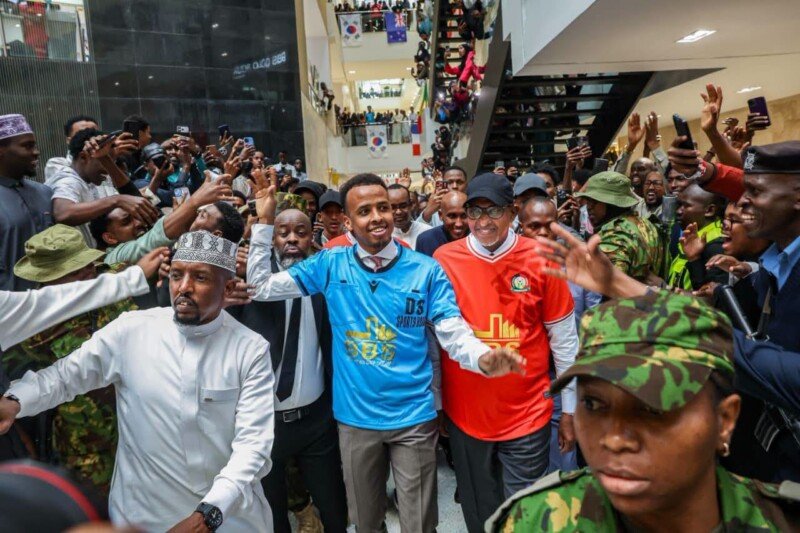
Upon his return to Mogadishu, Artan received a hero’s welcome from hundreds of cheering fans, government officials, and football community members at Aden Adde International Airport. Despite the heartbreak of being denied his World Cup dream, Artan was greeted with chants of “Omar! Omar!” and waves of Somali flags as he walked through the terminal.
Somali Minister of Youth and Sports Mohamed Barre Mohamud was among the first to embrace Artan, publicly declaring that the referee had been “robbed of history” by the Trump administration but that Somalia would always honor his achievements. “You remain our champion and Africa’s best, no matter what anyone says,” the minister told Artan at the airport.
Members of the Somalia Football Federation and dozens of local referees lined up to welcome Artan home, holding banners that read: “Omar Artan: Somali Pride” and “World Cup in our hearts.” Artan, visibly moved by the reception, addressed the crowd briefly, thanking them for their unwavering support.
“I came back with my head held high,” Artan said. “The dream was stolen, but not my spirit. Thank you, Somalia, for standing with me.”
The welcome ceremony quickly spread across social media, with videos of Artan’s emotional homecoming being viewed thousands of times. For many Somalis, Artan’s return was not a defeat but a celebration of resilience and national pride in the face of systemic discrimination.
Conclusion: Who Is Really Running the World Cup?
The case of Omar Artan has raised fundamental questions about FIFA’s authority and the nature of the World Cup itself. With the tournament kicking off, concerns remain about the potential presence of US Immigration and Customs Enforcement (ICE) at stadiums and how fans could be affected.
As Powar told the BBC: “The disruption is such that one has to ask who is running the World Cup. Is it FIFA or is it the US government with its racially charged immigration policies? Never have we seen so many World Cup coaches, team operations, fans and even senior administrators within Fifa member associations, subject to so much interrogation and exclusion.”
When FIFA cannot get all of its referees into a host country despite them holding valid visas and diplomatic passports, and when the governing body that once stripped Indonesia of hosting rights for refusing a single team now stands silent as its own officials are turned away, it raises an uncomfortable question: Does FIFA have any real authority at all, or has it surrendered control to host governments with their own ideological agendas?
The answers to those questions will determine not just the fate of this World Cup, but the future of international football itself.
Recommended Reading On ftlsomalia.com: