MOGADISHU – The capital has been plunged into a volatile security and political crisis reminiscent of the dark days of 2021, as heavy gunfire, mortar shelling, and tactical troop deployments paralyzed multiple districts overnight. The sudden escalation comes as President Hassan Sheikh Mohamud’s official governing mandate expired on May 15, 2026, triggering an armed standoff between the federal government and a heavily reinforced opposition coalition.
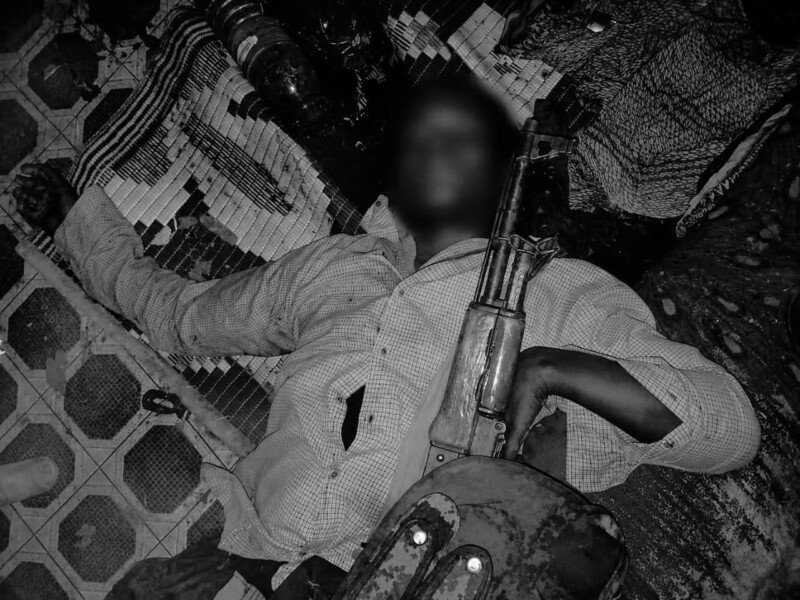
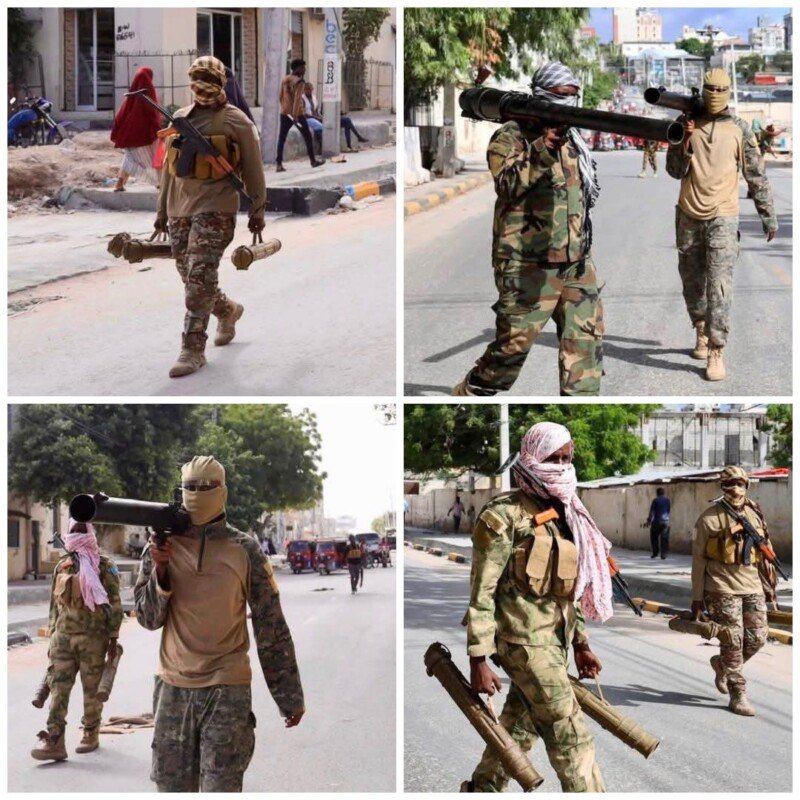
The streets of Mogadishu resonated with intense combat through Wednesday night and into Thursday morning, particularly in the Abdiaziz, Howlwadaag, and Heliwaa districts. Armed opposition militias positioned themselves at strategic chokepoints throughout the capital, prompting the federal administration to deploy heavy reinforcement convoys of armed technical vehicles along major thoroughfares, shattering the city’s fragile stability.
Strategic Positioning in Sayidka and Marinayo
Concurrently, opposition leader and former Prime Minister Hassan Ali Khaire fortified his forces in the strategically vital Sayidka district, a highly sensitive sector situated mere steps from Villa Somalia, the Prime Minister’s residence, and the federal parliamentary complex. The tactical positioning effectively places the nerve center of federal authority directly within the potential crossfire of an urban war.
Former President Sharif Sheikh Ahmed, the prominent leader of Somalia’s strengthened opposition coalition, entered the Marinayo area of Abdiasis district to a reception imbued with profound symbolism. It was, in every detail, a reflection of 2021, when the very person Sharif now opposes, current President Hassan Sheikh Mohamud, established that same Marinayo neighborhood as his headquarters while organizing the forces then called Badbaado Qaran against former President Mohamed Abdullahi Farmajo’s bid to extend his term without elections. Somalis on social media immediately dubbed it Marinayo 2.0.
Under the banner of the ‘National Salvation Group’ (Badbaado Qaran), soldiers pushed back special forces such as Gorgor, Haram’ad and Dufaan, who were targeting political rivals of Farmaajo, including two former presidents. The soldiers cordoned the special forces units within the perimeters of Villa Somalia. According to a military source, the security situation inside the Presidential Palace was tense as members of Badbaado Qaran positioned themselves at strategic locations near the Palace.
Conflicting Accounts of the Violence
The immediate spark for the armed clashes remains fiercely contested. The Federal Government of Somalia firmly denounces what it classified as coordinated criminal assaults by Khaire-aligned opposition militias. Authorities reported that heavily armed elements launched mortar attacks on civilian residential zones and targeted law enforcement infrastructure, including the Howlwadaag District Police Station and the Central Tax Protection Unit in Heliwaa.
The Somali Police Force has strongly condemned an attack by armed militants who targeted a police checkpoint in Heliwaa District using heavy weapons. Police reports indicate the assailants also attacked the Central Tax Protection Unit, a designated weapons-free zone. Authorities stated the attackers intentionally targeted law enforcement facilities, damaging public assets meant to serve Somali citizens.
Opposition leaders strongly rejected the state’s narrative, countering that government troops deliberately attacked peaceful political assemblies and tried to violently suppress localized protests. The pre-planned demonstrations were initially organized to protest a controversial land appropriation dispute that the opposition asserts has forcibly displaced nearly half a million Mogadishu residents. Government officials and opposition figures have since traded accusations over the causes of the unrest, while details of the clashes remain disputed.
Western Diplomats Issue Urgent Warnings
The rapid deterioration of capital security has triggered urgent diplomatic interventions from Somalia’s primary international partners. Western envoys from the United States, the United Kingdom, the United Nations, and the European Union held emergency high-level discussions with President Hassan Sheikh Mohamud at Villa Somalia, delivering a unified warning from their respective capitals.
Diplomatic sources indicate the envoys delivered an explicit warning that state-building and security operations cannot rely on external financial funding indefinitely if political leaders refuse to forge a consensus-based electoral framework. Furthermore, partners issued a joint declaration stating that the current governing mandate has effectively concluded, demanding an immediate political roadmap to navigate the transition.
International partners including the UN, African Union, EU, IGAD, the United States, and the United Kingdom are set to convene high-level meetings to address the intensifying political crisis. The UK on Thursday voiced alarm regarding violence reports in Somalia’s capital and appealed to all parties to remain calm and settle their conflicts through peaceful dialogue. “We urge all parties to maintain composure and participate in broad and constructive discussions to peacefully address the tensions,” the British Embassy stated.
The United States has expressed concern over escalating violence and political tensions in Mogadishu, urging Somali leaders to resolve disputes peacefully and safeguard the country’s stability. “Somali leaders on all sides have a responsibility to maintain stability and resolve their differences peacefully,” the U.S. Embassy said. Washington warned that decisions taken in the coming hours and days could have long-term consequences for Somalia.
Constitutional Crisis at the Core
At the core of this impasse is a constitutional breach that has widened with dangerous and accelerating momentum. President Hassan Sheikh Mohamud’s official authority concluded on May 15, 2026. The opposition, along with substantial legal and political voices both in Somalia and the international community, contend that his power to mobilize state forces, surround opposition homes, obstruct demonstrations, or assert legitimate governance ceased on that date. Hassan, however, maintains he possesses an additional year in office, a stance his opponents view not just as legally unsound but as the fundamental act of authoritarian consolidation.
The Puntland administration has accused President Hassan Sheikh Mohamud of unlawfully remaining in office following the expiration of his four-year term on May 15, 2026, which it said coincided with the end of the mandates for Somalia’s federal institutions. Puntland leader Said Abdullahi Deni has accused Mohamud of breaking the country apart as political tensions between the federal government and regional states continue to escalate.
Former president Sharif Sheikh Ahmed has sharply criticised Hassan Sheikh Mohamud, accusing him of violating the constitution. “Today, when he stands and says he has added another year to his term, I believe he is standing in the very place where his political downfall could begin,” Sharif stated.
Security Agencies Pursue Armed Group
Security agencies in Mogadishu reported that a major operation was approaching its conclusion as forces pursued an armed group suspected of launching mortar attacks on residential areas. According to a statement from the Somali Police Force, security forces were targeting individuals suspected of involvement in planning and executing armed attacks that put civilians at risk and compromised public security. Police confirmed that mortar shells had been fired into various parts of Mogadishu, endangering residents.
“The operation is concentrating on armed elements involved in attacks against residential areas and activities that endanger the security and stability of the country,” the statement read. Police dismissed claims that the security measures targeted peaceful protesters, emphasizing that security forces were responding to armed incidents rather than political gatherings.
The Criminal Investigation Department has initiated an investigation into the attack, with authorities vowing to bring all responsible individuals to justice. The Federal Government reaffirms its stance against any attempts to compromise the security of the capital, interfere with security force operations, or instill fear and instability among citizens.
International Warning: Al-Shabaab Threat
The international community’s warning has been remarkably unified in its urgency and unusually direct in its tone. Their apprehension is multifaceted and profoundly strategic: a return to open urban combat in Mogadishu would not only devastate a civilian population already experiencing severe economic distress, it would provide a crucial, potentially decisive advantage to Al-Shabaab, the Al-Qaeda-affiliated militant group that continues to pressure the capital’s boundaries.
Western governments have invested billions of dollars in Somalia’s security apparatus, its federal institutions, and its slow but meaningful advances in governance over nearly two decades. A descent into renewed civil strife would not merely negate those accomplishments, it would confirm every doubter who claimed the investment was pointless and empower every extremist who has persistently characterized the Somali state as a superficial Western creation unable to provide peace, justice, or economic well-being to its own citizens.
Economic Impact and Civilian Anxiety
The current crisis threatens to upend economic gains. Just days prior to the outbreaks of violence, Prime Minister Hamza Abdi Barre had assured local Somali investors of continued government support, emphasizing that commercial confidence was central to sustaining national development. However, with armed factions dug into residential sectors and checkpoints reinforced across the city, local businesses and markets have started shutting down early as civilians prepare for the potential of extended urban warfare.
Residents in the capital woke up Thursday to a tense security atmosphere following hours of intense combat and shelling. “Residents barely managed any sleep,” one local commented. The detonations and shooting were audible from distant locations. Although the combat intensity diminished Thursday morning, intermittent gunfire and periodic heavy weapon volleys continued to be reported in certain locations.
Looking Ahead
As dawn arrived in Mogadishu, checkpoints stayed staffed, technical vehicles remained positioned, and ordinary Somalis persisted with the somber calculation that inhabitants of vulnerable cities always undertake during such times: evaluating the danger of staying versus the expense of departing. Markets that previously bustled shut ahead of schedule. Families conversed quietly about which relatives possessed transportation, which escape route from the city remained unobstructed, where they might find safety, recognizing that for millions already displaced, already impoverished, already beyond every threshold, there is nowhere left to flee.
Thursday’s scheduled demonstrations mark the next critical juncture. Whether they conclude in the fragile peace of last-minute discussions, or whether the spark finally ignites the powder that has accumulated for months, will reveal much about whether Somalia’s hard-earned institutional advancements hold any significance at all, or whether the nation remains destined to replay its own history, one Marinayo at a time, until the burden of repetition ultimately shatters something beyond repair.
Somalia stands at a crossroads it has encountered before. The distinction this time is that the world observes more attentively, the consequences are more severe, and the city’s inhabitants, who have endured everything, are losing capacity to accommodate what follows.
Recommended Reading On ftlsomalia.com:
- Badbaado Qaran: A Renewed Hope for Political Agreement and Peaceful Transition Under the Leadership of PM Roble
- International Community Urges Renewed Dialogue Between Somali Government and Opposition Groups
- Puntland Accuses Hassan Sheikh of Remaining in Office Illegally
- Deni Accuses Hassan Sheikh of ‘Breaking the Country Apart’ as Puntland Leader Departs Mogadishu
- Ex-Somali Leader Sharif Sheikh Ahmed: Hassan Sheikh Stands Where Political Downfall Could Begin