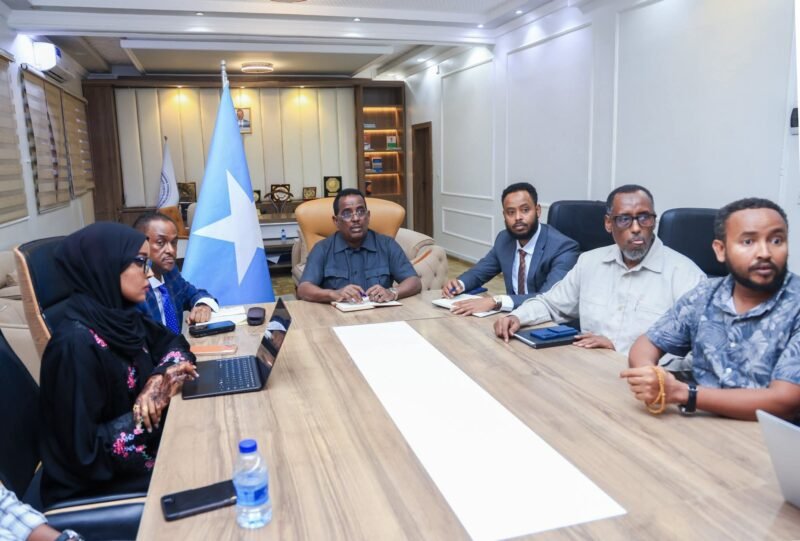
MOGADISHU: The Minister of Interior, Federal Affairs and Reconciliation, Ali Yusuf Ali Hosh, has chaired a key meeting focused on finalising the proposed law governing district councils in the Benadir Region. The gathering, which included the ministry’s Director General Abdulqadir Ali and the Chairman of the National Refugees and IDPs Agency, Liban Abdi Igal, centred on submitting the draft legislation intended to guide the administration of the recently elected local district councils.
According to officials, the proposed bill was developed through consultations involving political organisations, the National Independent Electoral Commission, and the Benadir Regional Administration. The aim is to establish a formal legal framework defining the structure and operations of district councils. The legislation also outlines the working relationship and responsibilities between the Benadir Regional Administration and its district councils in an effort to strengthen administrative transparency and improve public service delivery.
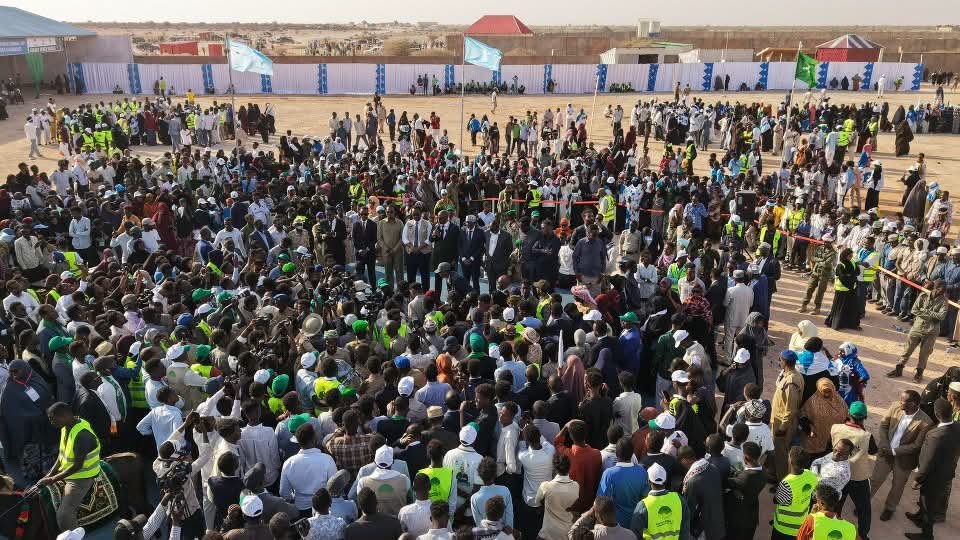
The meeting follows the historic local council elections held in the Benadir Region on 25 December 2025, the first direct local elections in Mogadishu since 1969. Voters across the capital’s 16 districts elected district councillors in a one‑person, one‑vote process, marking a significant shift from the longstanding clan‑based political system. The Ministry of Interior hailed the elections as a transformative event, emphasising that the newly elected district councils would play a key role in improving public services, promoting accountability, and advancing local development projects.
Ahead of the vote, the Council of Ministers approved the official ranking of Benadir districts, classifying nine districts as Grade A and seven as Grade B based on differences in population, administrative capacity, and development indicators. The National Independent Electoral and Boundaries Commission (NIEBC) set up over 500 polling centres across the capital, and the Ministry of Interior provided extensive briefings on electoral readiness. The successful and peaceful conclusion of the polls was widely welcomed by federal and regional leaders, with Galmudug President Ahmed Abdi Karie (Qoor Qoor) commending the NIEBC and security forces for their responsible execution of duties.
The new district councils were sworn in on 2 April 2026, becoming the legally recognised governing bodies of the district administrations in line with the Provisional Constitution and electoral laws. However, the absence of a comprehensive legal framework to define their powers, responsibilities, and relationship with the Benadir Regional Administration has prompted the current legislative initiative. The proposed law aims to address this gap by providing clarity on functions, accountability mechanisms, and coordination protocols.
Minister Hosh has consistently championed local governance reforms. He has emphasised the crucial role of peaceful coexistence and collective effort in delivering services to communities at the district level. The ongoing consultation with political organisations, the NIEBC, and the Benadir Regional Administration underscores the government’s commitment to inclusive and participatory local governance. As the draft bill moves through the legislative process, it is expected to provide a stable and transparent foundation for the operation of district councils across the Benadir Region.
Recommended Reading on ftlsomalia.com:
- Interior Minister Chairs Meeting on Banadir District Councils Bill
- Banadir Region Residents Congratulated by Interior Ministry
- Somali Cabinet Approves Benadir District Rankings, Police Act
- Mogadishu Holds Historic Local Elections After 54‑Year Gap
- Galmudug President Congratulates Benadir on Peaceful Local Elections