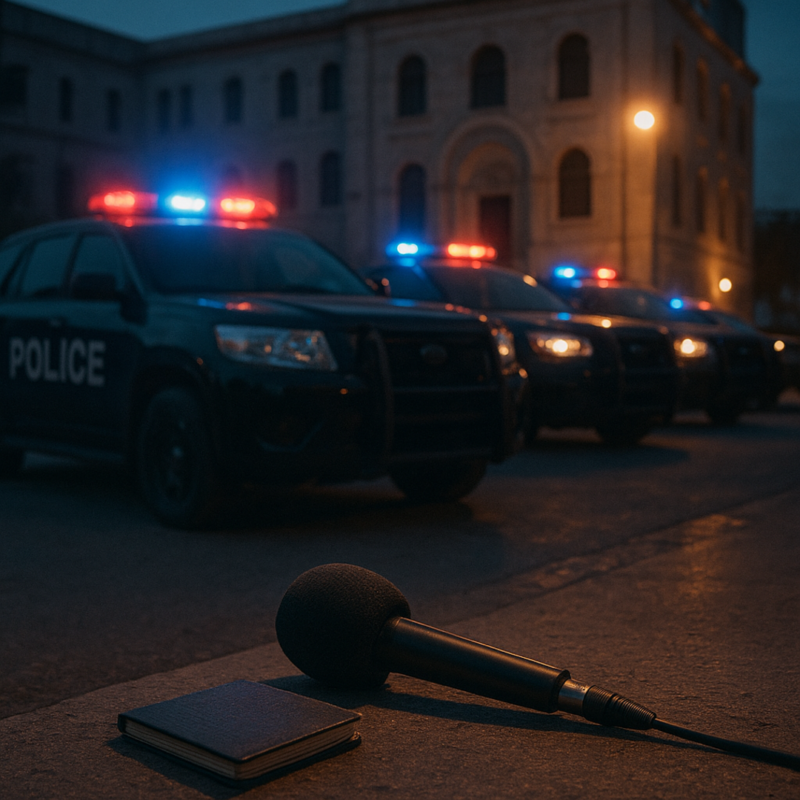
MOGADISHU: Somali security forces detained and allegedly assaulted three journalists in Mogadishu on Friday evening before releasing them hours later, according to media organizations, opposition figures, and a statement from the Somali Journalists Syndicate (SJS). The incident has intensified concerns over press freedom in Somalia as the capital braces for planned political demonstrations.
The journalists – Mohamed Bulbul, Abdihafid Nor Barre and Abdishakur Mohamed Mohamud – were arrested while at a restaurant in central Mogadishu. According to accounts from media groups and statements attributed to the reporters, members of Somalia’s US-trained counter-terrorism police unit detained them, assaulted them, and later transferred them for questioning at police headquarters. All three journalists were released in the early hours of Saturday, but their arrests have triggered condemnation from Somali media organizations, opposition politicians and press freedom advocates, who say journalists in Somalia are facing growing intimidation and repression.
According to a statement released by the Somali Journalists Syndicate (SJS), at police headquarters the three journalists were allegedly threatened by Mogadishu police chief Mahdi Omar Mumin. The organization reported that Mumin told them he was “tired of arresting journalists” and that if they did not remain silent about the planned protests and other sensitive developments in Mogadishu, including the case of a detained activist, the only remaining option for them would be “death.” The police have not publicly responded to the allegations made by the journalists or media groups. Colonel Mumin is a key participant in the capital’s recent high-level security conferences. In previous public statements, he has said the police force is neutral and ready to protect the democratic process, stressing that police officers must not act in a partisan manner.
The detentions came at a moment of heightened political tension in Mogadishu, as President Hassan Sheikh Mohamud’s term is due to expire on May 15. Opposition figures have warned of increasing pressure on critics, activists and independent journalists in the capital. Abdirahman Abdishakur Warsame, a member of parliament and leader of the opposition Wadajir party, condemned the arrests and accused the government of escalating intimidation tactics as its term nears its end. He wrote that the president’s administration “appears consumed by fear, confusion as the end of its mandate approaches.” He added: “Instead of addressing the growing public anger over forced displacement, land grabbing, and pursuing an inclusive political settlement to guide the country through this fragile transitional period, the administration has intensified repression against journalists, activists and outspoken young people.” Opposition leaders have confirmed that a demonstration scheduled for May 10 will go ahead despite government objections.
Media organizations said Bulbul’s arrest is believed to be linked to his reporting on allegations of abuse inside detention facilities, including coverage of the case of Sadia Moalim Ali, a 27-year-old rickshaw driver jailed after participating in peaceful protests and social media activism in Somalia. Ali has accused prison authorities of torture and mistreatment while in custody. In a report published on Thursday, she described being abused inside Mogadishu central prison. She said she was stripped naked by two male guards in a room monitored by CCTV, kicked, beaten with a baton and left for two days in a small cell without food. The allegations circulated widely across Somali media outlets and social media, drawing public attention and criticism online. Bulbul has also reported on alleged security force abuses and forced evictions in Mogadishu, according to colleagues and media organizations familiar with his work. Forced evictions in the capital have previously sparked armed clashes between rival security factions.
Somali Stream, the media outlet employing Abdishakur Mohamed Mohamud, described the arrests as a targeted attack on independent journalism and freedom of expression in Somalia. AbdiKani Hamud Abokor, the outlet’s managing director, said: “Somali Stream strongly condemns the unlawful detention of Abdishakur Mohamed Mohamud, Abdihafid Nor Barre, and Mohamed Bulbul. This is a deliberate attempt to terrorize journalists, suppress independent reporting and instil fear across Somalia’s media community.”
The incident followed a series of earlier arrests involving journalists in Somalia this week. On May 6, at least five local journalists were detained and had their equipment confiscated, according to the Somali Journalists Syndicate. Two broadcast journalists – Ja’far Mohamed Jim’ale and cameraman Nur Hasan Ali – remained in detention, with their whereabouts still unknown, the organization added. Goobjoog Media Group has strongly condemned a recent abduction and detention of one of its journalists, describing it as part of a wider pattern of press suppression.
Press freedom organizations have repeatedly warned about worsening conditions for journalists in Somalia, where reporters often face intimidation, violence, censorship and security threats while covering politics, protests and human rights issues. The National Union of Somali Journalists (NUSOJ) recently told the UN Human Rights Council that journalists continue to face intimidation, arbitrary arrests, censorship and violence in the line of duty. Figures compiled by media rights groups show Somalia recorded at least 41 violations against media freedom between January and June 2025, including arrests, assaults, and prosecutions of journalists. Mogadishu remained the most dangerous city for journalists during that period.
Political tensions in Mogadishu have been rising in recent weeks, with opposition leaders warning of a widening crackdown on dissent ahead of planned protests. With the president’s term set to expire on May 15 and no electoral framework in place, the political climate in the capital remains highly charged.
Recommended Reading on ftlsomalia.com:
- Goobjoog Condemns Journalist Arrest, Demands Release
- NUSOJ Sounds Alarm on Somalia’s Media Freedom at UN Rights Council
- Somalia Recorded 41 Media Freedom Attacks in First Half of 2025
- Media Arrests Ignite Outrage in Mogadishu
- Somalia Police Accused of Unlawfully Detaining Journalists in Mogadishu
- Evictions in Mogadishu Ignite Fierce Political Showdown