MOMBASA – Journalists and media leaders from ten Eastern African states have signed a joint statement committing to promote facts‑based reporting on migration, addressing concerns over misinformation, human trafficking and unsafe journeys that have increasingly shaped public discourse across the region.
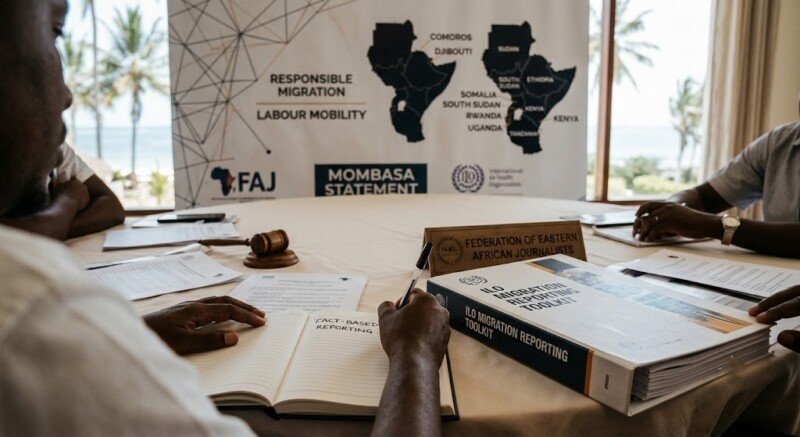
The pledge was issued at the close of a three‑day forum in Mombasa, where attendees adopted the Mombasa Statement on Responsible Migration Reporting, a call for ethical, balanced, evidence‑driven coverage of migration and labour mobility. Organised by the Federation of African Journalists and the Federation of Eastern African Journalists, the meeting brought together union heads and media practitioners from Comoros, Djibouti, Ethiopia, Kenya, Rwanda, Somalia, South Sudan, Sudan, Tanzania and Uganda. The ILO’s Better Regional Migration Management programme, funded by the UK’s Foreign, Commonwealth and Development Office, supported the event.
Somali journalists have previously benefited from capacity building in migration reporting, with training jointly organised by the National Union of Somali Journalists (NUSOJ) and the International Organization for Migration (IOM) Somalia aimed at raising awareness on the dangers of irregular migration and the reintegration of returning migrants[reference:0]. In May 2023, IOM and NUSOJ trained twenty‑five journalists in Mogadishu, equipping them with the skills and tools required for accurate and objective reporting on migration[reference:1].
Somali Delegates Participate in Regional Dialogue
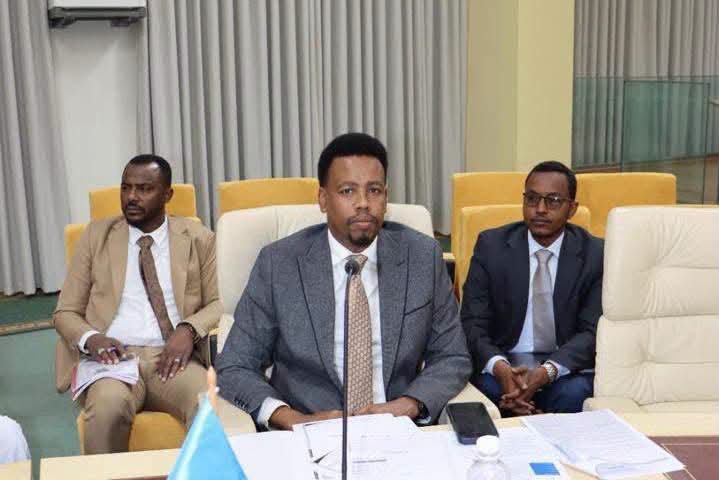
Somali delegates, represented by three leaders from the National Union of Somali Journalists, joined the dialogue on migration reporting, information integrity, and journalism’s role in helping communities make informed decisions about migration and job prospects. The forum unfolded amid mounting migration flows across Eastern Africa, where states function as origins, transit hubs and destinations for migrant workers. Participants noted that migration has become a key public‑interest issue shaping employment, economic growth and social cohesion.
ILO’s Better Regional Migration Management chief technical advisor, Aida Awel, highlighted that precise reporting is vital for enhancing public comprehension of migration matters. FAJ president Omar Faruk Osman urged journalists to debunk misinformation and deliver factual accounts of migration, noting that the spread of misleading stories still sways migration choices and public views.
Migration Reporting Toolkit Launched
A major outcome of the meeting was the regional launch of ILO’s Migration Reporting Toolkit, a practical guide meant to help reporters cover migration and labour mobility responsibly, ethically and with depth. Attendees received training on verification, fact‑checking and responsible journalism practices. The discussion also addressed the risks of irregular migration, including human trafficking, forced labour and exploitation, urging journalists to foreground these dangers without sensationalism that could stigmatise migrants or vulnerable groups.
Meanwhile, participants called for more media focus on opportunities within the region, such as fair recruitment, vocational training, entrepreneurship and legal labour migration pathways, arguing that balanced reporting must reflect both challenges and prospects.
Regional Cooperation and Press Freedom
Beyond migration, the forum served as a platform to discuss media freedom, journalist safety and regional solidarity. Delegates explored cross‑border reporting collaborations and coordinated advocacy to defend press freedom and freedom of expression across Eastern Africa. A high‑level roundtable in Mogadishu previously brought together British Ambassador Charles King and Somali journalists to assess the state of press freedom, highlighting both strides made and persistent threats to independent journalism[reference:2]. Ambassador King reaffirmed the UK’s commitment to supporting Somalia’s press sector, stressing that “a free, safe, and independent media is the cornerstone of any functioning democracy”[reference:3].
The meeting closed with a reinforced commitment by journalists and media organisations to strengthen cross‑border cooperation and ensure that migration coverage serves the public interest through accuracy, fairness and accountability. Somalia has also adopted its first National Labour Migration Policy, establishing a legal and institutional framework to promote safe, orderly and dignified migration for Somali workers, developed in close collaboration with the ILO[reference:4].