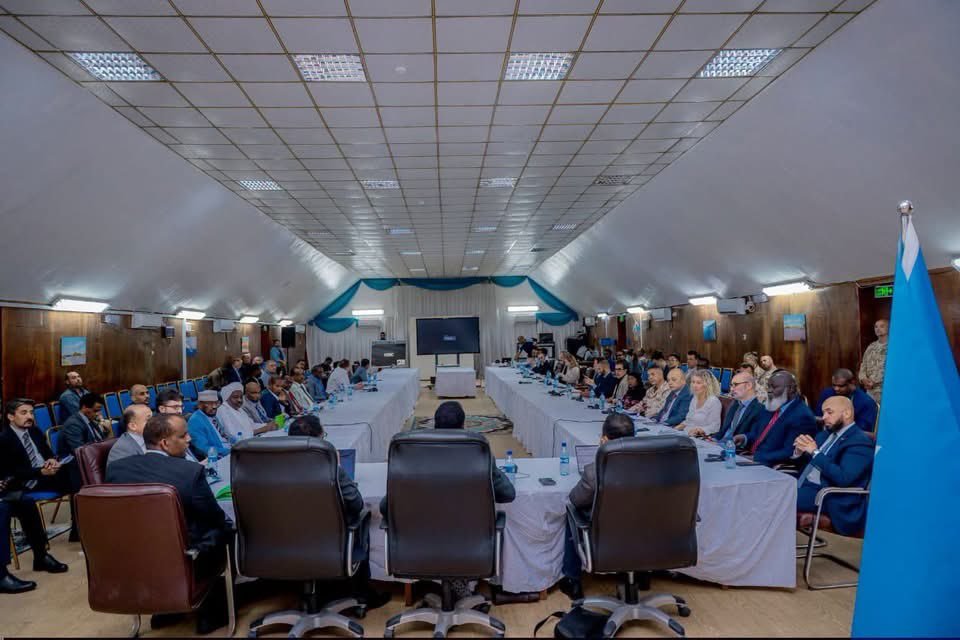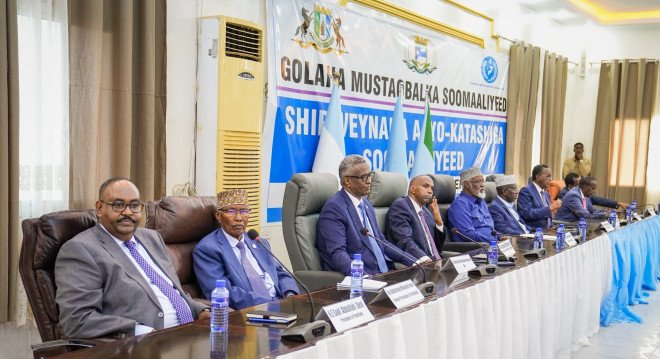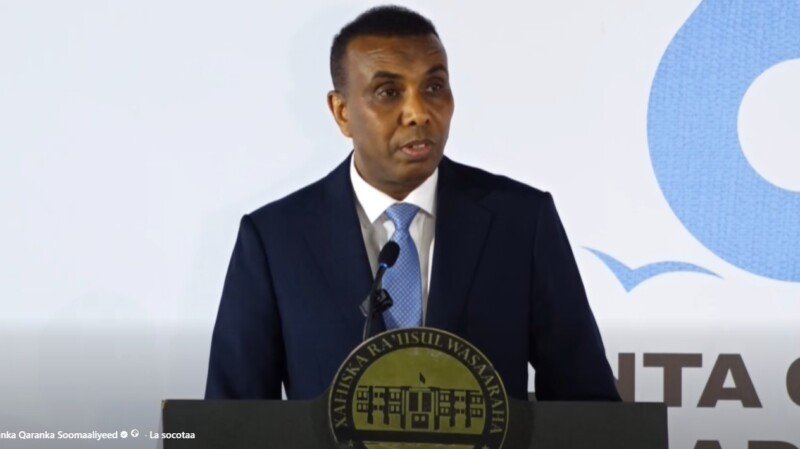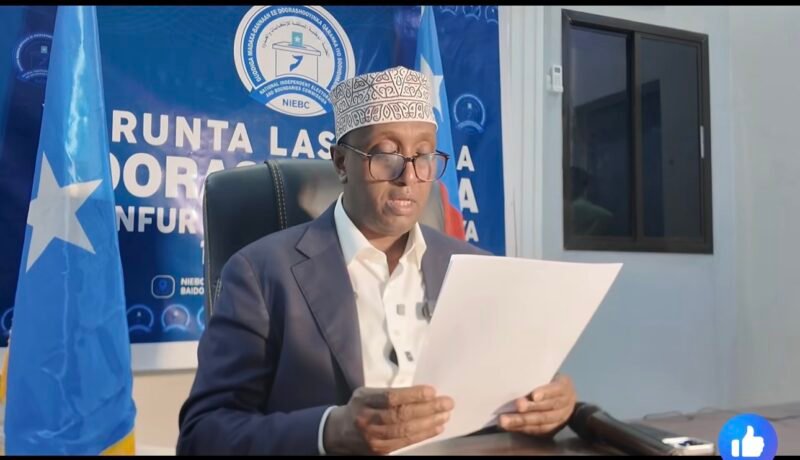
JOWHAR — The National Independent Electoral and Boundaries Commission has announced the postponement of the long-awaited parliamentary and local council elections in Hirshabelle State, which had been scheduled for August 20, 2026 .
According to a statement released by the commission, the delay is temporary and necessary to complete key electoral preparations . The commission cited three primary reasons for the postponement: voter registration is still underway in four districts of the Hiiraan region; political organizations need additional time to mobilize their supporters; and political groups require more time to submit candidate lists for the House of Representatives and local council elections .
“The commission is informing all stakeholders of the Hirshabelle State elections and the Somali public that the elections have been temporarily postponed to complete the important tasks for these elections,” the statement read. The commission said it would announce a revised election timetable and new polling date within two weeks .
A Democratic Milestone or a Federal Power Play?
Hirshabelle’s transition to one-person, one-vote elections was formally launched in July 2025, when President Ali Gudlawe Hussein inaugurated voter registration in Jowhar. President Gudlawe described the initiative as a turning point for inclusive governance, stating that “for the first time, every eligible citizen will have a voice and a vote in determining their local leaders” .
The announcement of the Hirshabelle timetable comes amid growing concerns about federal interference in regional electoral processes. President Hassan Sheikh Mohamud has reportedly signaled his intention to proceed with elections in three allied regional states, including Hirshabelle, before initiating broader federal electoral negotiations. Sources indicate the President plans to engage in federal-level talks about the national election framework only after the regional processes are completed .
The postponement comes amid deep electoral divisions between the federal government and opposition groups. The federal administration, led by President Hassan Sheikh Mohamud, maintains steadfast support for a nationwide “one-person, one-vote” system, while the opposition Somali Future Council has proposed an alternative “Expanded Indirect Election” model that blends direct voting with the 4.5 clan power-sharing formula .
Puntland President Said Abdullahi Deni has sharply criticised the Federal Government’s push for a one-person, one-vote electoral system, arguing that an election whose outcome is predetermined cannot be considered democratic . The dispute over the electoral model has seen Puntland and its allies in the Somali Future Council rejecting the “one-person-one-vote” framework, arguing that such a fundamental change requires broader agreement among all federal stakeholders .
Political Tensions Behind the Delay
The Hirshabelle Cabinet has convened to discuss election preparations, with Ismail Hassan Nur appointed as Minister of Planning and Ahmed Bariise Heydar selected as Deputy Minister of Interior . A key factor behind the delay is the ongoing dispute over the next president of Hirshabelle. A power-sharing arrangement had been established under which the next president would come from the Hawadle community, while the outgoing president, Ali Abdullahi Hussein Guudlaawe, is from the Abgaal community.
President Hassan Sheikh Mohamud has previously signaled his intention to proceed with elections in allied regional states, including Hirshabelle, before initiating broader federal electoral negotiations . However, the postponement suggests that the commission is facing significant logistical and political challenges in meeting the original August 20 deadline.
The Somali Future Council has proposed a “Transitional Direct Elections Model 2026”, which seeks to gradually transition Somalia from its current indirect electoral system toward direct popular voting while maintaining the 4.5 clan power-sharing system during the transition period .
Security and Logistical Challenges
The electoral timetable faces significant security and logistical hurdles. Al-Shabaab continues to control large areas of southern and central Somalia, including parts of Hirshabelle, and has repeatedly demonstrated its ability to disrupt political processes . President Guudlaawe has visited the frontlines to assess operations against terrorist groups, emphasizing that Hirshabelle State must not become a safe haven for militants .
The commission’s ability to conduct voter registration and polling in contested areas remains uncertain. Humanitarian agencies have warned about the worsening situation in the region, including flood risks and displacement, which could disrupt the electoral process .
Critical Note
The postponement of the Hirshabelle elections underscores the significant challenges facing Somalia’s transition to direct, one-person, one-vote elections. While the Commission has cited logistical reasons for the delay, the underlying political tensions over the regional leadership suggest that the postponement is as much about political maneuvering as it is about technical preparation .
The power struggle between the Hawadle and Abgaal communities, the involvement of President Hassan Sheikh in selecting a candidate, and the broader competition between Villa Somalia and regional leaders all point to a political process that remains deeply entangled with clan dynamics and federal-regional rivalries . The Commission’s ability to conduct free and fair elections depends not only on technical preparations but also on the willingness of political actors to respect the outcome and accept the results .
The government must ensure that the revised electoral timetable is realistic and that the process is transparent and inclusive . Without genuine commitment from all parties to a peaceful electoral transition, the postponement risks being followed by further delays or, worse, a disputed election that could destabilize the region. The international community must support the Commission in its efforts to conduct credible elections while urging political actors to prioritize the national interest over narrow political ambitions .
Recommended Reading On ftlsomalia.com
- Hirshabelle Election Timetable Released Amid Growing Concerns over Federal Interference
- Hirshabelle Cabinet Discusses Elections, Security, and Flood Risks
- President Hassan Sheikh Seeks Regional Allies Before Federal Election Talks
- Somali Government and Opposition Enter Second Day of Talks Amid Deep Electoral Divisions
- Puntland Leader Slams Federal Government’s Election Plans as ‘Predetermined’
- Somali Future Council Unveils Transitional Direct Elections Model for 2026