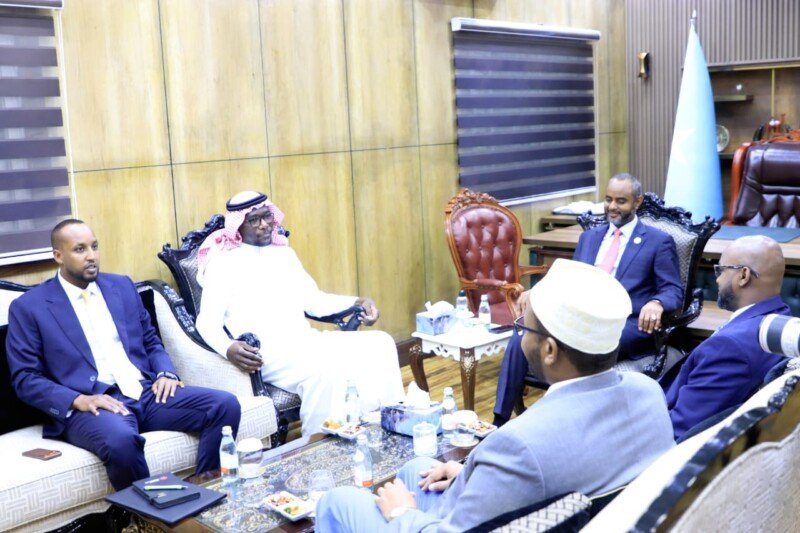
MOGADISHU — The Speaker of the House of the People of the Federal Parliament of Somalia, Abdulkadir Mohamed Nur (Jaamac), has received the Saudi Ambassador to Somalia, H.E. Ahmed Mohammed Almowallad, at his office to discuss strengthening bilateral relations between the two countries.
Ambassador Almowallad congratulated Speaker Jaamac on his recent election to the position of Speaker of the House of the People, according to a statement from the Somali Parliament. The two officials discussed enhancing the longstanding fraternal relations, brotherhood, and deep cooperation between Somalia and the Kingdom of Saudi Arabia.
Speaker Jaamac expressed gratitude to the Saudi government for its consistent support to the Somali government and its people. Saudi Arabia has been a key partner in humanitarian assistance, with the Kingdom stating it would increase aid to Somalia, particularly in the humanitarian sector.
The meeting is part of a broader pattern of engagement between Mogadishu and Riyadh that has intensified in recent years. This engagement includes discussions on security cooperation, urban development, and shifting the relationship from aid to trade.
In February 2026, Somalia and Saudi Arabia signed a significant military cooperation agreement in Riyadh. The defense pact was formalized by Somali Defence Minister Ahmed Moallim Fiqi and his Saudi counterpart, Prince Khalid bin Salman, on the sidelines of the World Defense Show 2026. The landmark agreement centers on enhancing defense collaboration through military training, equipment modernization, and intelligence sharing.
The Speaker’s meeting builds on a series of high-level engagements. Somalia’s Defence Minister Ahmed Moallim Fiqi has hosted the Saudi ambassador to discuss security cooperation, praising the Kingdom’s contributions to counter-terrorism efforts and efforts to improve the Somali National Armed Forces’ capacity. Prime Minister Hamza Abdi Barre has also held talks with the ambassador, calling for greater Saudi investment in Somalia’s infrastructure and shifting the relationship from aid to trade.
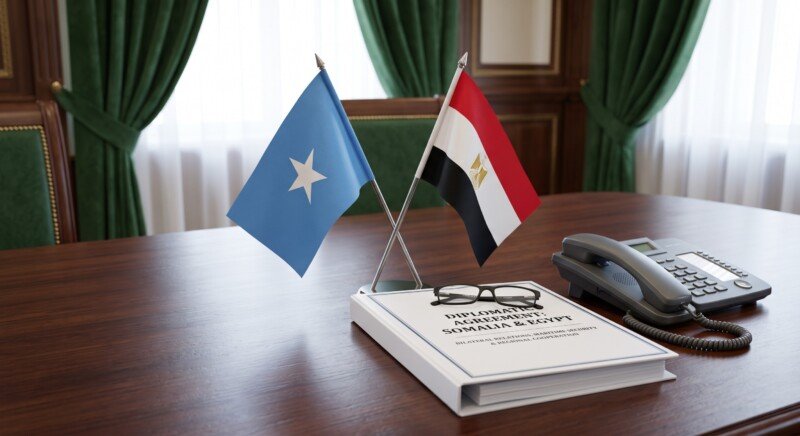
This diplomatic engagement is set against a backdrop of shifting regional alliances. The Federal Government of Somalia has acknowledged ongoing discussions regarding a proposed tripartite security arrangement with Saudi Arabia and Egypt, focusing on enhancing collaboration on Red Sea security and broadening military partnerships. This follows Somalia’s recent termination of security and port agreements with the United Arab Emirates.
Context of Saudi-Somali Relations
Saudi Arabia’s engagement with Somalia is driven by strategic considerations as much as humanitarian concern. Riyadh has consistently voiced political backing for Somalia’s territorial integrity and its efforts against Khawaarij militants. In February 2026, Saudi Arabia and Egypt issued strong statements reaffirming their backing for Somalia’s sovereignty and territorial integrity, creating a unified diplomatic front against recent moves to recognize Somaliland.
Saudi Foreign Minister Prince Faisal bin Farhan has reiterated the Kingdom’s full support for Somalia’s national unity and territorial integrity, explicitly rejecting any actions that could jeopardize the nation’s stability.
Critical Note
The Speaker’s meeting with the Saudi ambassador reflects Mogadishu’s ongoing diplomatic efforts to secure support from Gulf partners, but the practical impact of these engagements remains uncertain. While Saudi Arabia has been a consistent humanitarian partner and has signed a military cooperation agreement, the material assistance has historically been modest compared to other Gulf states. The gap between diplomatic rhetoric and tangible results is a recurring theme in Somalia’s relationship with its Gulf partners. The government has become adept at hosting meetings and signing agreements, but translating these into concrete improvements for ordinary Somalis has proven elusive. The real test of these diplomatic engagements will be whether they translate into tangible improvements in infrastructure, security, and economic opportunity, rather than serving primarily as a tool for managing regional rivalries.
Recommended Reading On ftlsomalia.com
- Banadir Governor Meets Saudi Ambassador Amid Growing but Limited Gulf Engagement
- Somalia Signs Military Pact with Saudi Arabia in Riyadh
- PM Barre and Saudi Ambassador Discuss Investment and Aid Cooperation
- Somalia Confirms Red Sea Security Pact Discussions with Saudi Arabia, Egypt
- Saudi Arabia and Egypt Rally Behind Somalia’s Sovereignty