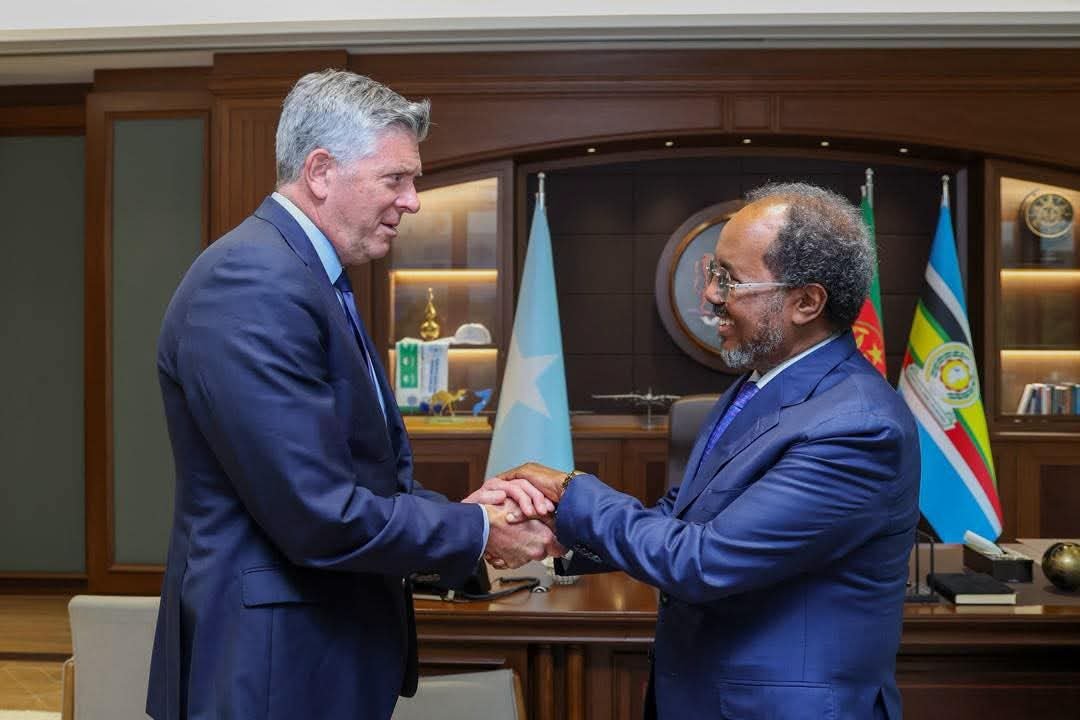
MOGADISHU – President Hassan Sheikh Mohamud has hosted U.S. Congressman Darin LaHood at Villa Somalia for talks focused on security cooperation, counterterrorism, trade and investment, as Mogadishu seeks to reaffirm its partnership with Washington at a time of profound uncertainty over the future of American financial support for Somalia’s security transition.
The meeting, held on Tuesday at the Presidential Palace, brought together the Somali head of state and the Illinois Republican, who serves on the House Intelligence Committee and the Ways and Means Committee, giving him a direct role in shaping U.S. trade and security policy. According to a statement from Villa Somalia, the discussions covered “peace and security, counterterrorism, trade and investment,” and both sides reaffirmed their commitment to deepening the strategic partnership between the two countries.
A Partnership Under Strain
The visit comes at a delicate moment in U.S.-Somalia relations. Just weeks before LaHood’s arrival, the Trump administration notified the African Union that it would no longer finance the UN Support Office in Somalia (UNSOS) beyond December 2026. The United States has contributed nearly $2 billion to the UN support mission in Somalia, but has grown frustrated with what it views as insufficient progress by Somali leaders in assuming responsibility for their own security.
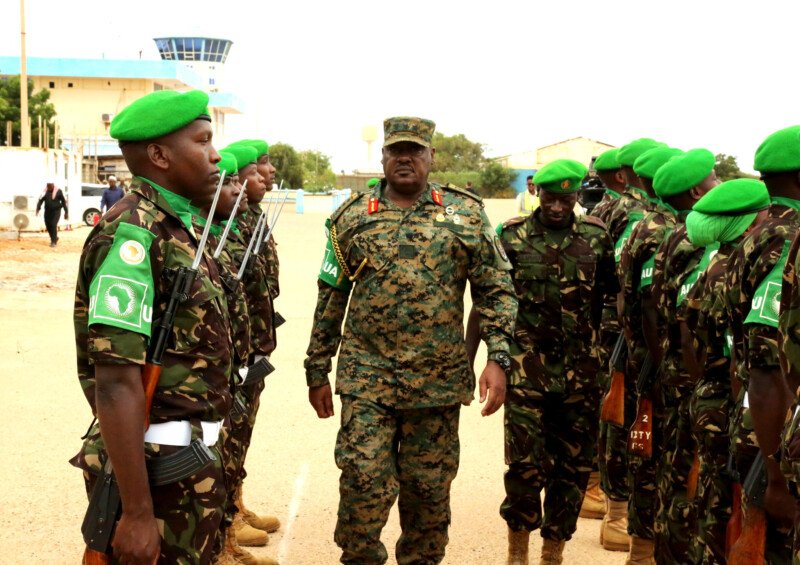
The decision has thrown the future of the African Union Support and Stabilization Mission in Somalia (AUSSOM) into doubt. Washington has signalled it will oppose any UN Security Council renewal of AUSSOM that includes UNSOS or any UN logistical or operational support. Without UNSOS, AUSSOM would lose critical logistical support, including food, water, fuel, transportation, medical services, and casualty evacuation for its 12,000 troops. Uganda has already declared its intention to withdraw its military personnel, and other troop-contributing countries are expected to follow suit.
LaHood’s Visit: Symbolism and Substance
Congressman LaHood’s visit is the first by a senior U.S. lawmaker to Mogadishu since the Trump administration’s funding announcement. Previous congressional visits to Mogadishu have focused on security cooperation, and LaHood’s trip appears to follow that pattern. According to the Somali presidency, the congressman “welcomed Somalia’s progress in rebuilding government institutions, stabilising the country and sustaining operations against terrorist groups.”
Yet the visit also carries a strategic message. LaHood’s presence in Mogadishu signals continued American interest in Somalia’s stability, even as Washington tightens its purse strings. The congressman, a Republican with influence on intelligence and trade policy, is well-positioned to advocate for a calibrated U.S. engagement that balances security interests with fiscal restraint.
The Limits of Congressional Influence
While LaHood’s visit is a welcome gesture, its practical impact is likely to be limited. The funding decision that threatens AUSSOM was made by the executive branch, not Congress. The U.S. has already notified the African Union of its intent to block UN financial support for the mission in 2027. President Mohamud has previously praised American support for Somalia’s counterterrorism efforts, but his administration has struggled to present a credible plan for the security transition that Washington demands.
The Somali government’s reliance on international support, its inability to secure predictable funding, and its failure to present a clear roadmap for the security transition have left it in a position of dependence. The Kampala summit, scheduled for July 31, may secure a temporary reprieve, but it will not resolve the underlying problem: Somalia is not yet ready to stand alone, and its international partners are no longer willing to carry the burden indefinitely.
A Pattern of Diplomatic Engagement Without Accountability
The meeting with LaHood is part of a broader pattern of Somali diplomatic engagement that has yet to translate into tangible results. The Foreign Ministry has highlighted four years of activism, but the gap between diplomatic rhetoric and on-the-ground reality remains wide. Somali legislators have been systematically excluded from reviewing key agreements with the United States and other partners, raising questions about the transparency and accountability of the government’s international engagements.
The president’s office described the meeting as a reaffirmation of the “longstanding partnership” between the two countries. Yet the partnership has become increasingly transactional, with Washington demanding clear benchmarks and Mogadishu struggling to meet them. LaHood’s visit may offer a moment of diplomatic reassurance, but it does little to address the structural weaknesses that have left Somalia dependent on foreign support for its security.
Way Forward
Congressman LaHood’s visit to Mogadishu is a reminder of Somalia’s continued strategic importance to the United States, even as Washington recalibrates its financial commitment. But it is also a reminder of the limits of diplomatic engagement. The Somali government has become adept at hosting meetings and signing agreements, but translating these into tangible improvements in the lives of ordinary Somalis has proven elusive.
For the partnership to deliver on its promises, the Somali government must move beyond hosting foreign dignitaries and present a credible plan for the security transition. It must ensure transparency in its international engagements and address the corruption and governance failures that have historically plagued the security sector. Without these safeguards, the relationship with the United States will remain a relationship of convenience, not a genuine partnership for recovery.
Recommended Reading On ftlsomalia.com
- Somalia Faces Critical Security Test as AUSSOM Mission Nears Collapse Without UN Support
- US Faces Critical Choice on Somalia Security Assistance as AUSSOM Mandate Nears Expiry
- Somali Army Chief, U.S. Official Discuss Security Cooperation
- Uganda Announces Intent to Withdraw Troops from Somalia After 19 Years
- Somali President Credits U.S. Backing for Dramatic Gains Against Extremism
- Somalia’s Diplomatic Landscape: Foreign Ministry Highlights Four Years of Activism