MOGADISHU – The Federal Government of Somalia is facing mounting international pressure to present a clear plan for its security forces to take over full responsibility from the African Union Support and Stabilization Mission in Somalia (AUSSOM), as a US funding cutoff threatens to collapse the logistical backbone of the 12,000-strong peacekeeping force.
The pressure has intensified following a recent regional meeting in Addis Ababa, where the African Union formally requested Somalia to urgently nominate representatives for consultations on the mission’s future. Technical meetings are scheduled from July 22 to 24, feeding into high-level sessions in Kampala, including military and police chiefs on July 29, defence ministers on July 30, and an extraordinary summit of troop-contributing countries on July 31.
A Funding Crisis Decades in the Making
The urgency stems from a US diplomatic note dated July 1, informing the African Union that Washington would no longer finance the UN Support Office in Somalia (UNSOS) beyond December 2026. The US has contributed nearly $2 billion to the UN support mission in Somalia, but has grown frustrated with what it views as insufficient progress by Somali leaders in assuming responsibility for their own security.
The UNSOS budget for the financial year running from July 1, 2026, to June 30, 2027, is $481 million. The US provides approximately 26 percent of that budget through assessed contributions. Without UNSOS, AUSSOM would lose critical logistical support, including food, water, fuel, transportation, medical services, and casualty evacuation.
The State Department has reportedly expressed frustration with what it views as insufficient progress by Somali political leaders, warning it will oppose any support for the continuation of AUSSOM beyond its current mandate. The United States would not support the UN Security Council renewal of AUSSOM if it includes UNSOS or any UN logistical or operational support.
The Quest for a Transition Plan
Somalia is now being pressed to produce a detailed plan outlining the handover of security responsibilities to Somali forces. President Hassan Sheikh Mohamud has held meetings with senior security officials, including military leadership, to assess readiness. However, the plan is expected to specify which bases will be transferred, the timeline for foreign troop withdrawal, the capacity of Somali forces, and the assistance they will still need.
Somali officials have not yet presented a comprehensive transition roadmap. Uganda has already declared its intention to withdraw its military personnel from Somalia after nearly two decades, a move that could trigger a broader exodus of troop-contributing countries. Burundian troops are also set to withdraw due to a failure to reach an agreement on troop numbers under the new mission.
A Security Vacuum in the Making
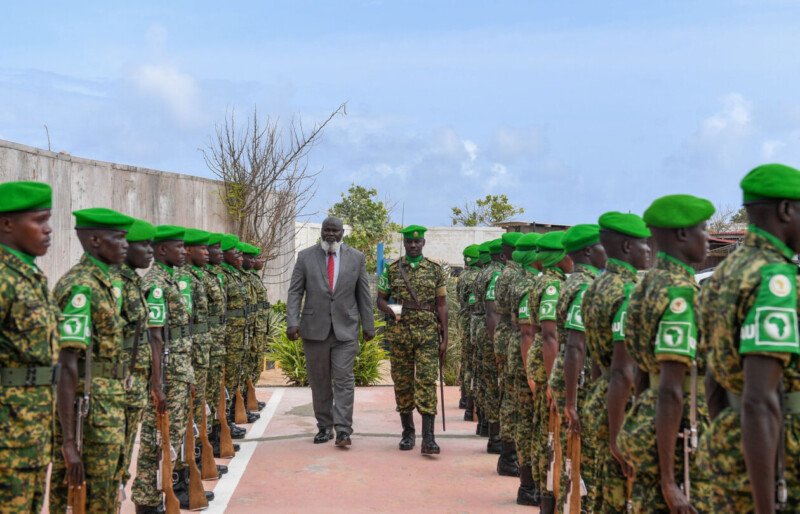
AUSSOM, which officially replaced ATMIS in January 2025, currently fields nearly 12,000 personnel, including 680 police officers and 85 civilian personnel. The mission was launched under a planned five-year mandate running to the end of 2029, subject to annual renewal. Without UNSOS support, the mission could end three years early.
The fear is that a sudden withdrawal, without adequate preparation, could create a security vacuum that Al-Shabaab would exploit. AU Commission Chairperson Mahmoud Ali Youssouf has called for a future guided by clear strategic objectives, while the AU Peace and Security Council has established a task force to evaluate strategic options.
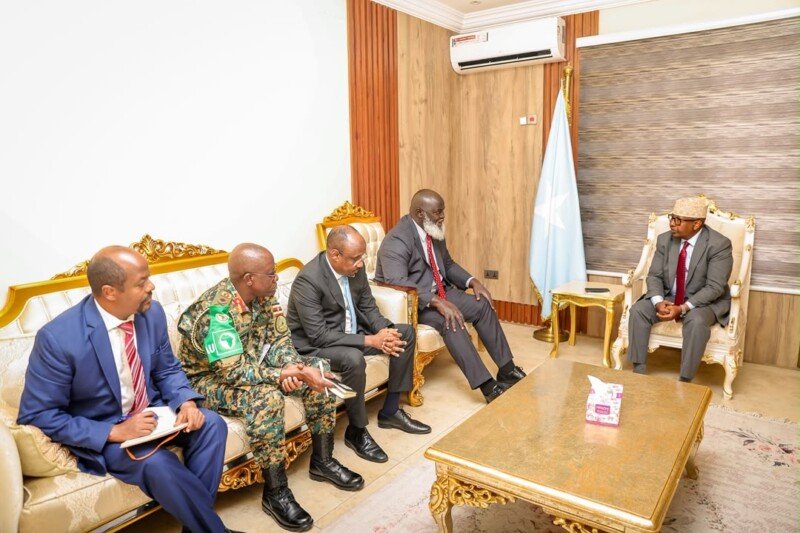
Somali Defence Minister Ahmed Moallim Fiqi and AU Special Representative Ambassador El Hadji Ibrahima Diene have met to reinforce security cooperation amid the funding crisis. But the gap between diplomatic rhetoric and financial reality remains wide.
A Debate About Readiness
The debate over Somalia’s readiness is fiercely contested. Some argue that the Somali National Army has matured enough to assume full responsibility. Others warn of a collapse similar to Afghanistan. Both arguments miss the point: the question is not whether Somalia will collapse once AUSSOM ends, but whether it can transition from externally guaranteed to nationally sustained security.
The Somali government’s reliance on international support, its inability to secure predictable funding, and its failure to present a credible plan for the security transition have left it in a position of dependence. The Kampala summit may secure a temporary reprieve, but it will not resolve the underlying problem: Somalia is not yet ready to stand alone, and its international partners are no longer willing to carry the burden indefinitely.
Way Forward
The future of AUSSOM is a microcosm of Somalia’s broader crisis of governance. It is a story of international commitment undermined by chronic underfunding, of Somali ambition constrained by institutional weakness, and of a transition that has been promised for years but never delivered.
The people of Somalia deserve more than a cycle of summits and funding appeals. They deserve a government that can secure its own borders, provide for its own security, and build the institutions that will allow it to stand on its own. Until that day comes, the future of AUSSOM will remain uncertain, and the security of the Somali people will remain hostage to the decisions of others.
Recommended Reading On ftlsomalia.com
- US Faces Critical Choice on Somalia Security Assistance as AUSSOM Mandate Nears Expiry
- Somali Defence Minister and AU Envoy Strengthen Ties as AUSSOM Faces Funding Uncertainty
- Uganda Announces Intent to Withdraw Troops from Somalia After 19 Years
- Burundi to Pull Troops out of New AU Mission in Somalia
- EU Reaffirms Support for AUSSOM Amid Funding Talks