GAROWE — The Puntland government has issued a strongly worded statement condemning recent airstrikes off the Nugaal coast, demanding that the countries responsible provide an immediate explanation for attacks it says targeted civilian fishermen and their property .
The Ministry of Security and DDR of Puntland said in a statement issued on Friday that it strongly condemns the resurgence of piracy and revealed that it possesses specific intelligence indicating that the recent incidents are not limited to local pirate groups. The ministry stated that there are “forces beyond Puntland” involved in the new piracy operations, and that there are political and financial officials providing support to these groups .
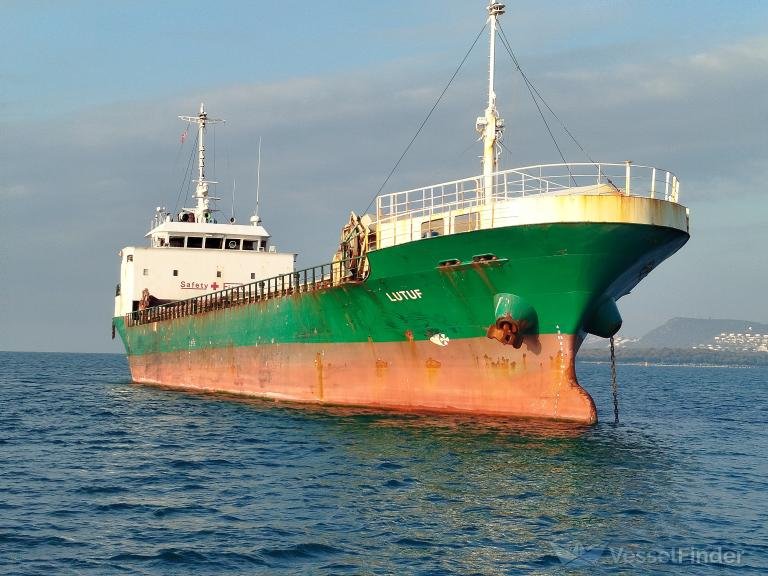
Puntland did not name the specific forces or officials it suspects . However, the statement comes after airstrikes on August 18 and 20 in the Garmaal area of the Nugaal region, which Puntland said targeted fishermen . The attacks are linked to the hijacking of the cargo vessel M/V LUTUF on August 17 off the coast of Eyl district, which was reportedly carrying weapons, communications and satellite equipment destined for a Turkish military training facility in Mogadishu .
Puntland emphasized its commitment to combating piracy and its readiness to cooperate with nations engaged in counter-piracy operations, but strongly opposed the manner in which some recent operations have been conducted . “The Puntland government is against airstrikes by international warships targeting civilians and their property in areas close to the coast where hijacked ships are held,” the statement said, warning that such strikes could damage cooperation between Puntland security agencies and international partners involved in counter-piracy efforts and cause harm to civilians not involved in piracy .
The LUTUF, a Cameroon-flagged cargo vessel, was seized by eight armed pirates approximately four nautical miles south of Mareeya in the Eyl district . The ship, owned by Polar Movement Shipping, carried weapons, communications and satellite equipment bound for a Turkish military training facility in Mogadishu, as well as a crew of ten that included six Indian nationals, one Turkish national, one Georgian, and two Serbian security guards .
Puntland has demanded that the nations whose vessels were involved in the attacks provide an immediate explanation for the purpose of the strikes .
Controversy Over Airstrikes and Civilian Casualties
According to the Associated Press, two Turkish-owned vessels later approached the hijacked ship, while Turkish helicopters and drones monitored the area . On Tuesday, a small boat carrying two men approached the vessel and delivered khat, a stimulant commonly chewed in Somalia . After the boat returned to shore, an airstrike followed, killing four men and wounding two others . The circumstances of the strike—including who carried it out and whether those killed were involved in the hijacking—could not be independently verified .
Puntland’s statement now officially supports claims that the strikes targeted fishermen, demanding that the responsible parties clarify their intentions . The controversy has intensified concerns about the conduct of international counter-piracy operations and the protection of civilian lives in coastal areas .
This latest development follows a pattern of piracy resurgence off the Somali coast . In April, several vessels, including the MT HONOUR 25 and MV SWARD, were hijacked within a week, while the European Union’s Operation Atalanta confirmed in late July that it was monitoring four ongoing hijacking cases . Puntland has now stated that its investigations are reaching anyone inside or outside the region who may be supporting or facilitating these operations .
The LUTUF Hijacking and Turkish Military Interests
The hijacking of the LUTUF represents the first known seizure of a vessel carrying military cargo in recent years . Turkish authorities have not issued any official statement on the incident .
While Turkey has categorically rejected reports suggesting that Russian-made S-400 air defense systems had been deployed to Somalia, the defense ministry reiterated that the deep, strategic defense collaboration continues unabated under previously established bilateral accords, concentrating heavily on training Somali national forces and enhancing their operational capabilities.
Reports indicate that Turkiye is preparing to deploy military personnel, including private defense contractors, to Somalia to support counterterrorism efforts against Al-Shabaab, following the Turkish parliament’s approval of a two-year deployment in July 2024.
Critical Note
Puntland’s statement marks a significant escalation in the diplomatic tensions surrounding the resurgence of Somali piracy and the international response. By publicly revealing that its investigations have identified “forces beyond Puntland” and political and financial officials supporting pirate networks, the regional government is signaling that it believes the piracy crisis is being exploited by external actors with their own strategic agendas.
The controversy over the Garmaal airstrikes, which Puntland says killed civilian fishermen, highlights the dangerous consequences of the international community’s counter-piracy approach. The Somali government and international partners must ensure that counter-piracy operations are conducted in a manner that respects civilian lives and Somali sovereignty. The lack of transparency and accountability in these operations threatens to undermine public trust and complicate the broader fight against maritime crime.
The Puntland government’s willingness to publicly challenge its international partners on this issue reflects the growing frustration in the region with the conduct of foreign military operations. As piracy resurges, the international community must work with Somali authorities to develop a comprehensive approach that addresses both the symptoms and root causes of maritime crime, rather than relying on heavy-handed tactics that risk alienating local communities.