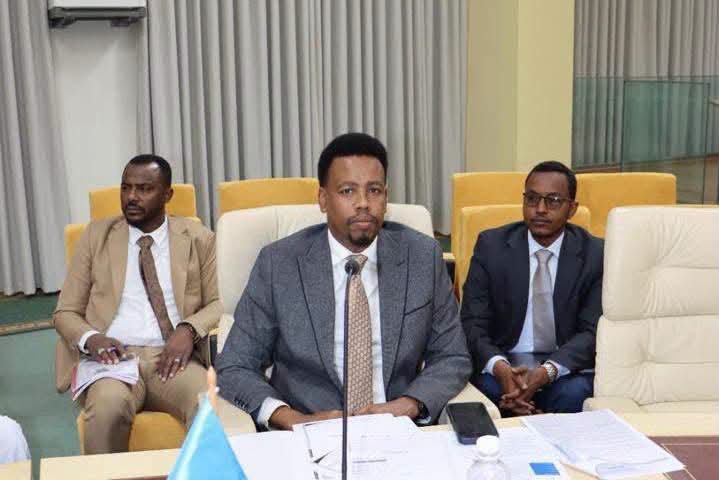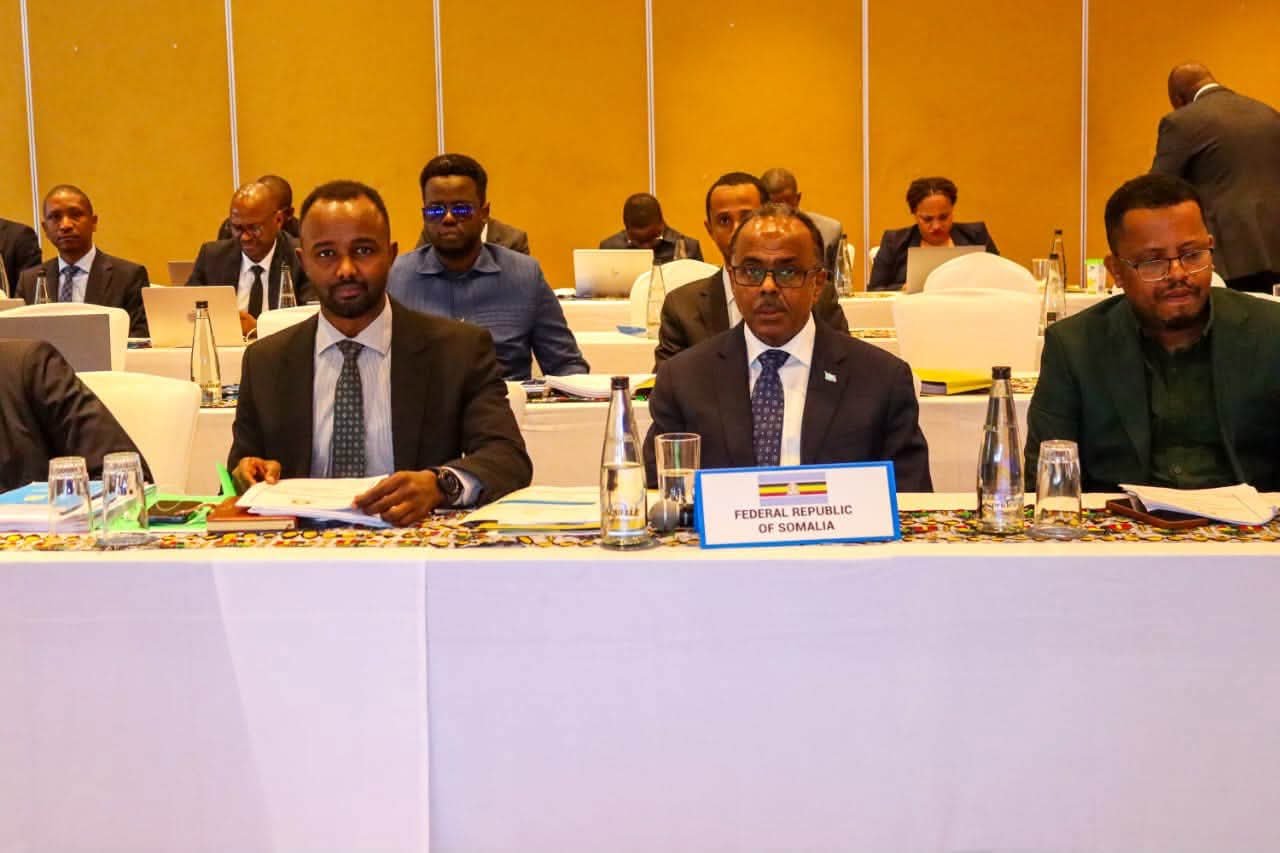
MOMBASA — Somalia’s State Minister for Foreign Affairs and International Cooperation, Ali Mohamed Omar (Ali Bal’ad), who also serves as Somalia’s focal point for East African Community (EAC) affairs, alongside Director General for EAC Affairs Mohamed Faatir, has participated in a special meeting of the EAC Council of Ministers held in Mombasa, Kenya.
The meeting addressed urgent matters concerning EAC staff and department vacancies, including the filling of important open positions and ensuring equitable representation for all EAC member states. Somalia is expected to secure 11 staff positions currently under consideration, strengthening its representation in EAC institutions and its participation in the regional integration process.
The Federal Government of Somalia remains committed to advancing Somalia’s interests within the EAC and ensuring that Somali professionals contribute meaningfully to EAC institutions.
Somalia’s Expanding Role in EAC Institutions
Somalia has secured a significant position within the EAC’s judicial system, with Advocate Abdiwahid Warsame Abdullahi formally appointed as a judge to the First Instance Division of the East African Court of Justice . The appointment, confirmed during the 25th Ordinary Summit of EAC Heads of State in Arusha, marked a notable achievement in Somalia’s broader strategy to establish itself as a central player in East African governance and policy-making .
Having a Somali judge on the regional court holds substantial economic and diplomatic importance. Somali entrepreneurs manage extensive commercial networks throughout East Africa, and the East African Court of Justice serves as the final authority for disputes related to treaty violations, unlawful cargo detentions, and non-tariff barriers . Justice Abdiwahid’s involvement ensures that the legal complexities of Somali commerce are comprehensively understood at the highest levels of regional arbitration .
Beyond the judicial appointment, EAC leaders have set ambitious integration deadlines, formally establishing June 30, 2026 as the deadline for Somalia to expedite the adoption of regional laws and finalize domestic consultations regarding the proposed East African Political Confederation Constitution . Somalia, which officially joined the bloc in 2023, must prioritize harmonizing its domestic legislation, including its newly ratified national Constitution, with the bloc’s overarching legal framework .
Security Cooperation and Intelligence Integration
Somalia has also been actively engaged in EAC security cooperation, with the Commander of the Somali National Army formally inaugurating a two-day gathering of intelligence leaders from EAC member states in Mogadishu . The high-level talks reflect a broader push within the EAC to harmonize security strategies among member states, a priority that has gained urgency amid persistent militant activity across the region .
In his opening address, Brigadier General Ibrahim Mohamed Mahmoud briefed participants on Somalia’s domestic security landscape and wider regional developments, emphasizing the critical role of intelligence partnerships in stabilizing the Horn of Africa . The gathering aligns with a series of recent high-level security engagements involving Somali officials, including intelligence coordination meetings with Ethiopia and participation in regional intelligence chiefs conferences .
Somalia’s integration into the EAC’s security framework continues to evolve, with NISA Director Mahad Salad attending regional intelligence chiefs conferences in Mombasa to discuss security cooperation and intelligence sharing .
Expanding Diplomatic and Economic Ties
Somalia has been actively strengthening diplomatic and economic relations across the region, with Ambassador to the DRC, Tanzania, and the EAC Ilyas Ali Hassan conducting meetings in Kinshasa to support Mogadishu’s push to broaden diplomatic and economic relations . The Ambassador engaged the DRC’s Energy Minister on energy collaboration and investment prospects, and discussed steps to reduce hurdles for Somali merchants and investors in the DRC .
These engagements align with Somalia’s drive to solidify regional partnerships and unlock fresh economic avenues amid changing conditions in the Horn of Africa and the broader Great Lakes area .
Critical Note
Somalia’s pursuit of 11 staff positions within EAC institutions represents a significant step in its integration into the regional bloc since joining in 2023. However, the gap between securing positions and ensuring effective Somali representation remains a concern. The appointment of a Somali judge to the East African Court of Justice and the participation in EAC security meetings are positive developments, but these achievements must translate into tangible influence over regional decision-making processes.
The government’s commitment to advancing Somalia’s interests within the EAC is commendable, yet it must be accompanied by sustained investment in developing the professional capacity of Somali officials who will staff these positions. Without rigorous preparation and institutional support, Somali representation risks remaining a symbolic achievement rather than a driver of meaningful regional influence. The June 30, 2026 deadline for harmonizing domestic legislation with EAC frameworks also raises questions about Somalia’s capacity to meet these commitments given ongoing political and security challenges.
The Federal Government must ensure that its EAC engagement is not merely a diplomatic exercise but a strategic priority that delivers tangible benefits for Somali citizens, including improved trade access, investment opportunities, and regional security cooperation. Without meaningful follow-through and institutional strengthening, Somalia’s EAC membership risks becoming another unrealized promise in the country’s long and difficult journey toward stability and prosperity.