BOSASO – Businesses across the port city of Bosaso remained shuttered on Saturday as traders staged a protest against the prolonged closure of Bosaso Port and a recent increase in taxes on imported goods, raising fears of severe economic consequences for Puntland and the wider region as the crisis becomes entangled in the broader political dispute between the regional administration and the Federal Government of Somalia.
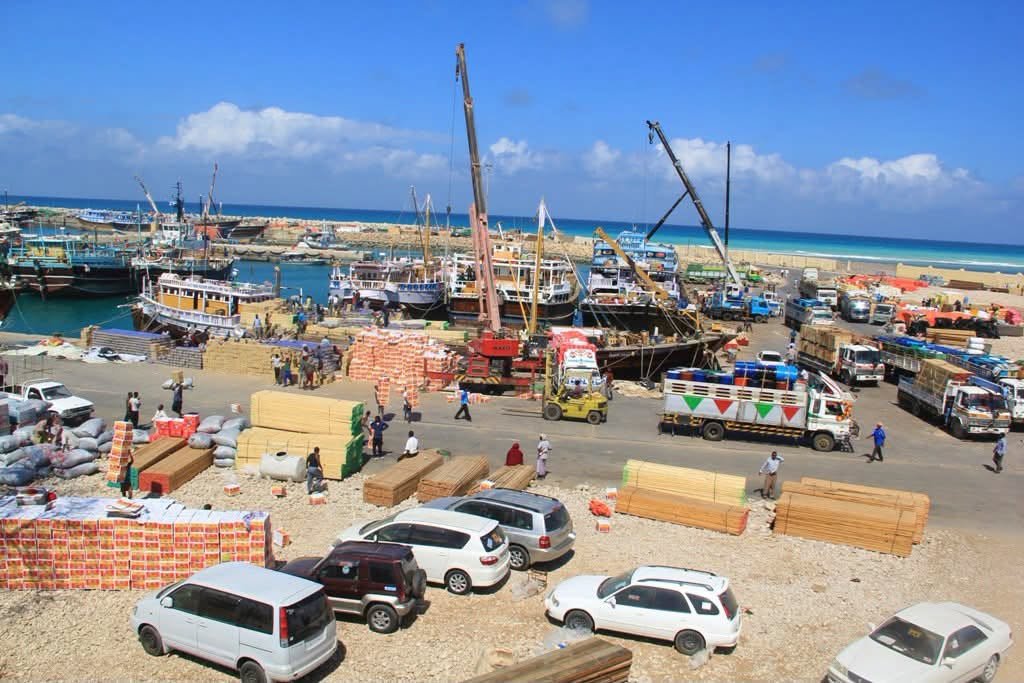
All commercial establishments in the city closed their doors as traders suspended business activities, calling on Puntland authorities to reopen the port and reconsider what they described as steep tax increases on imports. The port, which is Puntland’s primary maritime gateway and economic lifeline, has been shut since July 1, marking its 11th consecutive day of inactivity. According to local sources, the port was shut after traders refused to accept new charges imposed by the Dubai-based DP World, which they described as excessive and incompatible with the economic realities of the region. DP World has so far shown no sign of backing down, deepening the standoff. The port, a critical hub for imports and exports, has seen no commercial activity since the closure began.
A Crisis Fueled by Federal-State Tensions
The Bosaso port crisis cannot be separated from the wider political confrontation between Mogadishu and Garowe. The Federal Government’s decision to terminate all bilateral agreements with the United Arab Emirates in January 2026, including those concerning the ports of Berbera, Bosaso, and Kismayo, has been a major flashpoint. The termination explicitly nullified cooperation arrangements concerning the strategic ports, a move Puntland immediately rejected.
President Hassan Sheikh Mohamud has publicly defended the Federal Government’s decision, accusing the UAE of bypassing Somalia’s sovereignty and dealing directly with Federal Member States like Puntland, which he said undermined the federal structure. In response, Puntland has declared the federal cancellation of the Bosaso Port and security deals “null and void”, asserting its authority over the port agreement.
Puntland Vice President Ilyas Osman Lugatoor has accused Villa Somalia of utilising substantial resources to destabilize the region, stating that the state’s security focus is shifting toward “defense” against political interference. He specifically alleged that President Hassan Sheikh Mohamud, with roughly one hundred and ten days remaining in his term, is engaged in “destructive activities.”
President Said Abdullahi Deni has accused Villa Somalia of attempting to “monopolize power” and push unilateral constitutional amendments without consensus from federal member states, warning that policies purportedly backed by allies of President Mohamud threaten to fracture Somalia regionally.
Tax Hikes and Fee Disputes Fuel the Shutdown
The current shutdown stems from two overlapping issues. First, the Puntland government introduced a new tax regime that traders say has increased levies by as much as four times previous rates, an increase they describe as unsustainable. Second, DP World has imposed new service fees at the port, which traders have also rejected.
Business leaders have warned that the additional costs would ultimately be passed on to consumers at a time when households are already grappling with high living costs and inflation. Traders have further warned that if the policy remains unchanged, many importers may divert their shipments to other ports across Somalia, raising fears of a prolonged decline in cargo traffic through Bosaso.
Economic Impact and Supply Chain Disruption
The closure has dealt a severe blow to Puntland’s economy. The port is the main entry point for essential goods including food, fuel, medicine, and construction materials. Dozens of cargo trucks remain stranded outside the port, while commercial vessels carrying imported goods are reportedly anchored offshore awaiting clearance to unload.
Bosaso Port serves as the economic lifeline of Puntland and a critical trade gateway for much of central Somalia. Any significant disruption to its operations has severe economic consequences, including supply chain disruptions, shortages of essential goods, rising inflation, loss of government revenue, and widespread impacts on businesses and livelihoods throughout Puntland and central Somalia.
As customs revenue from Bosaso Port is the backbone of the regional government’s budget, a sustained drop in imports could sharply reduce state income, placing additional strain on public spending and essential government services.
A History of Conflict at Bosaso Port
This is not the first time such a standoff has occurred. In 2017, a similar conflict over fee increases led to a week-long closure that triggered protests and left at least one person dead. The current crisis suggests that the underlying issues between DP World and the local business community remain unresolved, raising doubts about the long-term viability of the company’s presence in Bosaso.
The Broader Political Divide
The port dispute is a microcosm of the larger political crisis that has engulfed Somalia’s federal system. The Federal Government’s decision to rename regional leaders as “leaders” rather than “presidents” has further strained relations with Puntland, which has formally rejected the constitutional amendments that underpin the change. The federal government recently abolished the use of the title “president” for regional state leaders, renaming them “leaders” in line with constitutional amendments that have been rejected by Puntland and Jubaland.
The constitutional amendments have significantly expanded the powers of the federal presidency, allowing for unlimited political parties and promoting political pluralism while also centralising authority in Mogadishu. Puntland has formally rejected the constitutional amendments, arguing that they undermine the federal system and concentrate excessive power in the hands of the federal presidency.
Way Forward
Neither Puntland authorities nor port officials have immediately commented on the traders’ claims. As the closure enters its second week, the pressure is mounting on both sides to reach a compromise. The longer the port remains shut, the more severe the economic consequences will be for Puntland.
The standoff underscores the fragility of the region’s critical infrastructure and the need for a more sustainable and transparent management model. Without a swift resolution, the crisis risks deepening, further destabilising an already fragile economy and adding to the growing list of grievances between Mogadishu and Garowe.
Recommended Reading On ftlsomalia.com:
- Bosaso Port Shuts Down for Ninth Day as Traders Reject DP World Fee Hikes
- Puntland Rejects Federal Decision to Cancel UAE Pacts, Vows to Maintain Bosaso Port Deal
- Puntland President Accuses Federal Government of Undermining Federal System
- Puntland Accuses Federal Government of Destabilization Efforts