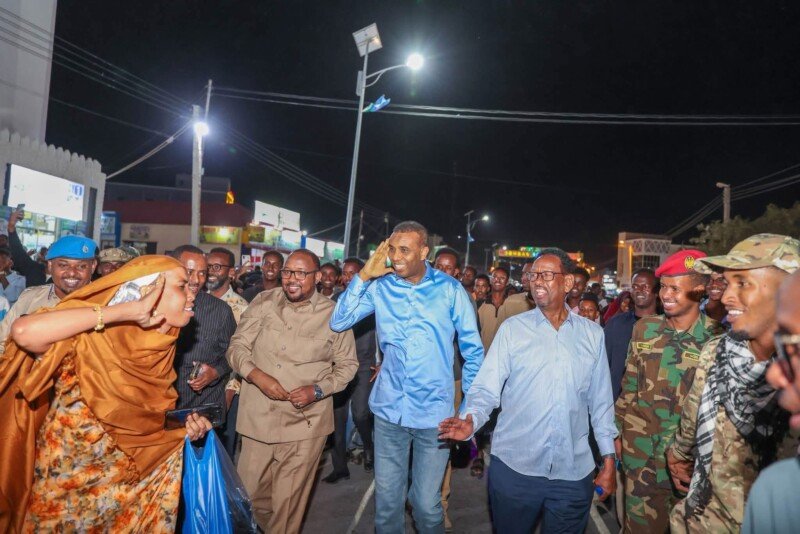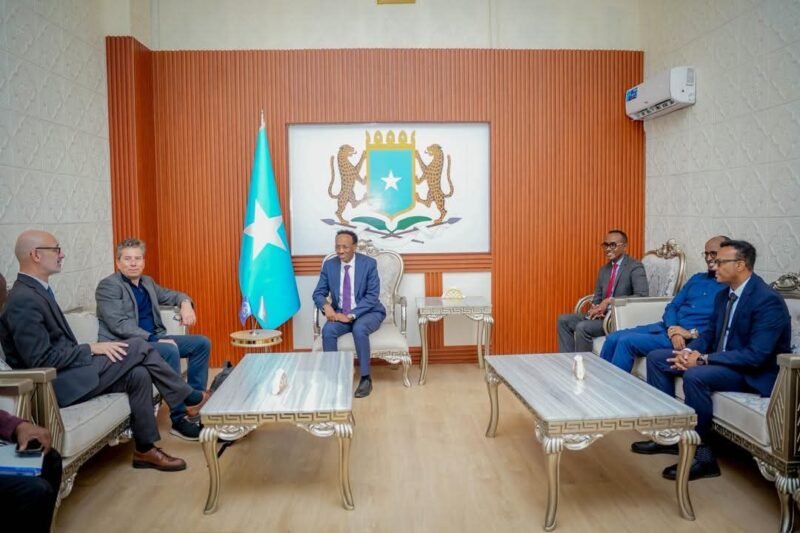
MOGADISHU — Somalia’s Deputy Minister of Foreign Affairs and International Cooperation, Hassan Mohamed Ali, on Monday welcomed the United Nations Under-Secretary-General for Humanitarian Affairs and Emergency Relief Coordinator, Tom Fletcher, upon his arrival at Aden Adde International Airport.
The reception was attended by the Commissioner of the Somalia Disaster Management Agency (SoDMA), Mahmoud Moalim Abdulle. The visiting delegation is expected to participate in high-level talks addressing Somalia’s urgent humanitarian needs, improving aid delivery mechanisms, and fundraising efforts.
Worsening Humanitarian Crisis
Fletcher’s visit comes as Somalia faces a deepening humanitarian crisis. Nearly 6.5 million people in Somalia are experiencing severe hunger as rapidly deteriorating drought conditions, ongoing conflict, and massive reductions in global aid exacerbate the nation’s humanitarian crisis. New findings indicate that 6.5 million people are anticipated to experience “Crisis” or worse levels of food insecurity, with approximately 1.84 million children under five years old projected to suffer from acute malnutrition during 2026.
“The severity of this drought is undeniable and profoundly concerning,” stated Mohamud Moallim Abdulle, Commissioner of SoDMA, who has urgently appealed to international partners, the Somali diaspora, businesses, and civil society to immediately pool resources and increase support.
Assessment Visit to Baidoa
Fletcher’s visit to Somalia is scheduled from April 27 to May 1, during which he will travel to Baidoa to evaluate the humanitarian conditions on the ground. Baidoa, the administrative capital of South West State, is a major hub for displaced populations, and the UN delegation is expected to conduct first-hand assessments of the local humanitarian situation.
International Funding for Emergency Aid
The UN humanitarian chief’s visit coincides with urgent funding appeals for Somalia’s emergency response. The World Food Programme is urgently appealing for $95 million to sustain critical food and nutrition operations in Somalia through August 2026, warning that without an immediate injection of funds, its lifesaving programs could be forced to shut down entirely by April.
The number of emergency food aid recipients has plummeted from 2.2 million in early 2025 to just over 600,000 currently, while crucial nutrition initiatives have dropped from approximately 400,000 beneficiaries in October down to roughly 90,000 by December.
Deputy Minister’s Humanitarian and Consular Role
Deputy Minister Hassan Mohamed Ali has been actively involved in humanitarian and consular efforts. In April 2026, he officially welcomed 174 Somali citizens repatriated from hazardous conditions in Libya at Aden Adde International Airport. The repatriation followed focused diplomatic efforts by the government, including bilateral talks in Libya led by Foreign Minister Abdisalan Abdi Ali.
Deputy Minister Ali underscored the government’s determination to counter human trafficking networks and address the drivers of irregular migration, stressing that similar evacuations would continue as Mogadishu ramps up efforts to bring back all citizens stuck in dire conditions abroad.
SoDMA’s Role in Disaster Management
Commissioner Mahmoud Moalim Abdulle has been actively strengthening SoDMA’s capacity to respond to humanitarian crises. The Commissioner affirmed that Somalia has successfully transitioned from foundational planning discussions to establishing robust, highly functional disaster response mechanisms across the country. He pointed out that Somalia continuously confronts numerous overlapping obstacles, including prolonged regional droughts, localized security conflicts, and escalating climate effects.
SoDMA has hosted high-level delegations from international partners to discuss the escalating drought crisis, with official assessments indicating the crisis is now severely affecting over 74 districts across the country. The agency has called for international backing to supplement domestic interventions, such as the government’s recent move to issue $3.88 million in drought insurance payouts to affected pastoralists.
Previous UN Engagement in Somalia
This is not the first high-level UN humanitarian visit to Somalia. In January 2026, a team headed by SoDMA Commissioner Mahmoud Moalim Abdulle landed in Kismayo to examine the consequences of the persistent drought, comprising delegates from humanitarian agencies and including the Deputy Special Representative of the UN Secretary-General for Humanitarian Affairs, George Conway. The team visited multiple internally displaced persons settlements to assess living conditions and humanitarian difficulties confronting displaced communities.
Commitment to Strengthening Humanitarian Response
Fletcher’s mission aims to strengthen strategic cooperation between the UN and Mogadishu, with a specific focus on scaling up international investment in humanitarian recovery and ensuring sustainable funding models for long-term aid delivery.
Fletcher reaffirmed the United Nations’ commitment to maintaining and expanding humanitarian support for Somalia, while praising the federal government’s efforts to respond to difficult conditions across the country. The visit is expected to result in enhanced coordination between UN agencies and Somali authorities to address the urgent needs of millions affected by drought, displacement, and conflict across the nation.