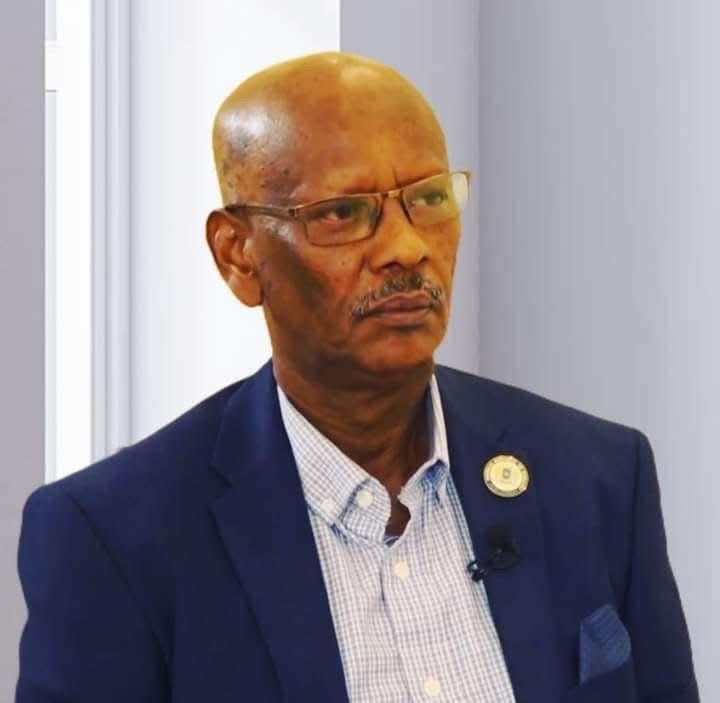
MOGADISHU – Former Somali Information Minister Zakaria Mahmoud Hajji has claimed that Israel has thoroughly penetrated Somalia’s federal institutions and political decision-making processes, just weeks after Somali President Hassan Sheikh Mohamud characterized Tel Aviv as an adversary of both Somalia and the Muslim world due to its recognition of Somaliland.
“Israel has deeply infiltrated Somalia’s institutions and penetrated Somali political decision-making. We must recognize the danger of its presence in Berbera, as well as the risks posed by delays in achieving national unity and saving what remains of the Somali state,” Hajji stated in an exclusive interview with Egypt Independent newspaper.
Speaking from his former position as head of the Somali Re-Liberation Alliance, Hajji warned that Israel’s military presence in the port of Berbera at the mouth of the Red Sea represents “a dagger in the back of the entire region.”
A CNN investigation published in revealed that Somaliland provided Israel with a covert military position during the recent war with Iran, allowing Israeli aircraft a potential stopping point on long-range flights to the Islamic Republic. The report, citing four sources familiar with the matter, revealed that Israel secretly deployed elite military and intelligence units to maintain positions in Somaliland, extending the military’s range by hundreds of miles deep into Iranian territory.
Israel Penetrates Somalia Through Ethiopia, Former Minister Says
Hajji added that “Israel penetrates Somalia through Ethiopia, as the two countries share relations and mutual interests.” He argued that Israel utilized Ethiopia as a proxy to pursue its objectives in Somalia.
Reflecting on his experience as part of insurgent groups that fought Ethiopian forces after they entered Somalia and seized Mogadishu in 2006, Hajji explained: “I was part of the Somali Re-Liberation Alliance when Ethiopia attempted to occupy parts of Somalia in 2007. The war with Ethiopia continued between 2007 and 2011. After Ethiopia was repelled and its forces pushed out of parts of Somali territory, Western powers stepped in and helped install non-national forces into positions of authority, which later contributed to the deterioration of the situation.”
Ethiopian officials have renewed calls for Somalia and other neighboring countries to respond positively to Ethiopia’s long-standing quest for access to the sea, framing it as a regional development imperative rather than a sovereignty dispute. The Federal Government of Somalia has consistently denounced Ethiopia’s actions as a violation of its sovereignty and territorial integrity.
“When Ethiopia occupied parts of Somalia, it was effectively a proxy war. Israel had an interest in fragmenting Somalia, while Ethiopia had a direct interest in fighting Somalia and occupying parts of it. Thus, Ethiopian and Israeli objectives converged. Even today, Ethiopia continues to occupy part of western Somalia,” Hajji added.
Responsibility for Fragmentation
The former Somali minister maintained that responsibility for Somalia’s fragmentation rests primarily with Somalis themselves, while also acknowledging the role of regional actors.
“The primary responsibility lies with the Somalis themselves, and this is what allowed the fragmentation to occur. However, Arab states and countries of the Horn of Africa also bear responsibility,” Hajji stated.
He linked foreign influence to Somalia’s internal political model, arguing that the federal system had deepened divisions rather than managed them. “The federal system has failed catastrophically,” he said.
Political disagreements have intensified in Somalia, with the latest conflict involving Jubbaland threatening to further divide the nation. Under President Hassan Sheikh Mohamud, political conflicts have escalated, with recent constitutional amendments made without consultation from certain stakeholders deepening the division. Jubbaland has announced it will be referred to as “Jubbaland State,” removing “federal member” from its official designation, a similar action taken by Puntland in 2023.
Hajji argued that Somalia’s crisis does not stem from social fragmentation because Somalis share language, religion and culture, but from the absence of a nationally agreed political programme. “The Somali people are united in every sense, culturally, religiously and linguistically. But the absence of a nationally agreed political programme negotiated among all Somalis is the root of the crisis,” he said.
Context of Israel’s Recognition of Somaliland
The remarks follow Israel’s recognition of Somaliland, making it the first United Nations member state to recognize the breakaway northern region. Following the recognition, Israel appointed an ambassador to Somaliland while accepting Somaliland’s appointment of an ambassador to Israel and plans to establish an embassy in Jerusalem.
Somaliland announced that it would soon open its embassy in Jerusalem, prompting condemnation from 19 Muslim countries that regard Jerusalem as an occupied Palestinian city. Somalia rejected the move as a violation of its sovereignty, while the African Union reaffirmed its support for Somalia’s unity and territorial integrity.
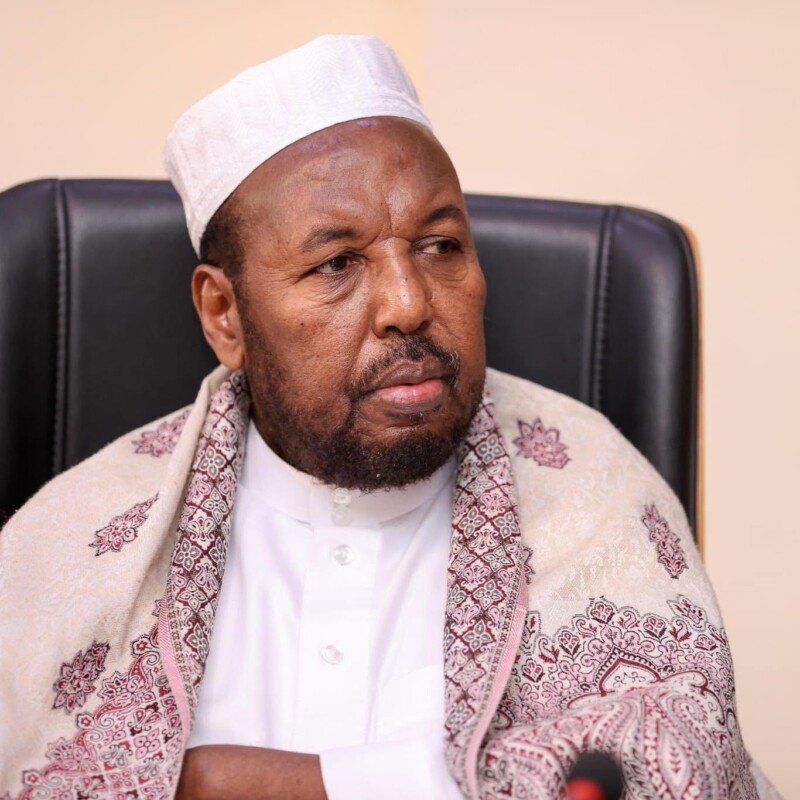
Renowned Islamic scholar Sheikh Mustafa Haji Ismail Harun has issued a stinging rebuke of the diplomatic breakthrough between Somaliland and Israel. Addressing a packed congregation, Sheikh Mustafa stated: “Success cannot be built on injustice. Escaping the injustice you are facing should never lead you to support the greatest oppressor, who is killing Muslim people to this day.”
The Sheikh’s condemnation centered on Israel’s conduct in Gaza, offering grim statistics regarding the ongoing conflict. “One cannot attain success through injustice, of any kind,” he added, directly challenging the government’s narrative that the Israeli partnership is a purely pragmatic path to prosperity and security.
Somaliland President Abdirahman Mohamed Abdullahi “Irro” traveled to the United Arab Emirates for a working visit to attend the annual World Governments Summit in Dubai. Talks focused on trade relations and investment opportunities, domains where the UAE remains a pivotal partner. The Emirati logistics giant DP World has invested approximately $442 million in the development of the Berbera Port, a project central to Somaliland’s economic roadmap.
Strategic Importance of Berbera and Regional Concerns
Hajji warned about the strategic implications of Israel’s presence in Berbera, a port city on the Gulf of Aden that has been transformed by the United Arab Emirates firm DP World over the past decade into a state-of-the-art facility on one of the world’s busiest trade routes. Berbera port traffic was up 30 percent from 2023 to 2025, and port authorities have envisioned further expansion following Israel’s recognition.
Global logistics giant DP World confirmed that its operations at the Berbera Port in Somaliland will continue under existing agreements, defying the Somali government’s move to nullify all pacts with the UAE. The statement comes amidst a sharp escalation in regional tensions after the Federal Government of Somalia announced the termination of all agreements with the UAE.
However, an alliance with Israel also brings risks, particularly as regional tensions escalate. Abdel Malek al-Houthi, leader of the Iran-backed Houthi rebel group in Yemen, had already warned that any Israeli presence in Somaliland would be considered a “military target.”
“There is a widespread assumption that there is an Israeli military or security presence that is already in the country,” a Western diplomat told AFP on condition of anonymity, though any military cooperation will remain secretive.
President Hassan Sheikh’s Position on Israel
President Hassan Sheikh Mohamud has consistently condemned Israel’s recognition of Somaliland. In an address to a special joint session of the federal parliament in Mogadishu, Mohamud strongly condemned Israel’s recognition, warning that “such null and void actions risk further destabilizing the Horn of Africa region and reviving extremist elements, undermining the significant gains made in the fight against international terrorism.”
In an interview with Turkish national broadcaster TRT World, Mohamud said: “We have never attacked Israel. We never have created problem to Israel. We don’t want Israel to come to us and bring their problem to us.”
He described Israel’s move as a “very sad situation,” calling for respecting international law. Mohamud warned that establishing an Israeli military base in Somaliland would escalate the conflict, a move the Somali government and people have categorically rejected.
Call for Somali Unity
Hajji called for urgent national unity, fair elections, and a move beyond what he described as the current political leadership made up of “warlords.” He said Somalia had gone 36 years without “a true state of institutions,” despite the resilience of the Somali people and the continued existence of strong national bonds.
“The problem is not with the people, but with those currently in power,” he said.
He warned that Somalia’s weakness could no longer be treated as a domestic issue, noting that the country’s location along the Gulf of Aden and near the Red Sea means its instability affects maritime security, Arab national security and the balance of power in the Horn of Africa.
Recommended Reading On ftlsomalia.com:
- CNN: Somaliland Provided Covert Military Position to Israel During Iran War
- Ethiopia Urges Somalia and Neighbors to Support Its Bid for Sea Access
- Somalia Faces Fragmentation Risk Amid Federal Rift Under Hassan Sheikh
- Sheikh Mustafa Haji Ismail Harun Speaks Strongly on the Issue of Israel
- DP World Confirms Berbera Port Operations Continue Despite UAE-Somalia Tensions