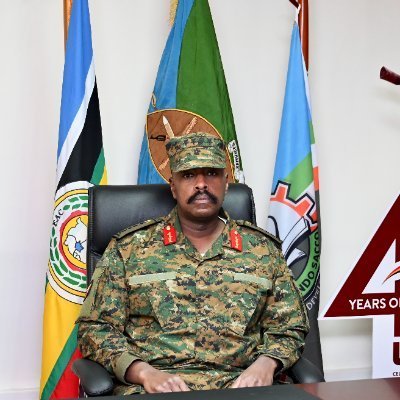
KAMPALA — Uganda will withdraw all its troops from Somalia by August 1, 2027, the country’s military chief Muhoozi Kainerugaba has announced, setting a specific date for an exit after nearly two decades of involvement in the country’s security operations .
“We are withdrawing completely from Somalia by the 1st of August 2027. They will not be UPDF in Somalia after that,” Kainerugaba said in a post on X on Friday, August 28, 2026. It was not immediately clear whether the date announced by Kainerugaba, the son of President Yoweri Museveni, had been formally approved by the Ugandan government.
Uganda has been one of the main contributors to African Union security operations in Somalia since 2007, helping Somali forces fight Al-Shabaab, the Al-Qaeda-linked militant group . Uganda was the first troop contributor to Somalia in 2007, helping to drive Al-Shabaab out of Mogadishu .
The announcement comes less than a month after Uganda hosted an extraordinary summit of countries contributing troops to the African Union Support and Stabilisation Mission in Somalia (AUSSOM). At the July 31, 2026 summit in Kampala, Uganda called for sustained international support for Somalia’s peace and security and backed efforts to secure sustainable financing for the mission .
However, the summit was marked by tensions. According to Africa Intelligence, President Hassan Sheikh Mohamud rejected proposals to include language calling on Somali political leaders to hold an internal dialogue involving federal member state leaders and political stakeholders, with international observers present. Following Mohamud’s protest, the clause was removed from the final communiqué .
President Museveni urged Mogadishu to build broad political consensus with domestic opposition groups. The Ugandan leader indicated that ongoing political instability could affect the deployment of Ugandan forces under the regional peacekeeping framework, warning Somali authorities of the risks involved. “Ugandan forces will stay in Somalia with or without Western financial support,” Museveni said during the summit.
AUSSOM Faces Funding Crisis
The future of the nearly 12,000-member AUSSOM mission has been put under pressure by a U.S. decision to stop supporting United Nations logistical and operational assistance to the African Union force from the start of 2027 . The United States notified the African Union in July that it would not fund the mission beyond December 31, 2026 .
The reasons for the US decision include the Somali federal government’s failure to take full ownership of its security functions and sustain the progress made against al-Shabaab and other terrorist groups. Washington has also criticised Somalia’s progress in combating the terror group and addressing broader security and governance challenges .
AUSSOM relies heavily on UN support for essential services, including food, water, fuel, medical assistance and troop transportation . The United States has said it will not oppose renewal of AUSSOM’s mandate but will reject continued UN logistical or operational support for the mission .
The funding decision has raised concerns within the African Union and among diplomats about the mission’s ability to continue operating without an alternative source of logistical and financial support. The African Union has projected a need for approximately $190 million to facilitate the shift from ATMIS to AUSSOM, while civil society monitors note that short-term needs already surpass $90 million .
The EU has provided an additional €75 million under the European Peace Facility, bringing its total support to successive AU-led missions in Somalia to almost €2.8 billion since 2007 .
On August 6, 2026, UNSOS issued a public tender seeking auctioneers to liquidate a vast inventory of equipment, signaling a potential wind-down of operations. The move comes as the UN prepares for the potential closure of its logistical support branch by Dec. 31, 2026. The planned sale has drawn immediate scrutiny from anti-corruption advocates, who warn that disposing of millions of dollars in assets in a high-risk environment lacks sufficient public oversight.
Somalia Seeks Greater Security Responsibility
Somalia has been working to assume greater responsibility for its own security as international forces gradually reduce their role. President Hassan Sheikh Mohamud has called for foreign troops to eventually leave Somalia, arguing that the country cannot indefinitely depend on international forces to protect its sovereignty. “We should give the foreign troops a beautiful bouquet and send them home,” Mohamud has said .
But the transition remains difficult as Al-Shabaab continues to carry out attacks and operate in parts of southern and central Somalia. AUSSOM replaced the African Union Transition Mission in Somalia in January 2025 and was established to support Somali security forces during the transition .
The withdrawal of Ethiopian troops from the strategic military base in Burhakaba on August 8, 2026, has raised concerns about the ability of Somali forces to secure positions transferred by African Union troops as AUSSOM faces financial and logistical uncertainty. Burhakaba lies on the important road connecting Mogadishu with Baidoa. Although government forces control the town, al-Shabab maintains influence in parts of the surrounding countryside. That makes Burhakaba an important test of whether Somali forces can defend positions transferred by foreign troops.
Defence ministers from the countries that make up AUSSOM—Burundi, Djibouti, Egypt, Ethiopia, Kenya and Uganda—and Somalia have stressed the need for an “orderly, coordinated” exit of the AU mission in order to hand over to Somali forces.
The UK has also reaffirmed its long-term commitment to Somalia’s security transition, with UK Minister for Development and Africa Kirsty McNeill visiting Mogadishu to discuss political and security priorities. The UK stands ready to provide further support for Somali forces through UNSOS, which plays a vital role in sustaining Somalia’s hard-won security gains against Al-Shabaab.
Critical Note
Kainerugaba’s announcement of a complete Ugandan troop withdrawal by August 2027 marks a significant development for Somalia’s security transition, but it also raises serious questions about timing and coordination. The August 2027 deadline comes just eight months after the U.S. is set to end its logistical support for UNSOS in December 2026, potentially creating a critical gap in the mission’s operational capacity .
ACLED’s Senior Research Assistant has warned that without immediate alternative international funding, AUSSOM faces imminent operational collapse heading into 2027. Because the Somali National Army remains overstretched and structurally unequipped to manage complex country-wide logistics independently, an abrupt degradation of African Union positions will trigger an immediate, destabilizing security vacuum across central and southern Somalia. Al-Shabaab is poised to aggressively exploit this security transition by launching a major, coordinated offensive during the 2026–2027 transition period.
The Kampala summit’s tensions and President Mohamud’s refusal to include language on political dialogue reflect the deep divisions between Mogadishu and its regional neighbours over the transition . Somalia’s neighbours are becoming increasingly frustrated with the country’s ongoing political disputes, and there are growing concerns in Kampala, Nairobi and Addis Ababa that disagreements over the electoral calendar are endangering national stability, regional security and the ongoing transition process.
The international community must urgently address the funding crisis facing AUSSOM and support a coordinated transition that preserves security gains. Without alternative logistical and financial arrangements, the premature withdrawal of Ugandan and potentially other troops could lead to a deterioration of security and a resurgence of Al-Shabaab. The Kampala summit’s call for a new UN peacekeeping mission, despite U.S. opposition, reflects the desperation of the situation and the need for creative solutions to prevent a security collapse .
Recommended Reading On ftlsomalia.com
- President Mohamud Meets Museveni in Kampala as AUSSOM Faces Funding Crisis
- Ugandan Commander Threatens Somalia Troop Pullout Without Turkish Funding
- President Defends Uganda’s Military Role Amid Turkish Influence Tensions
- Somali Defence Minister and AU Envoy Strengthen Ties as AUSSOM Faces Funding Uncertainty
- Somalia, African Union Mission Fast-Track Security Transition
- AUSSOM Reaffirms Support for Somalia’s Peace on Africa Day
- UK Minister Visits Mogadishu, Urges Political Dialogue and Security Transition