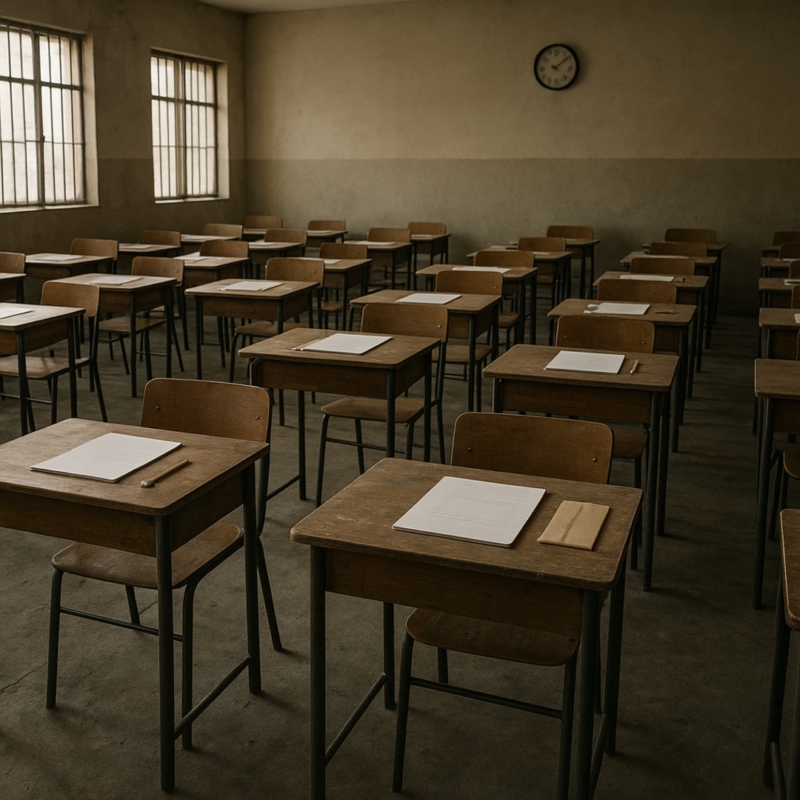
MOGADISHU – More than 44,000 Somali students sat for the country’s 2026 secondary school leaving examinations on Saturday, with officials describing the tests as an important step toward strengthening the education system as the federal government continues its push to rebuild the sector after decades of conflict.
The Ministry of Education said 44,300 students are taking the exams, which are being held in 158 examination centres across 58 districts, most of them in southern and central Somalia[reference:0]. The number of candidates rose by more than 5,000 compared with 2025, reflecting wider access to education, improved security, increased teacher recruitment, and the reopening of schools in areas once controlled by Al-Shabaab[reference:1].
Prime Minister Hamza Abdi Barre officially opened the examinations and encouraged candidates to show commitment and compete fairly. Barre said the federal government has made significant investments in education and remains committed to improving the country’s schooling system for the benefit of future generations.
Barre said the government’s National Transformation Plan has placed education at the heart of Somalia’s development agenda, with raising standards and modernizing the sector among its key priorities[reference:2]. “Education is not only the path to success, but also the foundation of development and national capacity-building,” the prime minister said, adding that Islam strongly emphasizes the importance of learning[reference:3].
The government has unveiled a comprehensive reform of the national education system, highlighting the recent federal recruitment drive as a significant achievement in structural reform and state sovereignty[reference:4]. Over 10,000 qualified teachers have been recruited and deployed across both urban centres and remote areas, with the aim of increasing the workforce to 12,000 government-employed educators[reference:5].
A Growing Education Sector
Somalia’s unified national secondary school examinations were launched in 2015 as part of efforts to create a standardised national education system after decades of conflict and institutional collapse, with about 7,000 students sitting the first exams[reference:6]. Since then, participation has increased steadily, and the annual examinations have become a key milestone in the country’s work to rebuild and strengthen its education sector[reference:7].
Prime Minister Barre has previously emphasised the critical role of education in Somalia’s reconstruction, characterising a robust educational framework as the foundation for economic revival, social unity, and national security[reference:8]. The government has given special priority to investing in education, aiming to establish a high-quality, efficient, and modern education system that meets contemporary needs[reference:9].
The government has also invested in education infrastructure, with Prime Minister Barre presiding over the groundbreaking ceremony for the new headquarters of Somalia’s Ministry of Education, Culture and Higher Learning in Mogadishu[reference:10]. The new facility, once completed, will centralise the ministry’s operations and provide a modern workspace to better coordinate national education policies[reference:11].
Teacher Recruitment and Domestic Funding
A crucial element of the sector expansion is its complete independence from external financial support. For the first time in contemporary Somali history, the salaries of newly hired teachers are fully funded through domestic national revenues[reference:12]. This financial autonomy marks a significant advancement in state capability, demonstrating the Federal Government’s capacity to sustainably manage its fundamental public services while exercising full sovereignty over its long-term development objectives[reference:13].
The federal government remains committed to advancing education at all levels, with Prime Minister Barre announcing that free PhD education will be available for 60 Somali students at the University for Peace (UPEACE), a powerful step toward empowering future leaders and fostering a skilled workforce[reference:14].
Minister’s Address to Candidates
Education Minister Farah Sheikh Abdulkadir congratulated the students sitting the exams and wished them success, while thanking school administrators, teachers, parents, security agencies and all personnel involved in organising the nationwide assessments.
“The Ministry of Education, Culture and Higher Education is committed to ensuring the integrity, fairness and quality of national examinations, with the aim of producing a knowledgeable and capable generation that will drive the country’s development,” the minister said.
Somalia has expanded its national examination system in recent years as part of broader efforts to rebuild institutions and improve access to education after decades of conflict and instability. The rising number of candidates signals growing confidence in Somalia’s public education system[reference:15].
Record Participation Reflects Progress
The examinations are conducted by the Federal Government in cooperation with education authorities in the Federal Member States and are considered a key benchmark for students seeking admission to higher learning institutions[reference:16]. This year’s sitting marks the highest number of candidates ever to take Somalia’s unified national secondary school examinations, underscoring the continued growth of the country’s education sector[reference:17].