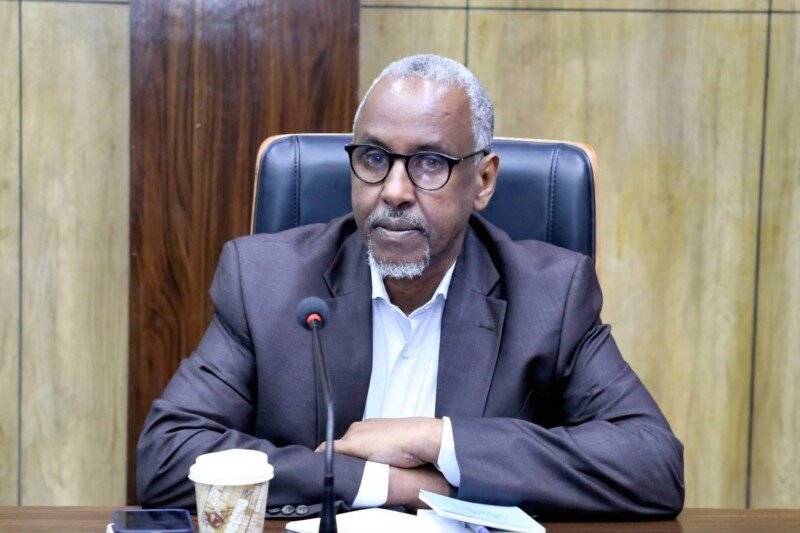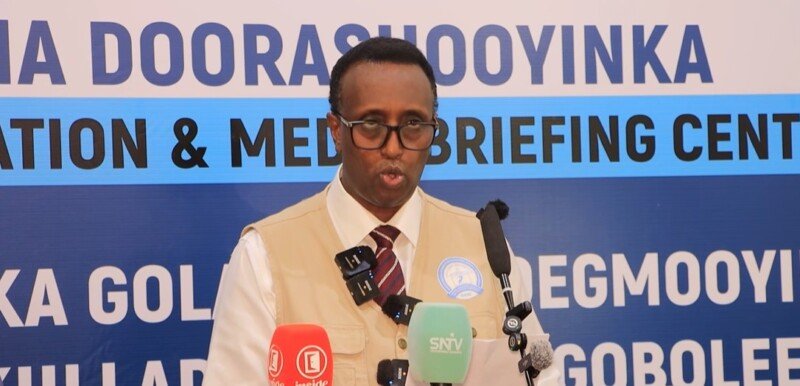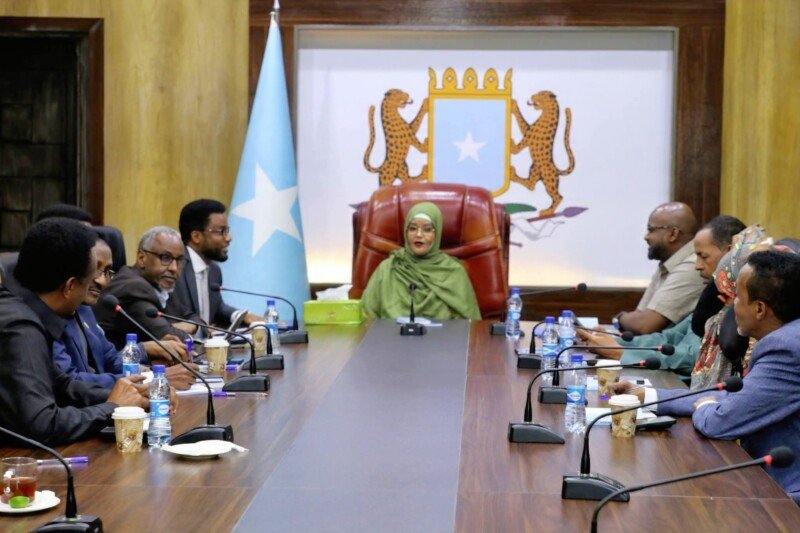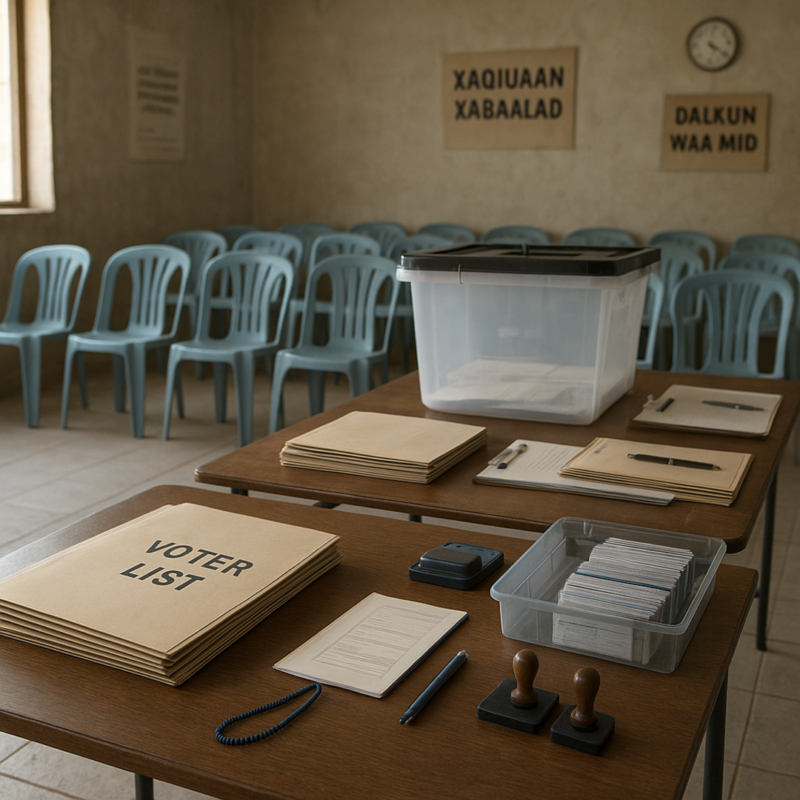
ABUDWAQ – Residents of Abudwaq district in Somalia’s Galgadud region have welcomed the ongoing voter registration process, which is intended to support one‑person, one‑vote elections nationwide. At a community meeting attended by traditional elders, politicians, religious scholars, youth, and women, participants voiced support for the registration exercise, calling it a key step toward allowing citizens to shape their political future and elect representatives who represent community interests.
Speakers at the gathering highlighted the need for wide public involvement in the electoral process, stressing that the right to vote and stand for election is central to strengthening democratic governance. The Federal Government’s DanQaran administration is expanding efforts to promote universal suffrage, aiming to ensure Somali citizens can directly choose their leaders and exercise their democratic rights.
The federal government has expanded voter registration to the Galgadud and Mudug regions, with the aim of strengthening the country’s democratic transition through universal suffrage. The registration drive is part of a broader strategy to empower citizens and transition Somalia away from the indirect, clan‑based electoral system that has dominated since 2000.
Galmudug’s Electoral Preparations
The voter registration in Abudwaq, a district within Galmudug State, is being conducted in coordination with regional authorities. The National Independent Electoral and Boundaries Commission has been implementing a phased registration rollout, starting in Mogadishu and the Southwest State before expanding to other regions.
Galmudug President Ahmed Abdi Karie (Qoorqoor) has faced domestic criticism over his close coordination with Mogadishu on electoral matters, reflecting the broader political sensitivities that accompany the move to universal suffrage. Opposition figures in Galmudug have accused the president of undermining the state’s autonomy by aligning too closely with federal plans.
Political Divisions over the Electoral Model
The enthusiasm in Abudwaq contrasts with deep political divisions at the national level. Opposition leaders have drawn sharp battle lines against what they describe as the government’s “illegitimate term extensions” and attempts to push through “disputed elections” without national consensus. The opposition, including the Somali Future Council, has repeatedly rejected the one‑person, one‑vote model, advocating instead for a return to the indirect, clan‑based electoral system that has been used for the past two decades.
The Future Council has formally proposed a return to indirect voting, citing concerns over the feasibility and security of nationwide universal suffrage. The council insists that any electoral framework must be negotiated among all stakeholders and cannot be imposed unilaterally by the federal government.
The federal administration, led by President Hassan Sheikh Mohamud, has remained steadfast in its commitment to direct elections. The government argues that the one‑person, one‑vote system is the only way to break the cycle of clan‑based power‑sharing and build a fully accountable democratic state.
Way Forward
The success of voter registration in Abudwaq will depend on whether the federal government and Galmudug authorities can resolve their differences over the pace and scope of the electoral transition. Meanwhile, national‑level talks between the government and the opposition remain stalled, and there is currently no clear consensus on how, or when, the next national elections will be held.
Recommended Reading On ftlsomalia.com:
- Federal Govt Expands Voter Registration to Galgadud and Mudug
- Somalia’s Voter Registration Set to Begin in Mogadishu and Southwest
- Galmudug President Dhuxulow Defends Mogadishu Visit Amid Local Opposition Criticism
- Opposition Warns Against ‘Red Lines’ on Term Extension and Disputed Elections
- Opposition Seeks Indirect Voting System as Future Council Sets Conditions for May 10 Dialogue
- Banadir Region Residents Congratulated by Interior Ministry for Successful Elections