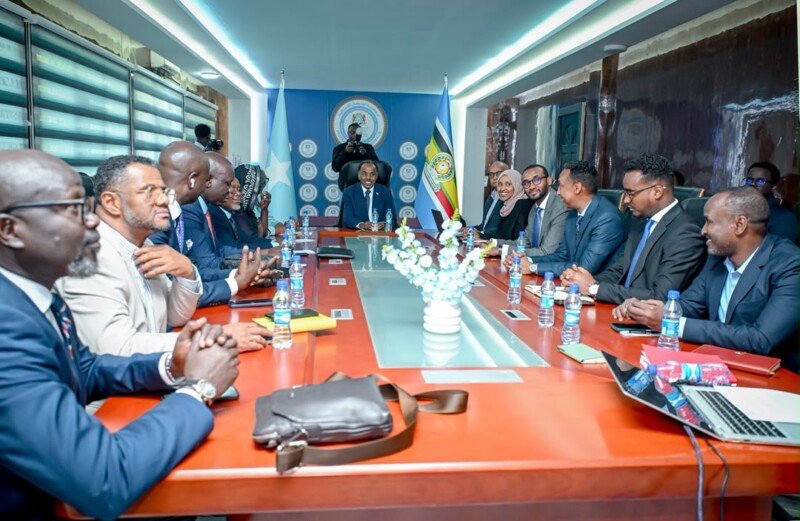
MOGADISHU — The Deputy Minister of Foreign Affairs and International Cooperation, Ali Mohamed Omar (Ali Balcad), has received a delegation from the East African Legislative Assembly (EALA) at the Ministry’s headquarters in Mogadishu, as Somalia continues to deepen its integration into the East African Community (EAC).
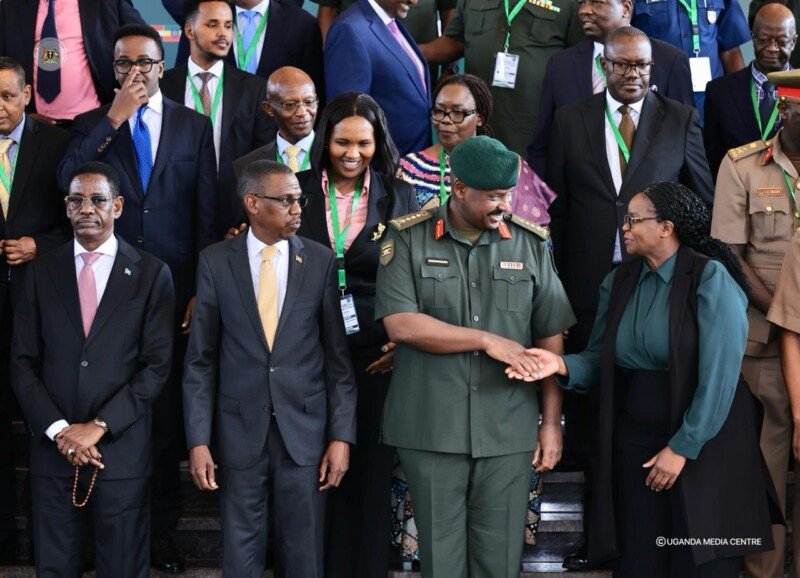
The delegation comprised parliamentarians from Rwanda, Uganda, Kenya, Burundi, South Sudan, and Somalia, and was accompanied by the Secretary General of the East African Community, Mohamed Faatir. The visiting lawmakers expressed a positive view of the peace and stability they observed in Somalia, commending the visible progress taking place in Mogadishu.
Deputy Minister Balcad, who was joined by directors from various departments of the Ministry, outlined Somalia’s strategic priorities regarding regional trade within the EAC. He called on the lawmakers to support these efforts when they deliberate in the East African Legislative Assembly.
Somalia’s Growing Role in the EAC
Somalia formally became the eighth member of the East African Community in March 2024, marking a significant step in its diplomatic and economic trajectory[reference:0]. In October 2025, Somalia’s bicameral Federal Parliament elected nine legislators to the EALA, securing the country’s first-ever seats in the bloc’s lawmaking body[reference:1]. The newly elected delegation reflects both diplomatic experience and technocratic expertise, including former foreign minister Dr. Abdisalam Omer, Ambassador Zahra Ali Hassan, and World Bank adviser Abdirahman Bashir Shariff[reference:2].
Prior to the delegation’s departure for Arusha, Tanzania, President Hassan Sheikh Mohamud met with the representatives and urged them to act as outspoken defenders of Somalia’s national interests within the EAC, warning that regional cooperation must never come at the expense of sovereignty or strategic priorities[reference:3]. Prime Minister Hamza Abdi Barre also challenged the delegates to elevate Somalia’s voice, calling their appointment a “milestone in Somalia’s regional journey”[reference:4].
The delegation’s path to EALA was not without obstacles. In November 2025, the East African Court of Justice postponed the inauguration of Somalia’s nine delegates following objections from a group of Somali academics and officials who challenged the legitimacy of the election process[reference:5]. However, the East African Court of Appeal reversed prior decisions in January 2026, clearing the way for the Somali lawmakers to take their seats[reference:6]. The lawmakers were officially sworn in during a ceremony in Arusha in March 2026[reference:7].
Deepening Regional Integration
The visit of the EALA delegation to Mogadishu comes as Somalia works to harmonize its policies with the EAC bloc to open new opportunities for investment and trade[reference:8]. In August 2026, Somalia held a National Trade Facilitation Committee workshop focused on harmonizing trade regulations, strengthening quality standards and infrastructure, and deepening regional integration[reference:9].
EALA, established in 2001, is the legislative arm of the EAC and is tasked with drafting regional laws, approving budgets, and providing oversight on integration commitments[reference:10]. For Somalia, participation in the Assembly offers a platform to influence decisions on trade, infrastructure, labor movement, and security across a combined market of more than 300 million people[reference:11].
EALA Speaker Joseph Ntakirutimana previously visited Mogadishu to discuss Somalia’s integration into the EAC and enhancing regional legislative cooperation[reference:12]. The current delegation’s visit reflects the deepening engagement between Somalia and the EAC institutions.
Critical Note
While the reception of the EALA delegation reflects Somalia’s growing diplomatic engagement and its commitment to regional integration, the country’s ability to translate its EAC membership into tangible benefits for its citizens remains uncertain. Somalia’s participation in the EALA, while symbolically significant, risks being largely ceremonial if the government does not adequately prepare its representatives to effectively advocate for national interests on complex issues such as trade harmonization, customs union protocols, and labor mobility. Furthermore, the legal challenges that delayed Somalia’s EALA representation highlight concerns about transparency and political interference in the selection process—issues that, if left unaddressed, could undermine the credibility of Somalia’s regional engagement. The government would be well advised to ensure that its EALA delegation is equipped with the technical expertise and institutional support needed to meaningfully shape regional policy, rather than merely occupying seats at the table. The EAC integration process offers genuine opportunities for economic growth and regional cooperation, but these will only materialize if Somalia’s participation is strategic, well-prepared, and backed by a coherent domestic agenda.
Recommended Reading On ftlsomalia.com
- Somalia Secures Historic First Seats in East African Legislature
- Somali President Urges Fresh EALA Delegation to Champion National Interests
- Barre Challenges New EALA Delegates to Elevate Somalia’s Voice
- Somali MPs Cleared to Join East African Legislature
- EALA President Visits Somali President in Mogadishu
- Somalia Holds NTFC Workshop to Boost Trade, Attract Investment and Strengthen EAC Integration