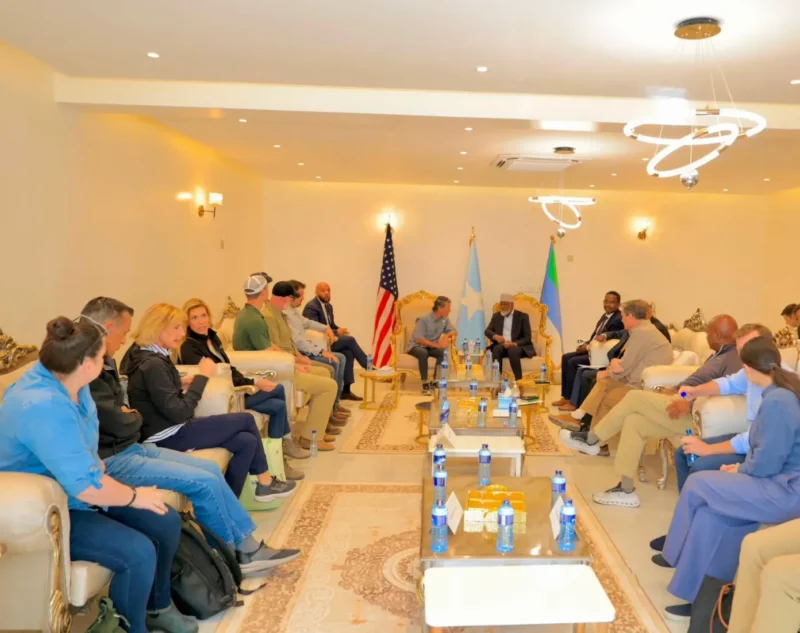
KISMAYO — Jubaland President Ahmed Mohamed Islam (Madobe) has held high-level talks with a delegation of 11 United States Congress members in Kismayo, with counterterrorism cooperation and continued American support for regional security operations topping the agenda, according to an official statement from the Jubaland presidency.
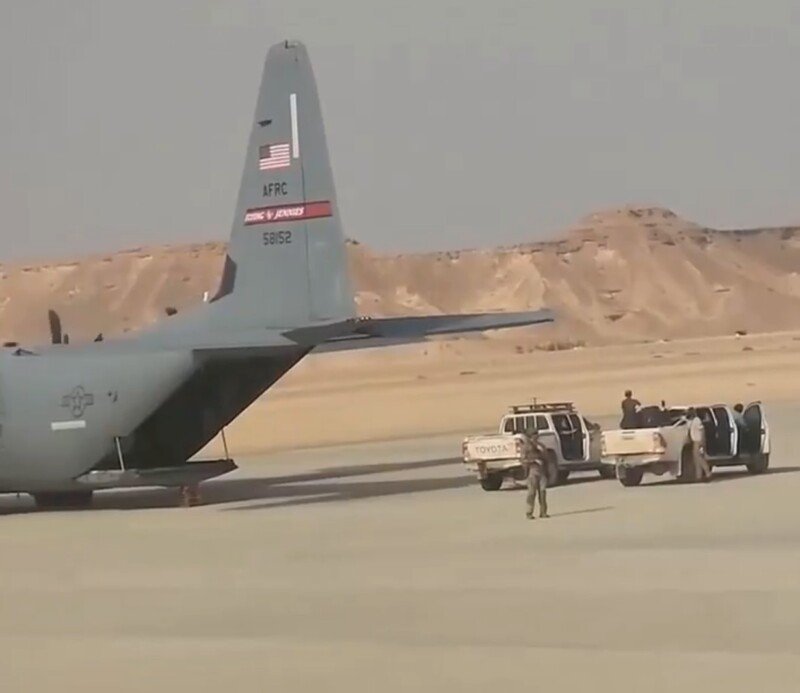
The delegation, which arrived in Kismayo on July 29, 2026, was led by Congressman Ronny Jackson and included 10 other US lawmakers, alongside US Chargé d’Affaires to Somalia Justin Davis and other officials. President Madobe was accompanied by MP Ahmed Abdi Kooshin, MP Mursal Mohamed Khalif, who serves as Secretary of the Defense Committee of Somalia’s 11th Federal Parliament, MP Abdirahman Jire Qalinle, who represents Jubaland in the Future Council, and other senior regional officials.
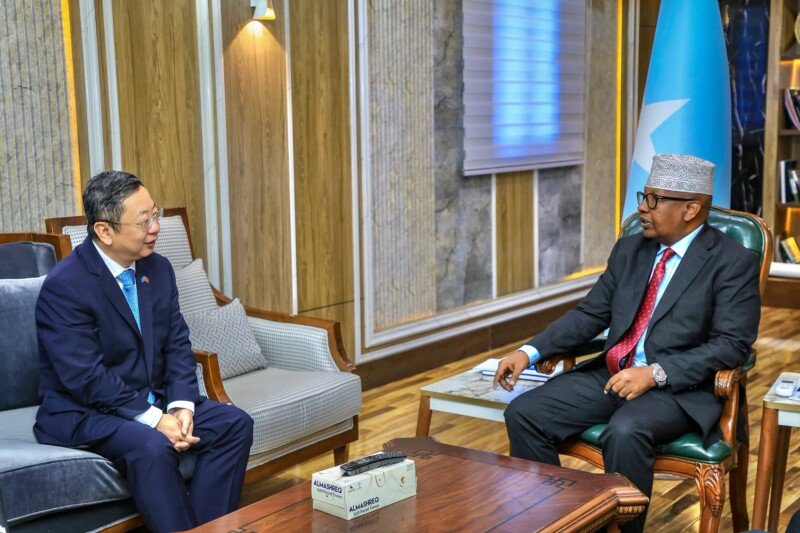
The meeting focused on bilateral cooperation in the fight against Al-Shabaab, as well as US support for security sector development, state-building institutions, and other priorities critical to Jubaland’s progress, the presidency said in a statement.
US Praise for Jubaland’s Counterterrorism Efforts
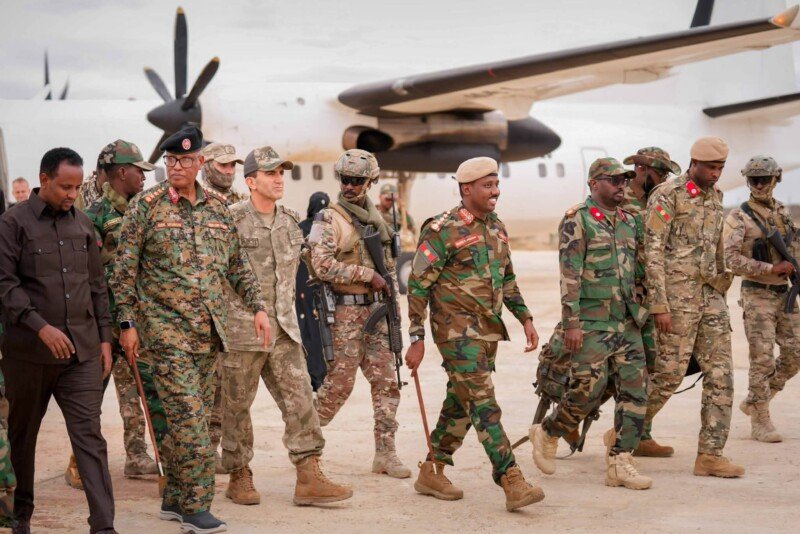
US officials commended Jubaland’s sustained efforts in the fight against Khawaarij militants, noting the region’s long-standing commitment to counterterrorism operations. They also praised recent successes achieved by Jubaland’s Darawiish forces and the US-trained Danab commandos operating in the region, who have conducted joint operations with AFRICOM to degrade militant capabilities.
President Madobe has previously hosted senior US military commanders, including SOCAFRICA Commander Maj. Gen. Claude K. Tudor Jr., to reinforce strategic military alliances and intensify joint counterterrorism operations. During those talks, Madobe stressed the necessity of ongoing international backing to preserve offensive momentum against Al-Shabaab.
The US delegation’s visit follows a pattern of deepening security engagement between Washington and Jubaland. In previous meetings with US Ambassador Richard H. Riley, Madobe urged the United States to invest in Somalia’s regional states and reaffirmed Jubaland’s pivotal role in national counterterrorism efforts. Ambassador Riley has also visited Kismayo to discuss bilateral ties, emphasizing the importance of national unity in fighting terrorism for the benefit of all Somalis.
Jubaland’s Darawiish forces and the Danab commandos have been at the forefront of recent military advances in the region. Joint operations have intensified in recent days, with Somali National Army and Jubaland forces carrying out coordinated offensives targeting militant bases and logistical hubs in the Dhasheeg-Waamo area of Lower Juba. Elite US-trained Danab commandos have spearheaded the advance, capturing key positions and securing major access routes.
Jubaland Expresses Gratitude for US Support
The Jubaland presidency expressed gratitude to the US government for its sustained support to the Somali people over the years. The statement noted that the meeting also addressed development initiatives and the importance of aligning foreign assistance with Jubaland’s strategies for improving services, infrastructure, and institutions.
On political issues, President Madobe renewed Jubaland’s commitment to a just, inclusive, and stable federal system, pledging constructive engagement with national and regional actors to protect Somalia’s federal structure. The US delegation’s visit underscored confidence in Jubaland’s leadership and its push for peace, resilience, and progress.
The meeting comes at a time when Jubaland continues to play a pivotal role in Somalia’s counterterrorism efforts. Jubaland regional forces, reinforced by the SNA, are making significant strides against Al-Shabaab, reclaiming territories beyond Kismayo and tightening the squeeze on militant strongholds. Recent advances have brought troops to Jamaame, a key Al-Shabaab hub in Lower Jubba, with surrounding villages already liberated.
Security sources indicate that the current offensive has been strengthened through coordinated airstrikes with assistance from international allies, mounting substantial pressure on militant hideouts throughout the area.
Critical Note
While the meeting between President Madobe and the US congressional delegation reflects the strategic importance of Jubaland in Somalia’s counterterrorism architecture, the visit also raises questions about the broader political implications of such direct engagement. Jubaland’s relationship with Washington has at times complicated federal-state relations in Somalia, with the federal government in Mogadishu expressing concerns about parallel security arrangements that bypass national institutions. The US delegation’s focus on Jubaland’s forces, while tactically, given their battlefield effectiveness, risks reinforcing perceptions of fragmentation within Somalia’s security sector. Furthermore, the effectiveness of military operations, while producing tactical gains, has not been matched by comparable progress in governance, service delivery, or political reconciliation in liberated areas. The government would be well advised to ensure that security cooperation is complemented by efforts to strengthen federal institutions and address the underlying grievances that sustain the insurgency, lest military victories prove temporary and the cycle of conflict continue.
Recommended Reading On ftlsomalia.com
- Jubaland President Meets with U.S. Military Officials to Bolster War on Al-Shabaab
- Details of Talks Between Jubbaland President and US Ambassador Revealed
- US Ambassador Meets Jubbaland Leader in Kismayo
- Joint Operations Intensify Against Al-Shabaab in Jubaland
- Jubbaland Forces and SNA Edge Closer to Breaking Al-Shabaab’s Hold in Southern Somalia
- Danab Commandos Lead Major Push Toward Jamame in Southern Offensive