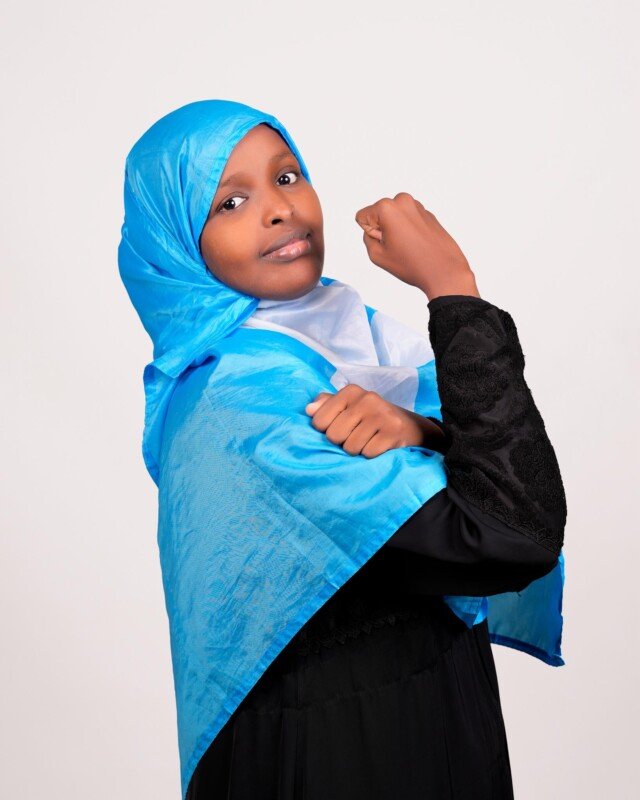
MOGADISHU — Amnesty International has renewed its call for the immediate and unconditional release of Sacdiya Macalin Ali, a Somali tuk-tuk driver and social activist who was sentenced to three years in prison by the Banadir Regional Court on June 25, 2026. In a powerful first-person account published by the rights organization on August 7, 2026, Sacdiya declared: “Not even prison will silence me.”
Sacdiya, 27, was arrested on April 12, 2026, by officers from the National Intelligence and Security Agency (NISA) in Mogadishu’s Hodan district and was transferred to Mogadishu Central Prison two days later. The Banadir Regional Court of Appeal has commenced hearings on her appeal, with defense lawyers presenting legal arguments challenging the lower court’s ruling. Amnesty International has described her detention as arbitrary, stating that she is being held solely for the peaceful exercise of her human rights.
In her testimony, Sacdiya stated: “I believe that my conviction and the violations against me are politically motivated. I feel that what has happened to me is an act of retaliation for speaking up about the challenges that Somali people face every day. To my knowledge, this is the first time in Somalia’s history that a Somali woman and mother has been arbitrarily arrested, detained, convicted and sentenced to three years imprisonment for solely speaking up openly about issues affecting her community.”
Sacdiya Bajaaj’s Personal Story and Activism
Sacdiya, a mother of a 12-month-old child, studied midwifery and completed her degree despite significant financial challenges. She has frequently used social media to highlight issues of corruption, youth unemployment, and rising fuel prices in Somalia. She gained a following for her activism while working in the male-dominated tuk-tuk industry, where she drove a “bajaaj” (rickshaw) to support her family.
According to her testimony, Sacdiya faced significant challenges in finding formal employment despite her education. “As a woman, I often felt excluded and discriminated against. I was told that because I came from a minority clan, my chances of finding a job were limited in a system shaped by Somalia’s 4.5 clan structure,” she said. Unable to secure formal work, she turned to various jobs, including cooking and selling food online, before eventually driving a tuk-tuk to support herself and her family.
“I spoke because I believed I had the right to express my opinions peacefully on the streets and on social media. I wanted my voice to be heard, and I wanted other Somalis to know that their concerns mattered too. Today, I am in prison because of expressing my views,” she stated.
Impact on Her Family and Health
Sacdiya has said that one of the most painful aspects of her imprisonment is being separated from her one-year-old daughter, whom she was still breastfeeding at the time of her arrest. “What hurt me most was knowing that my baby was just a year old and still breastfeeding when I was sentenced. As a mother, my greatest responsibility is to care for my child,” she said. She has not been allowed to see her child since her detention began.
She also stated that she was the primary breadwinner for her family, and her mother fell ill after learning of her daughter’s sentence, further compounding the family’s hardship. “After my arrest, my mother is unable to work and support my daughter. I worry about how my family is coping and who will support them,” she said.
While in detention, Sacdiya has reported various health issues, including kidney pain, asthma, eye problems, and hearing loss, which she claims began after a police officer struck her on the ear during her arrest. “My skin has changed, and I have developed wounds and pimples due to poor prison hygiene. I have lost significant weight, I worry about my worsening health, and have not had access to a doctor,” she stated.
Refusal to Be Silenced
Sacdiya also stated that she was offered release if she agreed to remain silent, and later, a senior government official allegedly offered her a job on the condition that she stop speaking out. “Since then, I have continued to face threats and harassment while in detention,” she said.
Explaining her refusal to remain silent, she said: “This administration has shown me how far it is willing to go to silence me, including sentencing me to prison. But I cannot remain silent while so many Somalis face injustice. Since my detention, I have witnessed more cases of what I believe are unjust detentions, which has only strengthened my determination to speak out. When I am released, I want to continue advocating for their rights as well as my own. That is why I refuse to be silenced.”
Her message to Somalis is clear: “Stand up against injustice and never accept it as normal. Today it may be happening to me, but tomorrow it could happen to you or to someone you love. Injustice does not stop with one person, which is why we must all speak out.”
Critical Note
While the Federal Government has maintained that the legal process against Sacdiya Bajaaj was conducted in accordance with the law, her testimony and Amnesty International’s advocacy highlight the growing tensions between Somalia’s legal framework and the protection of fundamental rights. The case, which has drawn widespread concern from human rights organisations, underscores the risks faced by Somali activists, particularly women, who speak out against injustice and inequality. The defense’s claims of procedural irregularities, including the replacement of the presiding judge and the denial of adequate medical care, suggest that due process may have been compromised. The government would be well advised to ensure that the appeal process is transparent and impartial, and to uphold the right to peaceful expression. The case of Sacdiya Bajaaj should serve as a reminder that genuine democratic governance requires protecting the rights of all citizens, including those who speak truth to power.