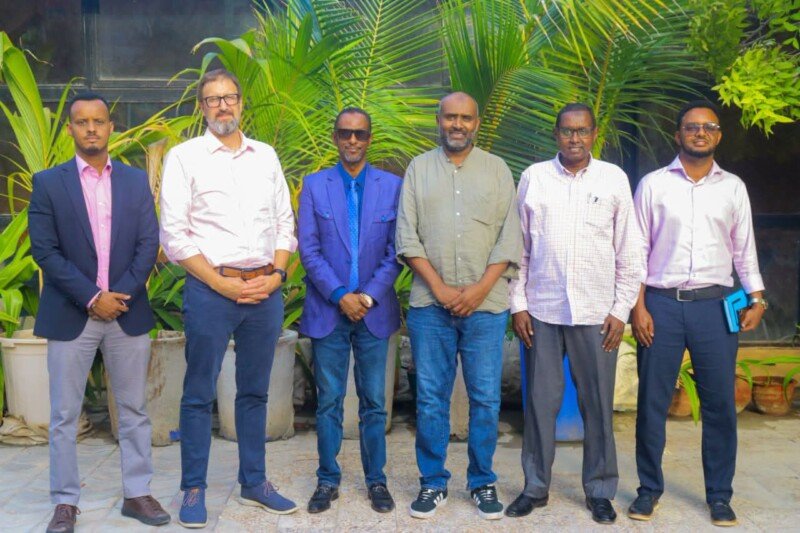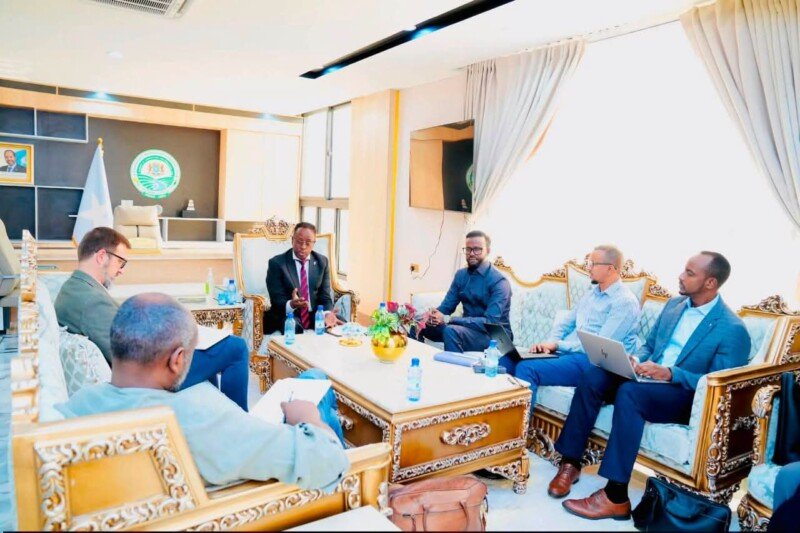
MOGADISHU — The Minister of Agriculture and Irrigation of the Federal Government of Somalia, Mohamed Abdi Hayir (Maareeye), has received a delegation from Refugees International (RI), led by the organization’s President, Jeremy Konyndyk, and Abdullahi Halakhe, to discuss strengthening cooperation on food security, community resilience, and agricultural investment for the recovery of livelihoods and durable solutions for displaced populations.
The meeting, held at the Ministry’s headquarters in Mogadishu, focused on the importance of investing in agriculture to support the recovery of livelihoods and provide lasting solutions for internally displaced persons (IDPs). The delegation from Refugees International, a global humanitarian organization that advocates for the rights and protection of refugees and displaced people, explored ways to deepen collaboration with Somalia’s agricultural sector.
The Federal Government has been actively engaging with international partners to boost food security and resilience, particularly in the face of recurring climate shocks and displacement crises.
El Niño Preparedness and Climate Resilience
A significant portion of the discussions was dedicated to preparedness for the anticipated El Niño weather phenomenon, which is expected to bring heavy rains and potential flooding later this year. The talks addressed the risks of floods, excessive rainfall, crop damage, and community displacement. Minister Maareeye emphasized the importance of early warning systems, water management, irrigation, and climate-resilient agriculture to mitigate the impact of disasters and protect agricultural production.
The government has been coordinating with health partners on El Niño response, with SoDMA and the UN bolstering joint efforts against the escalating climate crisis.
Minister Maareeye highlighted the need to invest in irrigation infrastructure and climate-smart farming techniques to reduce the vulnerability of agricultural communities to climate-related shocks. The meeting also discussed the importance of strengthening value chains, improving rural infrastructure, and creating employment opportunities for youth and women in the agricultural sector.
Refugees International’s Engagement in Somalia
Refugees International has been actively engaged in Somalia, advocating for the protection of refugees and internally displaced persons. President Hassan Sheikh Mohamud recently hosted Jeremy Konyndyk in Mogadishu, where they discussed the situation of displaced populations, durable solutions, and the humanitarian response. Konyndyk’s visit also included meetings with the Chairman of the Refugee and Displacement Agency, Liban Abdi Cigaal, reflecting the broad engagement of RI with Somali authorities on displacement issues.
Konyndyk also met with the Chairman of the Somali Refugee and Displacement Agency to discuss strengthening cooperation on refugee protection and durable solutions.
For Somalia, strengthening agricultural resilience is a key component of addressing the root causes of displacement and building long-term stability. The Federal Government has been working to develop the agricultural sector, which is a cornerstone of the country’s economy and livelihoods for millions of Somalis.
Critical Note
While the meeting between Minister Maareeye and Refugees International reflects a growing international focus on the intersection of displacement, food security, and climate change in Somalia, the gap between policy discussions and on-the-ground implementation remains a significant challenge. The agricultural sector continues to face systemic problems, including limited access to finance, inadequate infrastructure, weak extension services, and ongoing insecurity. The government’s ability to translate the commitments made in this meeting into tangible improvements for farmers and displaced communities will be a critical test of its commitment to agricultural development and resilience-building. Furthermore, the humanitarian and development community must move beyond short-term emergency responses and invest in long-term solutions that address the underlying drivers of displacement, including climate vulnerability, conflict, and economic marginalization. Without sustained investment and a genuine commitment to reform, the cycle of crisis and displacement will continue, with the Somali people bearing the heaviest burden.
Recommended Reading On ftlsomalia.com
- Somalia’s Planning Minister Holds Talks with WFP Team
- SoDMA and Health Partners Coordinate El Niño Response
- President Mohamud Hosts Head of Refugees International
- Chairman of Refugee Agency Meets Refugees International Head
- SoDMA and UN Bolster Joint Efforts Against Drought
- Cabinet Endorses National El Niño Preparedness Plan