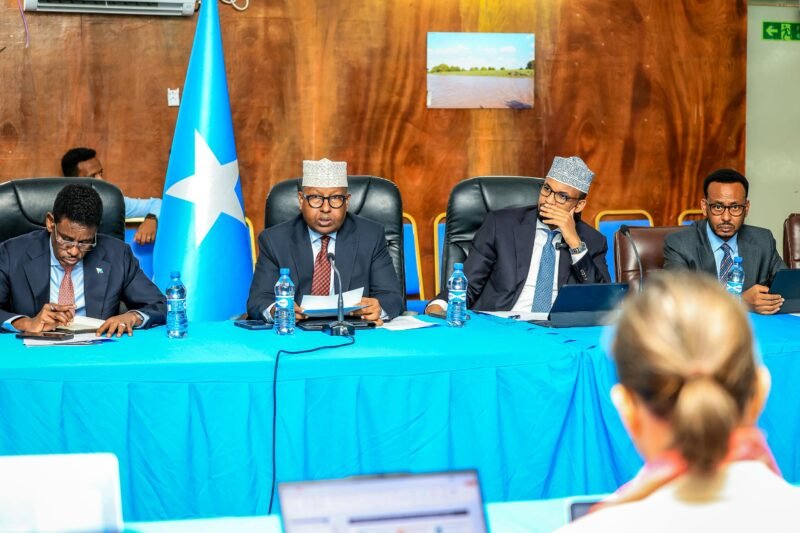
MOGADISHU — The Minister of Defence of the Federal Government of Somalia, Ahmed Moallim Fiqi, has participated in the Somalia Security Sector Governance Review, bringing together senior officials from the Federal Government, the World Bank, and international partners to advance accountability and institutional reform across the country’s security apparatus.
The meeting focused on strengthening governance, accountability, and institutional reform across Somalia’s security sector, including the legal framework, personnel and payroll management systems, procurement and contracting controls, pension reform, and the long-term sustainability of the Somali National Armed Forces.
Minister: Security Transformation Beyond Military Operations
Minister Fiqi stated that Somalia’s security transformation is not measured by military operations alone, but also by the strength of its security institutions, the integrity of its systems, and the accountability of its forces. He highlighted the progress made by the Ministry of Defence in the nationwide force census and biometric registration, through which the accurate number of personnel was verified and a credible national force registry was established.
The Minister also noted that the Ministry is moving towards a monthly personnel verification system directly linked to payroll and presence at duty stations and operational areas, ensuring that identity, duty status, and salary payments are fully aligned. He further emphasised the importance of the Defence Bill, procurement and contracting reform, the sustainability of the pension system, and the establishment of the agency for the care of martyrs’ orphans, disabled personnel, and retirees.
World Bank and International Partners Support Reform
Minister Fiqi thanked the World Bank and international partners for their support to Somalia’s security sector reform, particularly in strengthening analytical work, institutional systems, and accountable governance. According to a Goobjoog report, the meeting focused on reforms in legal frameworks, payroll systems, procurement controls and long-term sustainability of the armed forces.
A World Bank economic analysis has previously noted that the security sector accounts for one-third of the expenditure of Somalia’s federal government, with eight out of ten government employees employed in the security sector. The World Bank analysis recommends a focus on enhancing the security sector’s capacity to ensure that it is fiscally sustainable and able to efficiently deliver security services.
Audit and Anti-Corruption Reforms
Meeting Attendees
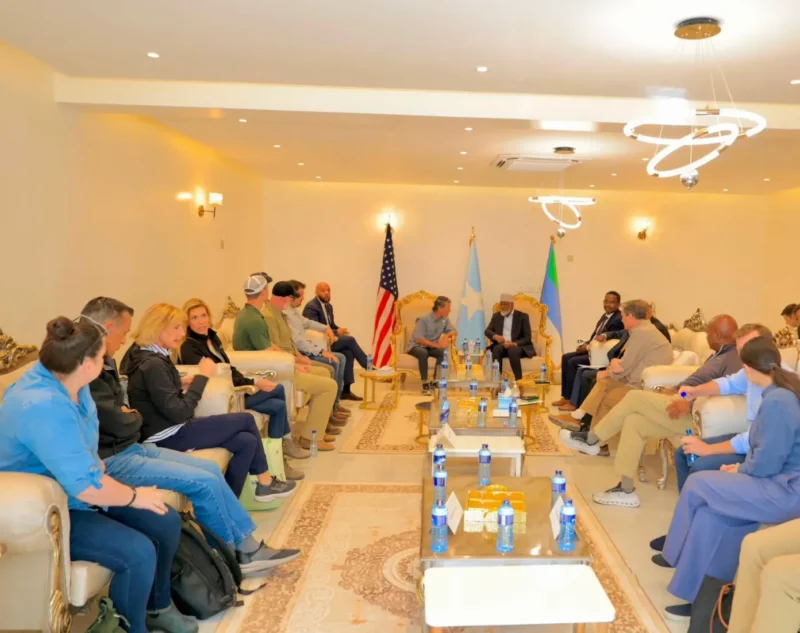
The meeting was also attended by the Minister of Internal Security, Abdullahi Sheikh Ismail (Fartaag), the Deputy Minister of Finance, Abdiqafar Elmi Haange, the Director General of the Presidency, Abdihakim Yusuf, the Senior Defence Affairs Advisor to the President, Jihan Abdullahi Hassan, Hideki Matsunaga, World Bank Country Manager for Somalia, Verena Fritiz, Lead Governance Specialist at the World Bank, and representatives of international partners.
Somalia’s Security Sector Reform Progress
The Security Sector Governance Review is part of Somalia’s broader efforts to transition from a post-conflict security framework to a professional, accountable, and sustainable national security apparatus capable of taking full responsibility for the country’s stability as international forces draw down. The reform process includes strengthening civilian oversight, improving financial management, and enhancing the operational effectiveness of the Somali National Armed Forces.
The Minister of Internal Security also opened the Program Steering Committee meeting advancing the second phase of the Joint Police Programme (JPP II), aimed at strengthening public security and policing services across the country. The meeting focused on reviewing and approving the 2026 work plan and budget to accelerate and enhance the implementation of the programme.
Commitment to Security Sector Reform
The Security Sector Governance Review represents a significant step in Somalia’s ongoing efforts to professionalize its security institutions and ensure they are accountable to the Somali people. As the country continues its transition toward full security responsibility, sustained engagement between government institutions and international partners remains critical to achieving long-term stability and self-reliance.
“The meeting focused on strengthening governance, accountability, and institutional reform across Somalia’s security sector, particularly the legal framework, personnel and payroll management systems, procurement and contracting controls, pension reform, and the long-term sustainability of the Somali National Armed Forces,” according to an official readout.