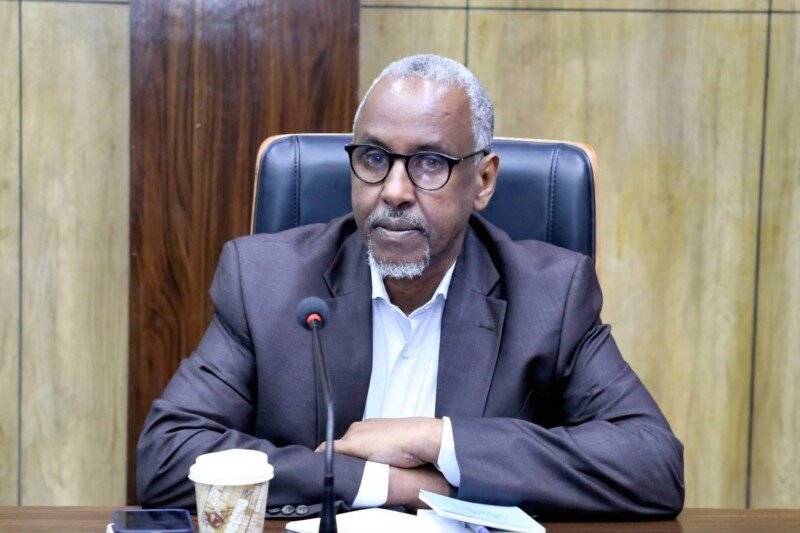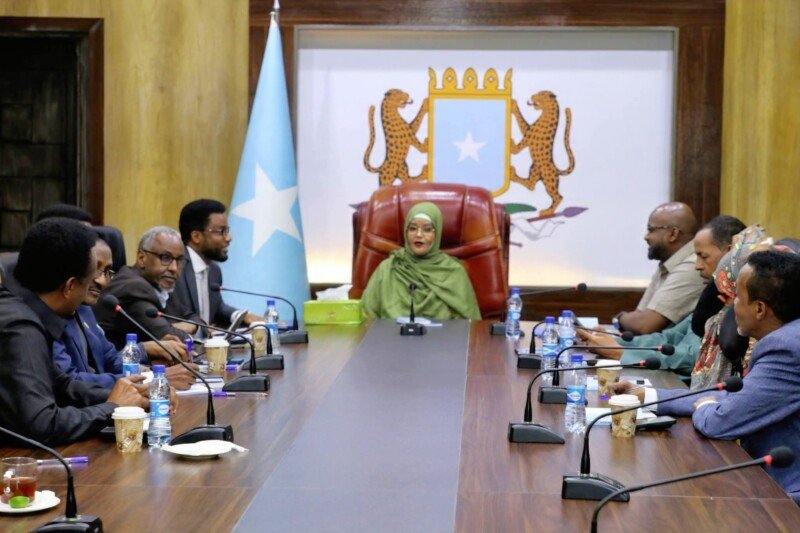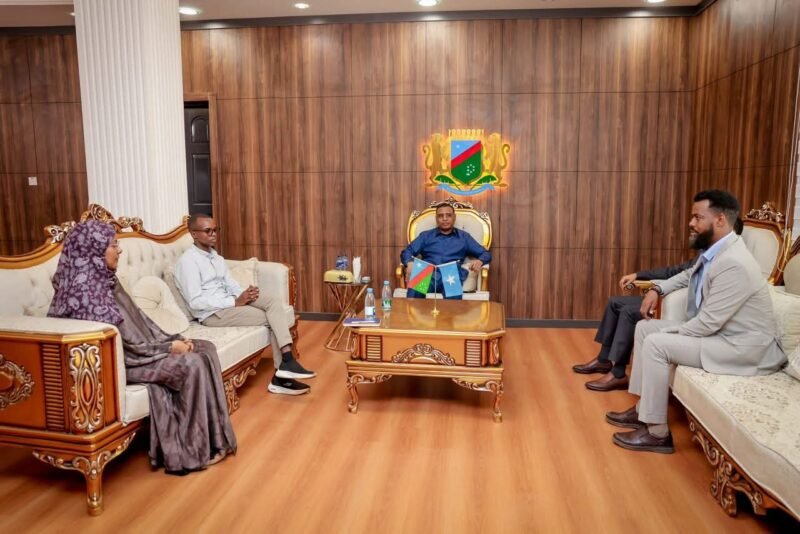
BAIDOA — The Interim Leader of South West State, Jibril Abdirashid Haji, on Monday received presidential candidate Abdiaziz Mohamed Sheikh Osman (Jawaari) at the Presidential Palace in Baidoa, marking another engagement in the ongoing political consultations ahead of the region’s upcoming elections.
The meeting involved political consultation, with both parties discussing the general political landscape, electoral procedures, and the significance of enhancing unity and stability throughout the regions.
Mr. Jibril Abdirashid Haji welcomed the candidate and stressed the importance of conducting elections transparently, justly, and in accordance with the nation’s legal framework.
Speaker Madobe Arrives for Presidency Race
The meeting follows the recent arrival of Speaker of the House of the People, Sheikh Adan Mohamed Nur (Madobe), in Baidoa, signaling a high-stakes bid for the presidency of South West State. Madobe, a veteran politician and senior figure in the Justice and Solidarity Party (JSP), was received by Acting Leader Jibril Abdirashid Haji and local officials amid a heightened security presence in the regional capital. Political insiders suggest that Villa Somalia is positioning Madobe as its preferred candidate to lead the South West administration.
Candidate Commits to State-Building
Presidential candidate Abdiaziz Mohamed Sheikh Osman (Jawaari) expressed gratitude for the hospitality and reiterated his dedication to contributing to state-building, peace, and Somalia’s reconstruction. His candidacy adds to the growing field of contenders for the South West State presidency, which includes federal parliamentary speaker Adan Mohamed Nur (Madobe), Minister of Ports Abdulkadir Mohamed Nur, and Minister of Livestock Hassan Elay.
Interim Leader’s Role in Electoral Process
The meeting represents continuing efforts by the interim leader to intensify political dialogue and prepare for the upcoming elections. Jibril Abdirashid Haji Abdi was appointed as interim head of South West State by Prime Minister Hamza Abdi Barre following the resignation of former regional president Abdiaziz Hassan Mohamed (Laftagareen) on March 30. According to the official decree, Abdirashid’s primary responsibilities include advancing concrete preparations for the implementation of universal, one-person, one-vote elections across the regional state.
Security and Administrative Preparations
The interim leader has been actively working to strengthen institutional effectiveness in South West State. He recently conducted an inspection tour of several key government ministries, including Security, Justice, Home Affairs, Health, Constitution, and Relief, to assess their operational effectiveness and institutional performance.
In preparation for the upcoming elections, security authorities have strengthened their presence in Baidoa, deploying more personnel and implementing enhanced controls throughout the city. Police units, national intelligence agents, and Special Forces have expanded their operations, with dedicated units assigned to preserve domestic stability and extra personnel positioned at the city’s perimeters.
Electoral Commission Postpones Deadline
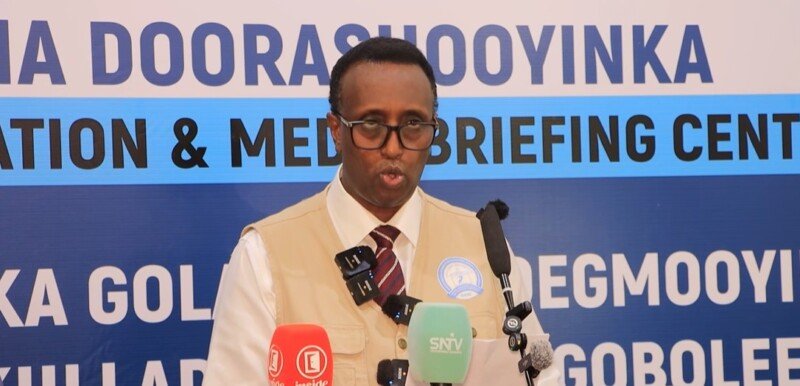
The National Independent Electoral and Boundaries Commission (NIEBC) has officially announced a delay in the submission deadline for candidate applications for the South West State electoral process, while also confirming the polling date for the upcoming regional elections. The decision comes as part of ongoing preparations to ensure a credible and inclusive electoral process in the region.
Commitment to Democratic Process
Federal authorities remain committed to implementing universal suffrage in South West State. Prime Minister Hamza Abdi Barre has declared that there will be no elections in Baidoa or across South West other than a one-person, one-vote process.
“We will not allow, in any way, disorder, revenge, clan-based discrimination or any trouble in Baidoa,” Prime Minister Hamza has stated.
The NIEBC has scheduled the South West State elections for April 28, 2026, with the commission emphasizing its commitment to ensuring an inclusive and credible electoral process. If completed as scheduled, the elections would mark one of the most significant electoral experiments in Somalia in decades, testing the country’s capacity to transition from negotiated power-sharing to direct public voting at the regional level.
The push for direct elections, however, faces strong opposition from the presidents of Puntland and Jubaland, who are united in the Somali Future Council, reflecting deeper fissures within Somalia’s federal system as the nation approaches highly contentious national elections due this year.